Tattoo ideas
Butterfly Wrist Tattoo Ideas
The wrist is one of the most popular butterfly placements precisely because the subject and the location share the same emotional register — small, delicate, personal, and usually visible without being loud. A butterfly here reads as quietly meaningful rather than a statement piece, which fits the symbolism well: transformation, personal growth, or honoring a change you went through (recovery, loss, a major life transition) rather than the more public-facing symbolism a chest or back piece tends to carry.
The honest tradeoff of this pairing is longevity. The wrist is a joint that flexes constantly and has some of the thinnest skin on the body, which means fine detail here fades and blurs faster than almost anywhere else — a delicate fine-line butterfly with thin antennae and detailed wing veining can start softening in as little as 3-5 years, sooner than the same design would fade on a forearm or calf. This isn't a reason to avoid the placement, but it is a reason to be realistic about touch-up frequency, and to consider whether a slightly bolder linework style (thicker outline, simpler wing pattern) might serve you better long-term than the most delicate version of the design.
Sizing on the wrist is inherently constrained — most butterfly wrist tattoos run 1.5-3 inches, small enough to wrap partially around the wrist's curve without crowding, though a wing tip can extend slightly onto the forearm side for a bit more room if you want added detail. Pain here is moderate-to-sharp, generally 5-7/10, higher than a flat forearm placement because of thin skin and proximity to wrist bones and tendons; the inner wrist (where a watch would sit) tends to hurt more than the outer wrist. Sessions are quick, usually well under an hour for a simple design, though the small scale means an artist needs real precision — ask to see healed wrist work specifically, since this placement is unforgiving of anything less than clean technique. Given the fading timeline here, plan on a light touch-up around year 4-6 to keep linework crisp, which is standard maintenance for this placement rather than a sign anything went wrong.
Butterfly Wrist designs
Generate your own butterfly wrist design
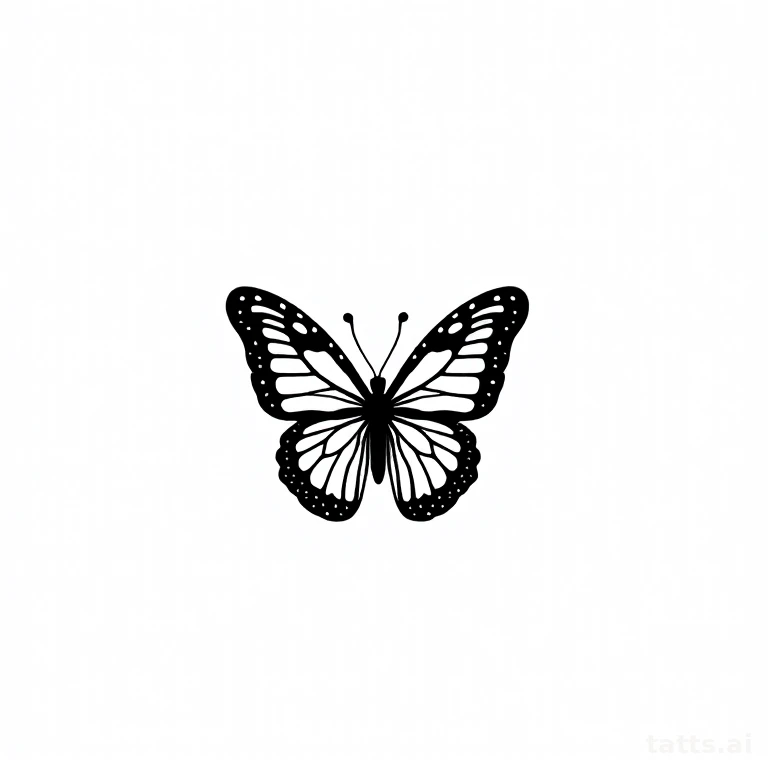
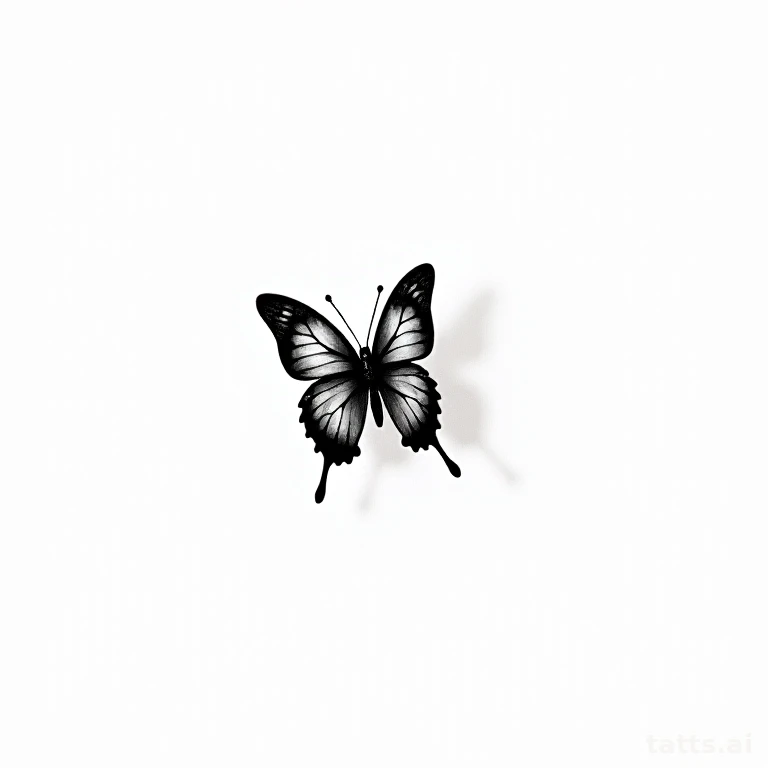
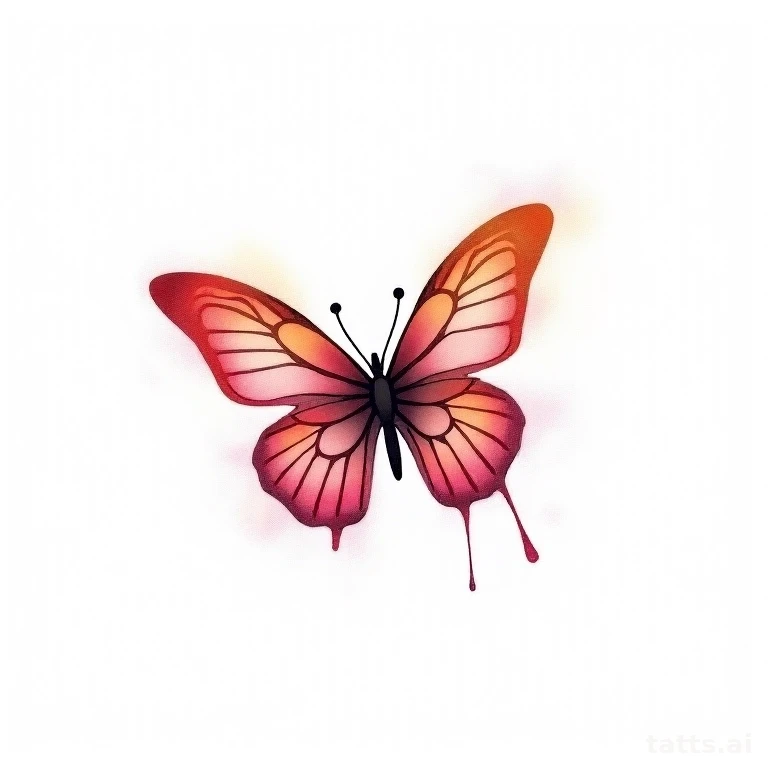
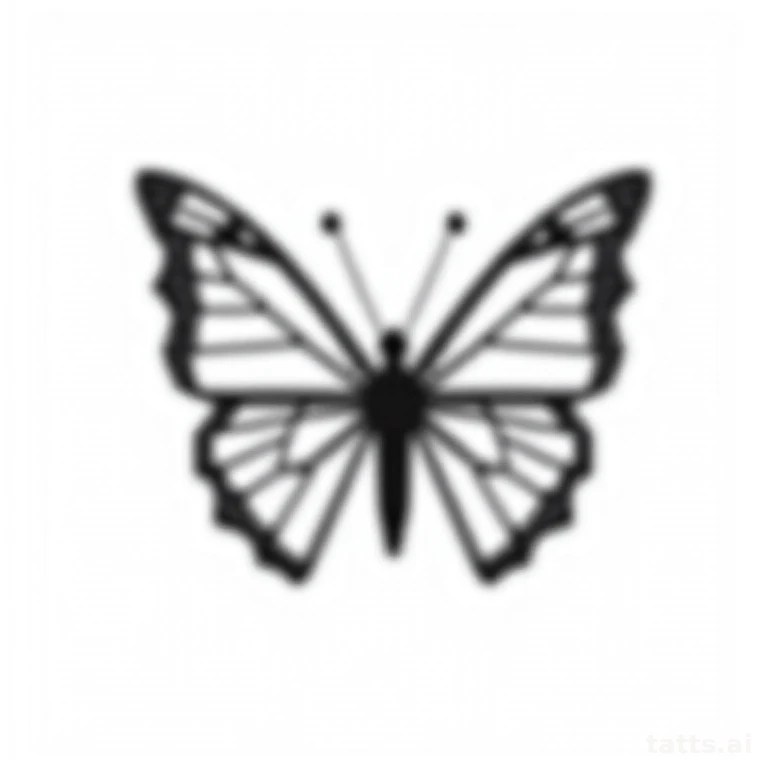
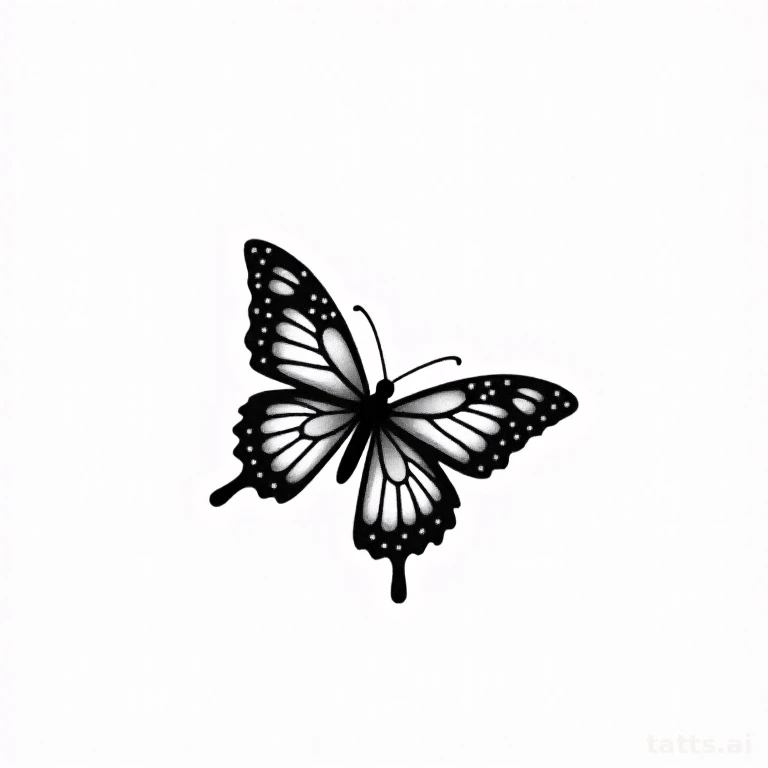
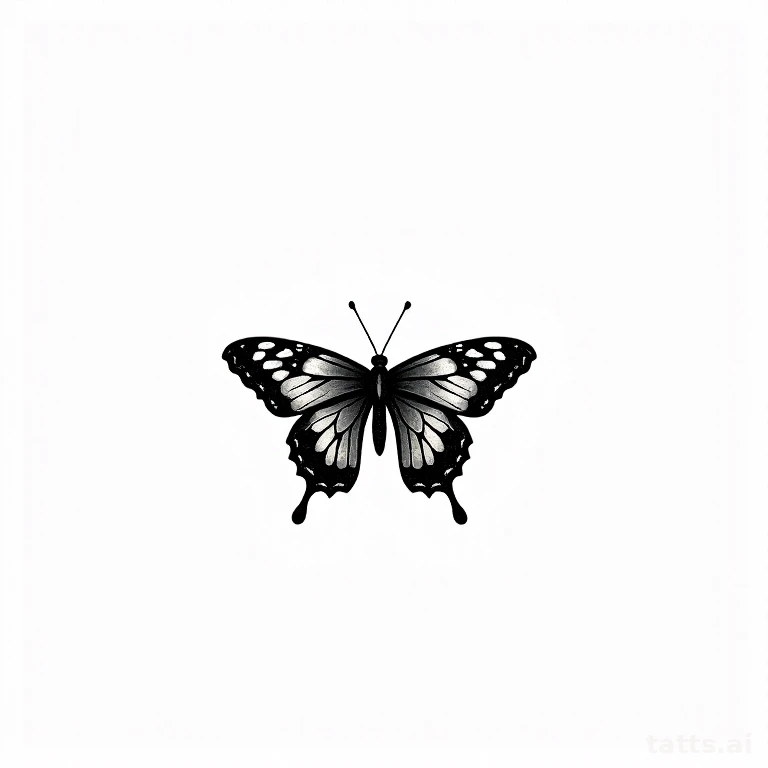
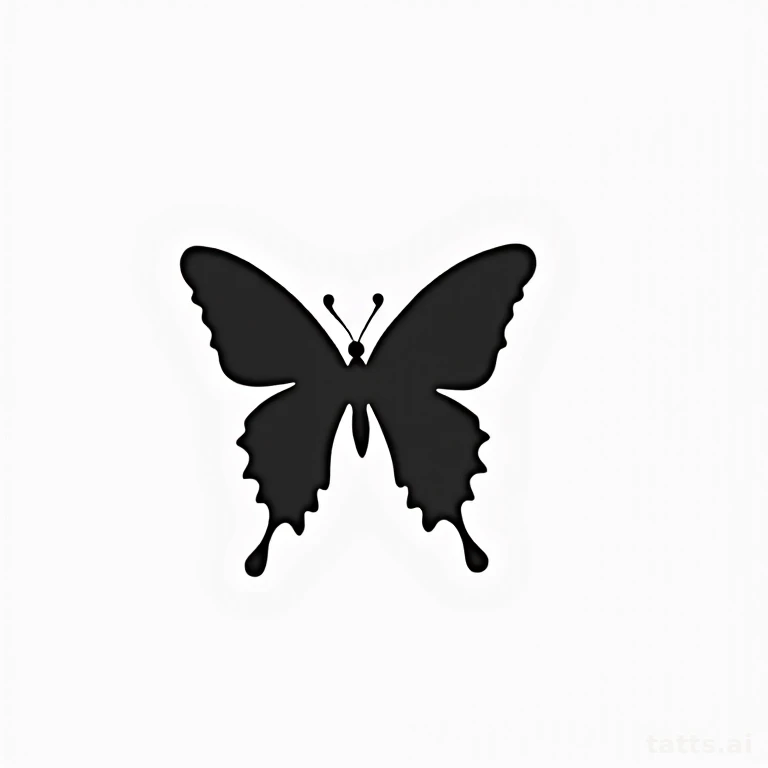
Fine-Line vs. Bolder Linework for This Spot
The wrist is the placement where the fine-line-versus-bold tradeoff matters most directly. A whisper-thin single-needle butterfly looks beautiful fresh and reads as very personal and understated, but it's genuinely the fastest-fading style-placement combination in common tattooing — expect visible softening within a few years. A slightly bolder outline with simplified wing detail sacrifices a little delicacy but holds its shape dramatically longer in this specific spot. If you want the design to still look sharp at year eight without a touch-up, lean bolder here even if fine-line is your instinct.
Wrapping the Design Around the Wrist's Curve
Because the wrist is narrow and rounded, some artists design the butterfly to wrap slightly around the side, with one wing more visible from the palm-facing angle and the other from the back-of-hand angle. This adds visual interest and makes the piece feel more three-dimensional than a flat single-view design, though it also means the artist needs to account for how the skin curves during the tattooing process itself, since wrist positioning shifts more than a flatter area would as your hand moves.
Frequently asked
- Will a wrist butterfly fade faster than one on my arm?
- Yes, noticeably — the wrist's thin skin and constant flexing (from hand and wrist movement all day) accelerate fading compared to flatter, less mobile areas. Fine detail especially softens sooner, often needing a touch-up by year 4-6 versus 10+ years for comparable detail on a forearm.
- How painful is a wrist tattoo compared to a forearm one?
- Noticeably more, generally 5-7/10 versus 3-5/10 for the outer forearm, because the wrist has thinner skin and sits closer to bone and tendon. The inner wrist tends to be the more sensitive side, so ask your artist which side better suits your design if pain tolerance is a concern.
- What size butterfly actually works well on the wrist?
- Most successful wrist butterflies stay in the 1.5-3 inch range to avoid crowding the joint's limited flat space. If you want more detail than that size comfortably holds, consider extending one wing tip slightly onto the forearm rather than forcing everything into the wrist itself.
Make it yours
Generate a one-of-one butterfly wrist design free — then try it on your skin.