Tattoo ideas
Lion Tattoo Ideas
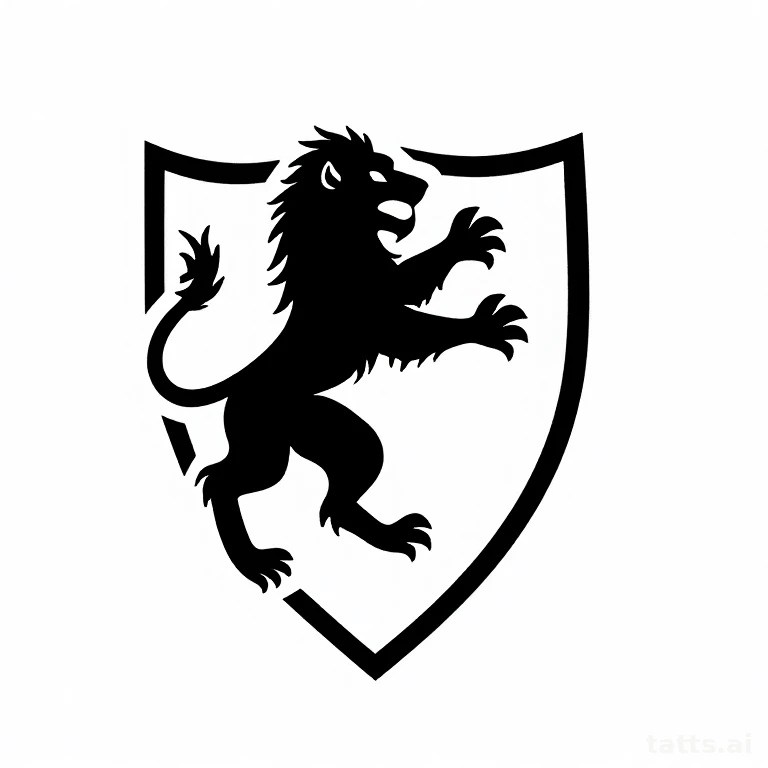
Lions carry a fairly universal symbol set across cultures — courage, leadership, and family protection — which is part of why the subject shows up equally on Leo zodiac pieces, fatherhood tattoos, and straightforward strength statements. A maned lion leans masculine and dominant in most Western readings; a lioness, often drawn mid-hunt or curled with cubs, shifts the meaning toward maternal protectiveness and quiet strength rather than aggression. Some clients specifically request a lioness over a lion for exactly that reason. In heraldry, a rampant lion (rearing on hind legs) signals valor in battle, which is why you'll see that pose a lot in crest-style chest and back pieces.
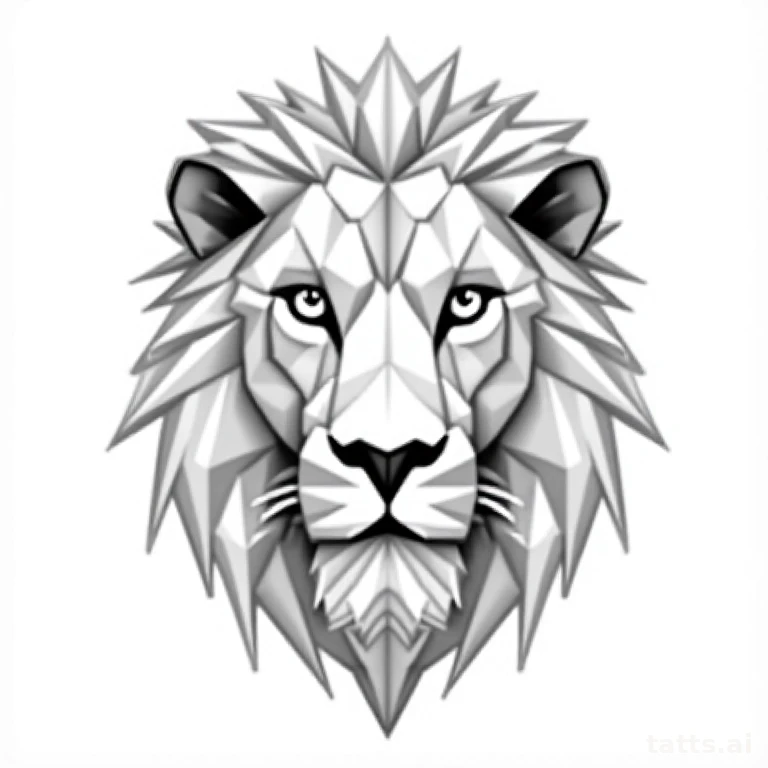
The mane is what makes lion tattoos genuinely demanding to execute well, and it's the main reason this subject needs real size. A realistic lion face with full mane detail wants at least 5-6 inches of space — the chest, upper back, or outer thigh are the go-to spots because the mane radiates outward and needs room to fan without hitting the edge of the canvas. Shrink a detailed mane below 4 inches and the individual hair strands merge into a solid blob within a couple years as the tiny lines spread. A simplified geometric or linework lion, by contrast, can work fine on a forearm at 3-4 inches since it's not relying on fine texture to read.
Pain depends heavily on where the mane sits. Chest pieces run 6-7/10 for men and can spike higher directly over the sternum. Upper back and shoulder blade sit around 4-5/10, genuinely one of the more tolerable spots for a large piece. Outer thigh is the easiest large-canvas option at 3-4/10. For longevity, realism lions with heavy black-and-grey gradient shading in the mane are the style most likely to need a refresh — usually 7-10 years before the softest gradients need re-saturating. A bold neo-traditional lion with thick contour lines defining the mane chunks (rather than thousands of individual hair strokes) holds its shape far longer, often 15+ years before it needs attention.
Lion designs
Generate your own lion design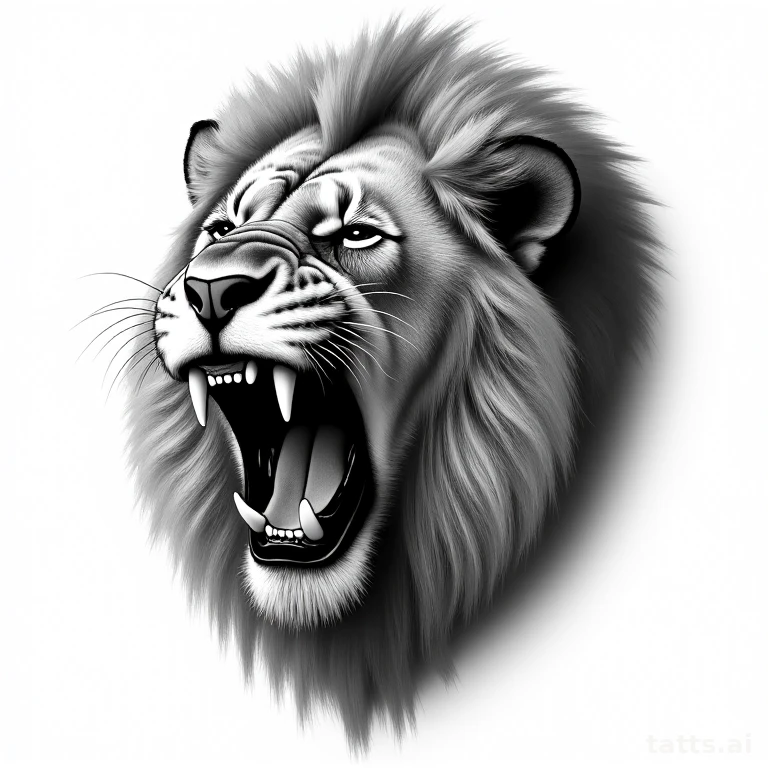
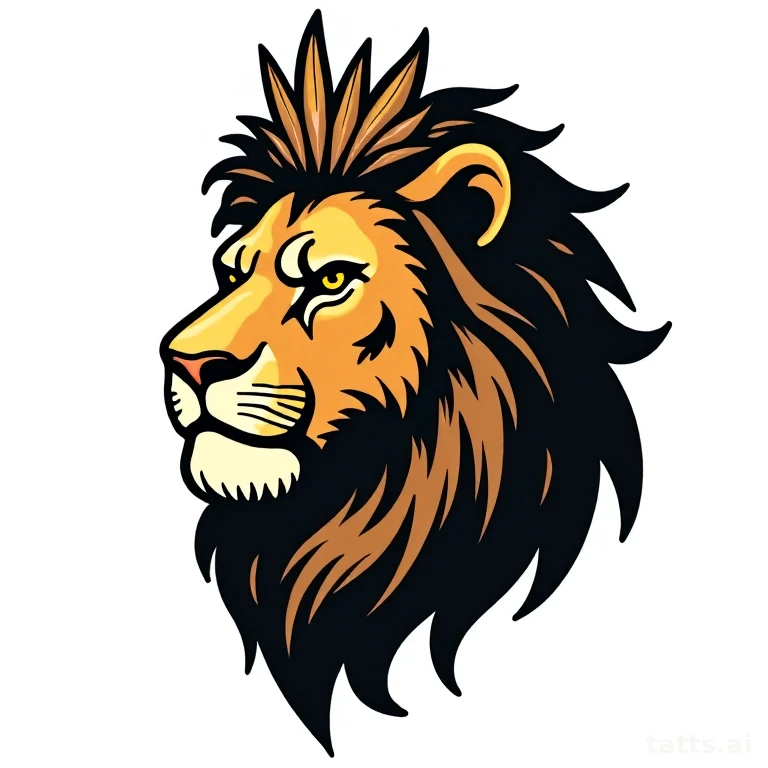
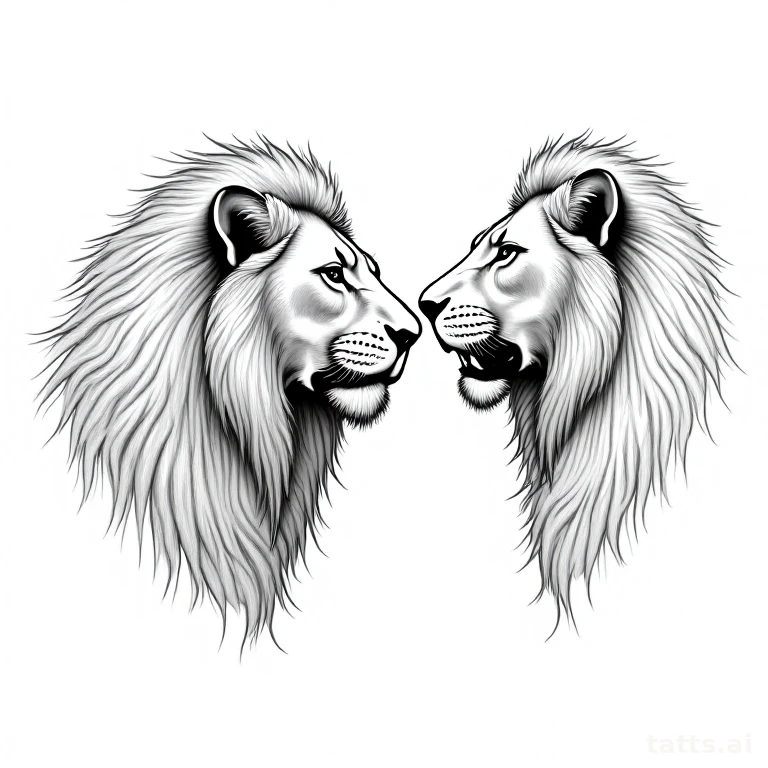
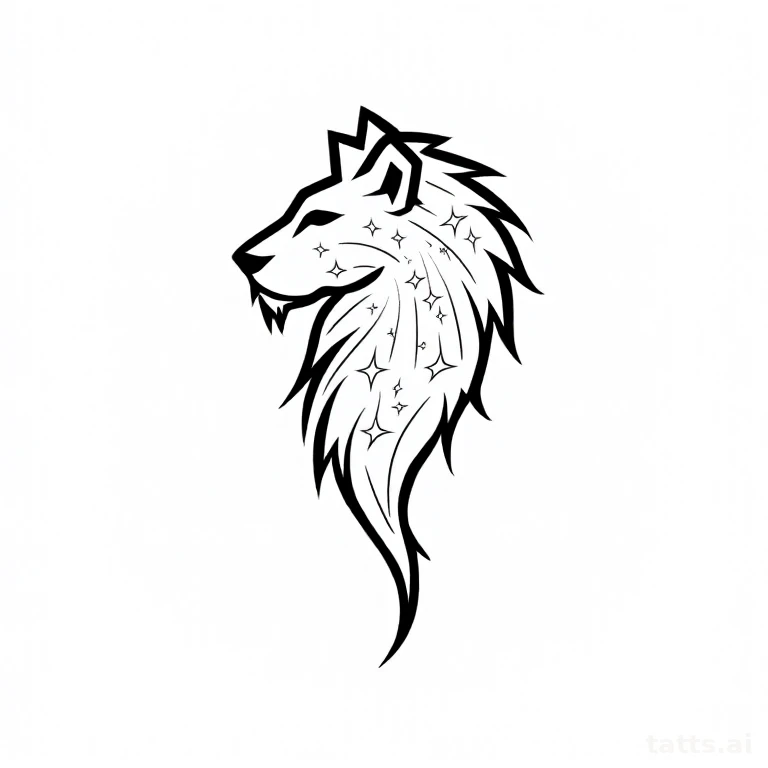
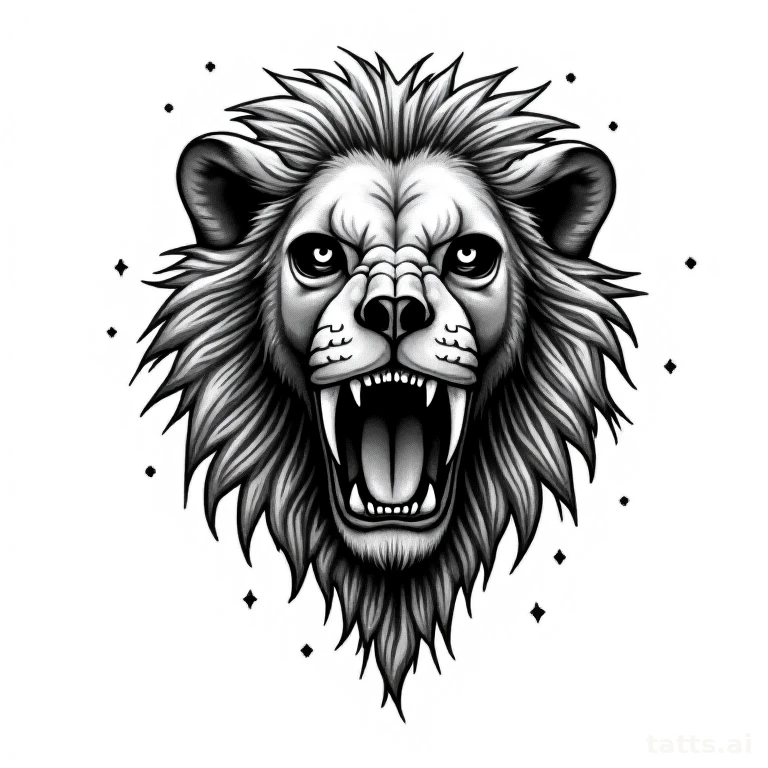
Lion vs Lioness: Different Statements
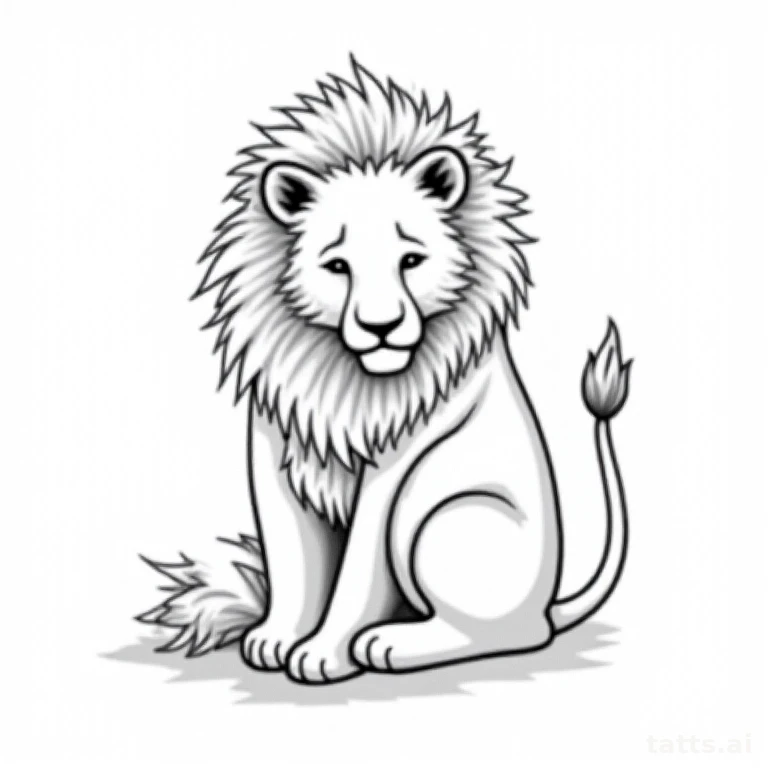
A full-maned lion, especially rendered mid-roar, is the go-to for strength, leadership, and paternal pride pieces — it's a common Father's Day or 'provider' tattoo. A lioness, often shown alert and watchful or with cubs at her side, is increasingly chosen by mothers or as a self-representation of resilience without needing the visual weight of a mane. Some clients pair both in a single piece — lion and lioness facing each other — to represent a partnership or family unit, which works well as a two-panel composition on opposite forearms or shoulder blades.
Realism vs Illustrative Mane Rendering
Photorealistic lion tattoos are judged almost entirely on how the artist handles mane texture — good realism artists build depth with layered grey values rather than trying to ink every hair strand, which actually ages better. Illustrative or neo-traditional lions instead break the mane into defined chunks or waves with bold black separating lines, trading photographic accuracy for graphic clarity that holds up better long-term. If you're choosing based on longevity over photorealism, the illustrative route is the safer bet for a first big tattoo.
Frequently asked
- Is a lion or lioness tattoo better for a mother's tattoo?
- Lioness designs are more commonly chosen for maternal or motherhood pieces since the symbolism leans protective and nurturing rather than dominant. That said, plenty of mothers choose a full-maned lion for straightforward strength — there's no wrong answer, it's about which visual reads as 'you.'
- How big does a realistic lion tattoo need to be?
- Plan for at least 5-6 inches of space to keep the mane's individual strands legible long-term. Chest, upper back, and outer thigh are the most common placements because they offer that room without excessive stretching, joint movement, or crowding of the fine mane detail.
- Do lion tattoos hurt more than other large pieces?
- It depends entirely on placement, not the subject itself. Chest pieces run 6-7/10, upper back and shoulder blade around 4-5/10, and outer thigh 3-4/10 — choosing a lower-pain zone matters more for overall comfort than anything specific about the lion imagery you're getting.
Make it yours
Generate a one-of-one lion design free — then try it on your skin.