Tattoo ideas
Minimalist Tattoo Ideas
Minimalist tattooing is a discipline of subtraction — where other styles add detail, shading, and color to build a piece, minimalist work is measured by how much can be removed while the design still reads clearly. A single geometric shape, a one-line animal outline, a tiny symbol, a small word: the whole style depends on the artist deciding which two or three lines actually carry the concept and cutting everything else. This isn't the same discipline as fine line, though the two overlap heavily — fine line refers to needle technique (thin single-needle strokes), while minimalist refers to design philosophy (radical simplicity). You can have a bold-outline minimalist tattoo, and an intricate fine line piece that isn't minimalist at all. Most minimalist tattoos use fine line technique because thick bold strokes on an ultra-simple 1-inch design would look clunky.
The single biggest risk with minimalist tattoos is a design that's simple in concept but rendered too small to survive skin's natural aging. A one-line wave that's 3 inches wide will hold its shape for years; the same line compressed to three-quarters of an inch starts to blur into an ambiguous smudge within 2-3 years because there's so little ink real estate to hold density. The rule most experienced minimalist artists follow: simplicity and size are a tradeoff, not something you maximize together. If you want genuinely tiny (a symbol under an inch), the design needs to be almost absurdly simple — a dot, a short straight line — anything with more than two or three strokes at that scale is fighting its own longevity from day one.
Because minimalist tattoos are small, they're the style most commonly stacked in collections — a scatter of tiny symbols across the wrist, forearm, or behind the ear rather than one large centerpiece. This changes placement thinking: think about how multiple small pieces will read together as your collection grows, since minimalist tattoos are rarely one-and-done for people who love the style. Wrist, inner forearm, behind the ear, ankle, and fingers are the most popular zones. Pain is low for most of these (wrist and forearm run 3-4/10) except fingers, a special case — thin skin over bone makes finger tattoos rate 6-7/10, and fingers fade fastest of any placement due to hand-washing and friction, often needing a touch-up within 1-2 years regardless of how minimal the design is.
Minimalist designs
Generate your own minimalist design
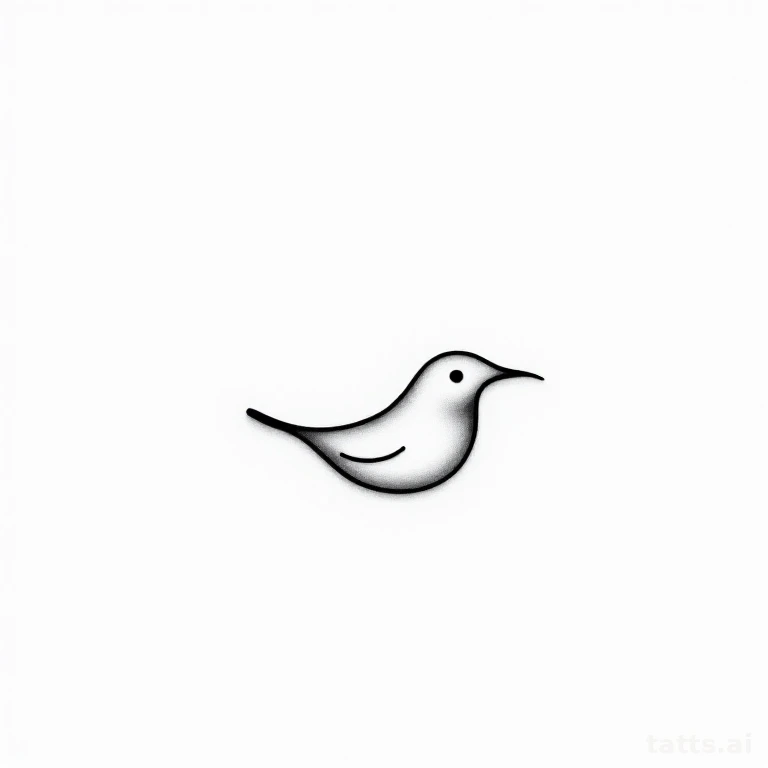
Why finger tattoos need a different conversation than other minimalist placements
Fingers are the single fastest-fading placement in tattooing, full stop, regardless of style. The skin on fingers turns over and sheds faster than almost anywhere else on the body, constant hand-washing and friction accelerates ink loss, and there's very little fat layer under finger skin to hold pigment stable. A minimalist ring-style band or small finger symbol should be treated as a piece you'll touch up every 1-2 years as routine maintenance, not a one-time investment — if that maintenance commitment isn't appealing, consider the same design on the wrist instead, where it will hold dramatically longer.
Building a minimalist collection instead of one big piece
People who gravitate to minimalist tattooing often end up with 5, 10, or more small pieces scattered across the body rather than a single large tattoo, and the best results come from planning loosely for that pattern from the start — leaving room near a first small piece for future additions, choosing a consistent line weight and black ink shade across pieces even if they're done by different artists or years apart, and resisting the urge to overcrowd a small area like the wrist or fingers where new additions can visually compete with older, already-softening pieces.
Frequently asked
- How small can a minimalist tattoo actually be before it stops aging well?
- Under about half an inch, even the simplest single-line design starts to blur within 2-3 years because there's too little ink density to hold a crisp edge. If you want genuinely tiny, keep the design to one or two strokes maximum — a dot, a short line, a simple symbol — anything more complex at that scale won't hold up.
- What's the difference between minimalist and fine line tattoos?
- Fine line describes needle technique — thin, single-needle strokes. Minimalist describes design philosophy — radical simplicity in concept. Most minimalist tattoos use fine line technique because it suits small, simple designs, but the two aren't the same thing; you can have bold minimalist work or highly detailed fine line work.
- Do finger tattoos need more maintenance than other minimalist placements?
- Yes, significantly more. Fingers fade faster than any other placement on the body due to rapid skin turnover, constant washing, and minimal fat layer to hold pigment. Expect to touch up a finger tattoo every 1-2 years as routine maintenance, versus 5+ years for the same design on the wrist or forearm.
Make it yours
Generate a one-of-one minimalist design free — then try it on your skin.