Tattoo ideas
Realism Clock Tattoo Ideas
A realistic clock is fundamentally a study in surfaces — brass, glass, wood grain, aged metal — which makes it a very different technical challenge from an animal or portrait piece. The artist is rendering reflection and material texture rather than organic form, so the tell of a strong realism clock is whether the glass face actually looks like it's catching light (a subtle white streak and soft distortion over the numbers) versus a flat painted-on circle. Pocket watches with an open case and visible gears are the most requested version and also the most technically demanding, since gear teeth need consistent scale and depth or the whole mechanism reads as a jumbled mess.
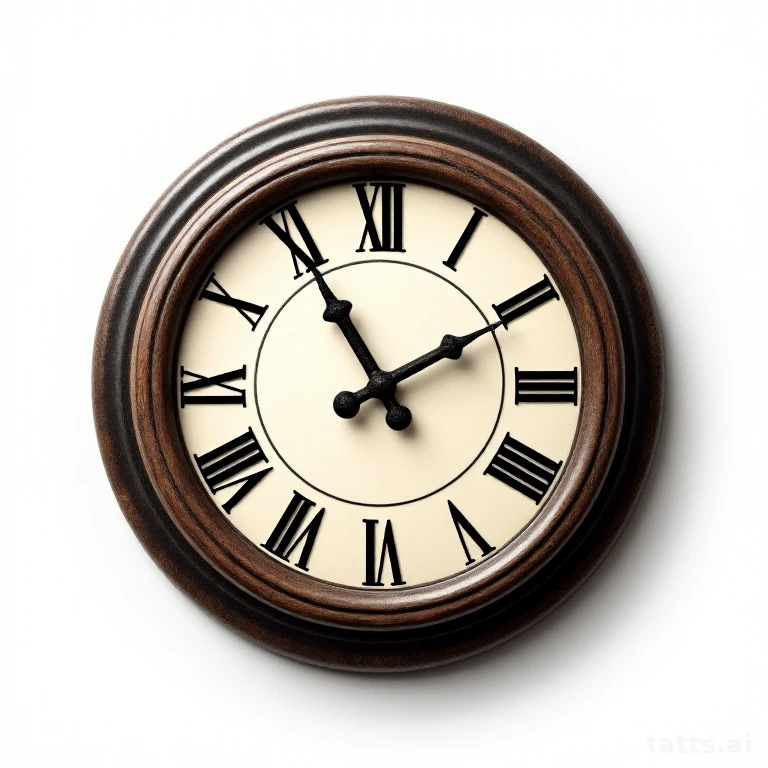
Symbolically, clocks stopped at a specific time are almost always memorial pieces — marking a birth, a death, or the exact moment something ended. That specificity is what makes this subject genuinely personal rather than decorative; discuss with your artist early whether you want the hands frozen at a real time (common for memorials) or left generic (more common in a broader "time is fleeting" theme, often paired with roses, hourglasses, or Roman numerals). If the time matters, say so explicitly in the consultation — it's an easy detail to lose in translation.
Sizing for a realistic clock needs to accommodate the numeral ring plus whatever surrounds it (chains, roses, wings), so 5x7 inches is a workable minimum for a standalone face, with 8+ inches recommended if you're adding a broken chain or floral wrap. Forearm and upper arm are the most popular placements because the cylindrical shape actually helps sell the illusion of a rounded watch face; flat areas like the shoulder blade work too but lose some of that dimensional trick. Pain runs 4-6/10 on forearm and upper arm, rising to 6-7/10 on the inner bicep where skin is thinner. Because this subject relies heavily on crisp white highlights on glass and metal, it's one of the faster-fading realism subjects — expect the glass shine to soften by year 4-5, meaning a touch-up schedule closer to fine-line work than to a black-and-gray animal piece.
Realism Clock designs
Generate your own realism clock design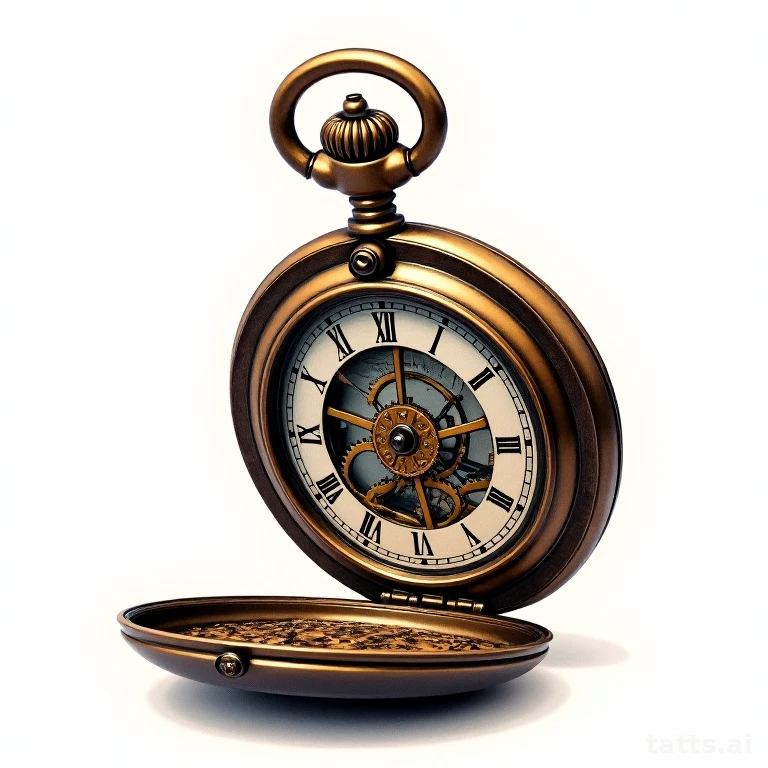
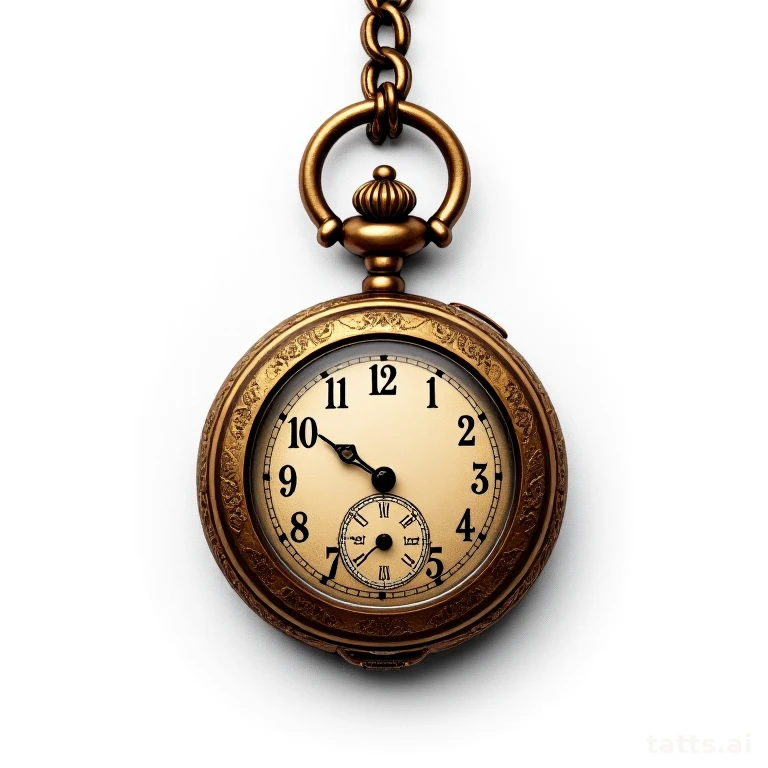
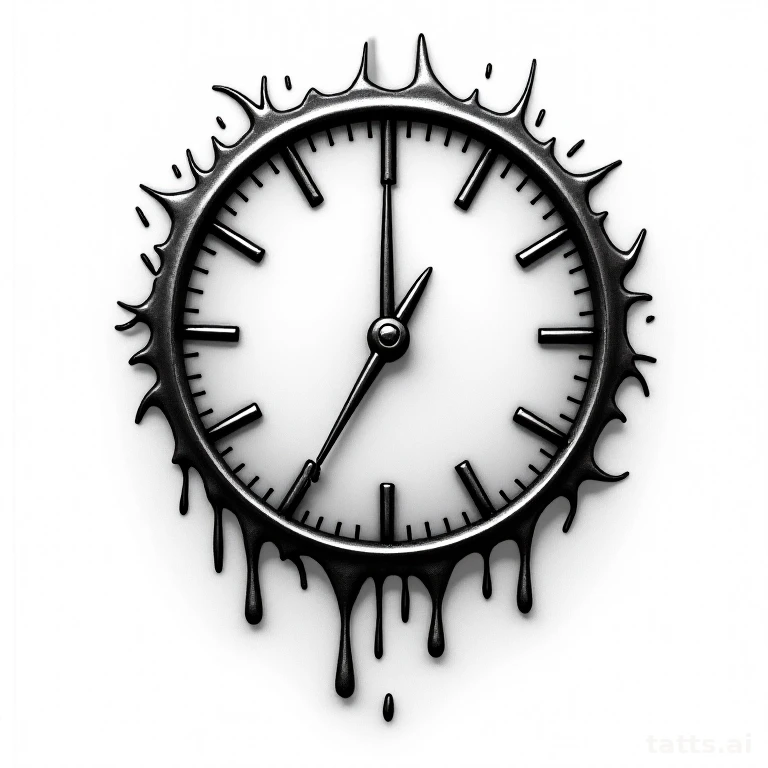
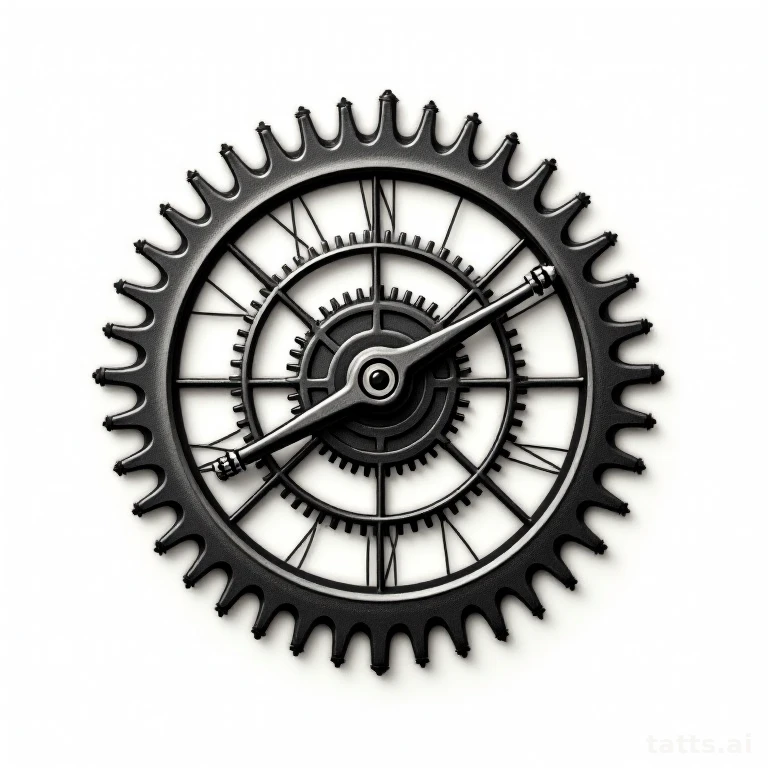
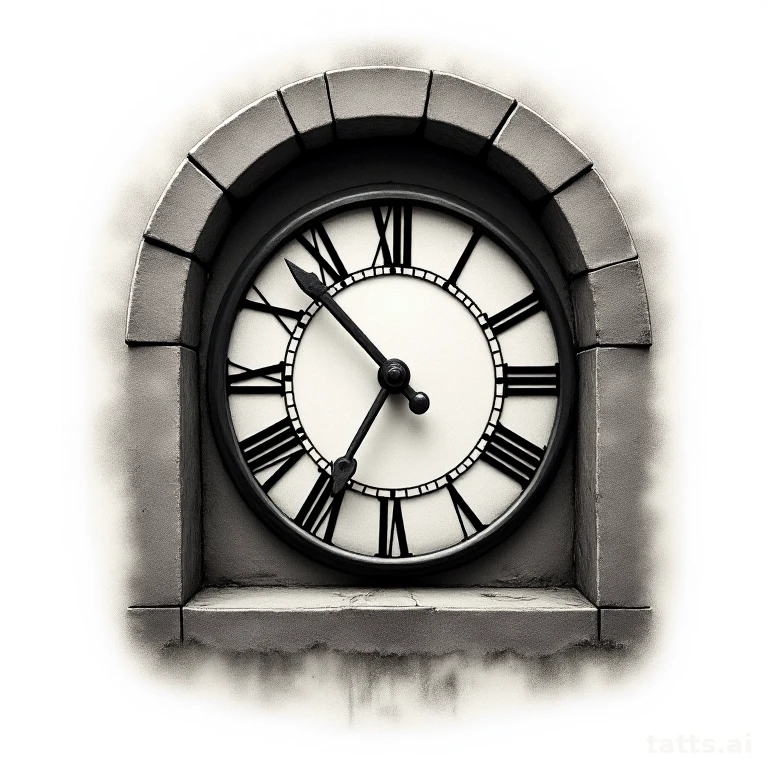
Metal, Glass, and Wood Need Different Shading Techniques
A pocket watch with a wood-grain background, brass casing, and glass face is really three separate rendering problems in one piece. Wood grain needs organic, slightly irregular linework; brass needs warm mid-tone shading with sharp highlight breaks; glass needs almost no shading at all except a thin curved highlight and slight distortion of whatever's beneath it. Artists who default to the same shading technique across all three surfaces produce a clock that looks flat no matter how much detail is packed in. Ask to see a healed pocket watch specifically — this subject shows technical shortcuts more clearly than almost any other.
Pairing Elements and What They Add to Timeline
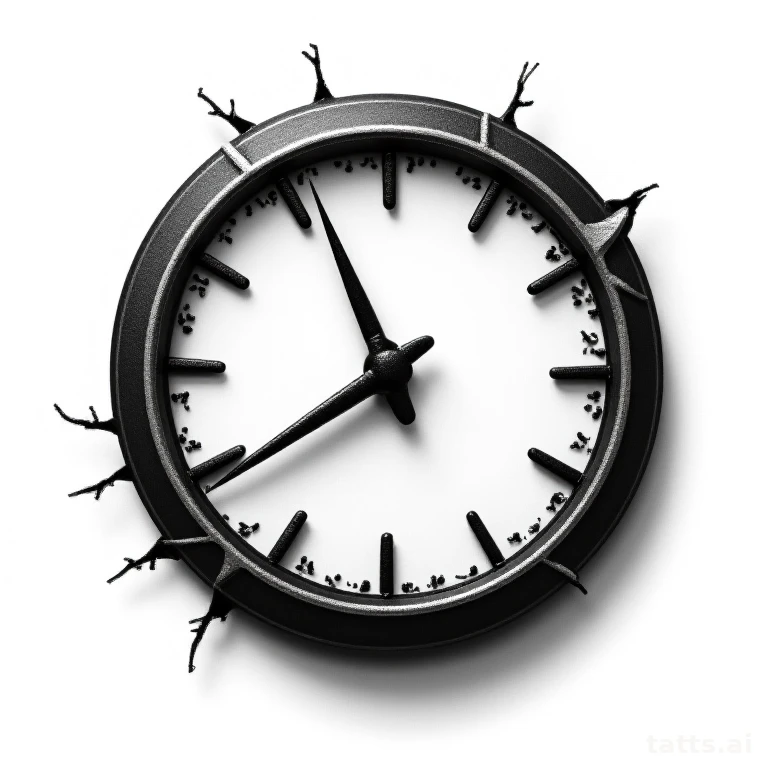
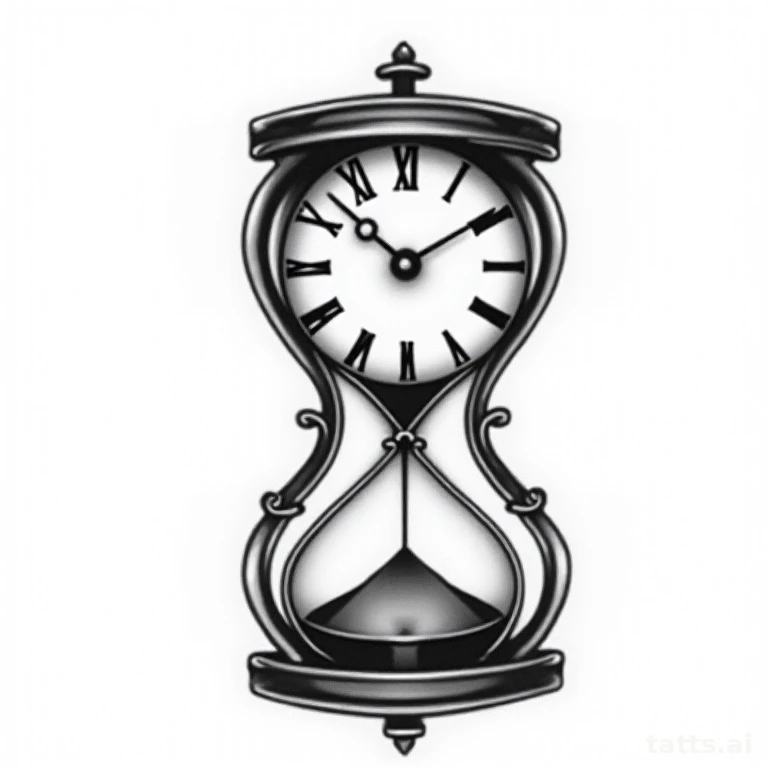
Roses wrapped around the chain, hourglasses beside the face, or a broken glass overlay are common additions that each extend session time by 1-2 hours and each carry their own aging curve — roses hold up well since they're mostly saturated color and bold outline, while broken-glass crack effects rely on fine white linework that's among the first detail to soften. If budget or pain tolerance is a concern, a standalone clock face with strong metal-and-glass rendering is a complete, powerful piece on its own without needing added elements.
Frequently asked
- Should I get the exact time of a memorial event tattooed?
- Yes, if it matters to you — many people get the precise minute a loved one passed or a child was born frozen on the clock face. Confirm the exact time with your artist during the stencil review since it's the one detail that can't be casually adjusted once shaded.
- How long before the glass shine on a clock tattoo fades?
- The bright highlight on the glass face is typically the first thing to soften, often noticeable by year 4-5 even with good skin care. A quick touch-up session to re-crisp that highlight and the darkest gear shadows will restore most of the original depth.
- What placement works best for a pocket watch design?
- Forearm and upper arm are the top choices because the natural curve of the limb helps sell the illusion of a rounded watch case. A flat area like the shoulder blade or chest can still work well but reads slightly more like a flat illustration than a 3D object.
Make it yours
Generate a one-of-one realism clock design free — then try it on your skin.