Tattoo ideas
Dragon Forearm Tattoo Ideas
The forearm forces a specific compositional choice for dragon tattoos that other placements don't: because it's a long, narrow, curved canvas, the dragon's body has to either coil (wrapping the limb in loops) or elongate (running in a serpentine line from wrist to elbow) rather than sprawling out the way it could on a back or chest. This constraint is actually a gift for Japanese-style (Eastern) dragons, whose long, wingless, serpentine bodies were practically designed for exactly this kind of wraparound composition — a Japanese dragon coiling twice around the forearm with clouds filling the gaps is one of the most naturally balanced dragon compositions in tattooing.
Western-style dragons (thicker body, wings, four legs, more compact and coiled-up posture like a heraldic crest) fit less naturally into a long narrow space and usually work better as a single coiled mass on the outer forearm rather than trying to elongate the body — trying to stretch a stocky Western dragon into a thin wraparound strip usually looks cramped. If you specifically want a Western dragon on the forearm, plan for a more compact, circular composition rather than a long serpentine one.
Placement pain on the forearm is comparatively mild for tattooing generally — 3-5/10 on the outer/top forearm where most of the body will sit, rising to 6-7/10 if the design wraps to the thinner-skinned inner forearm. A meaningful dragon piece with scale detail and some background (clouds, fire, or water depending on style) needs 6-9 inches of length to let the body coil convincingly without cramming — a dragon squeezed into 4 inches tends to lose the sense of motion that makes the subject compelling. Session length runs 3-5 hours for a mid-detail black-and-gray piece, more if going full color or adding a wraparound water/cloud background. Bold-outlined dragon work, whether Japanese irezumi style or Western neo-traditional, ages remarkably well on the forearm specifically because this area sees less constant flexing than the inner elbow or wrist — expect 15-20+ years of sharp linework with color needing a refresh sooner, around year 8-10, if done in saturated full color.
Dragon Forearm designs
Generate your own dragon forearm design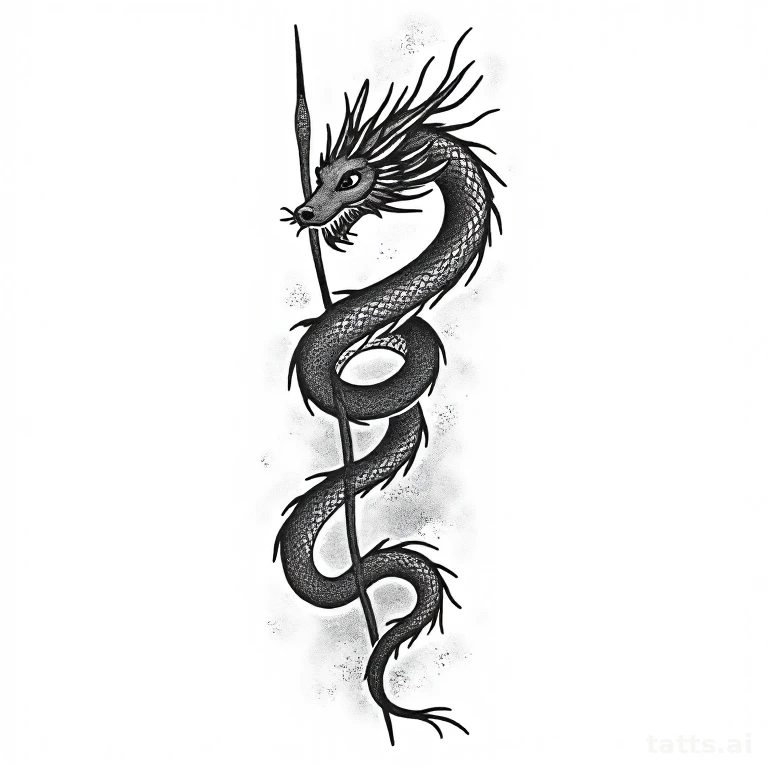
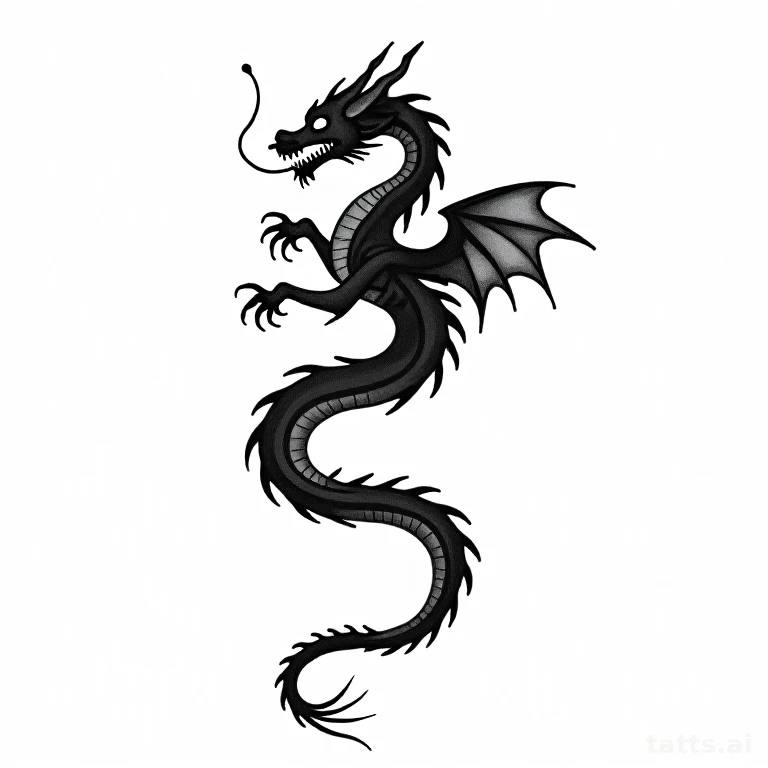
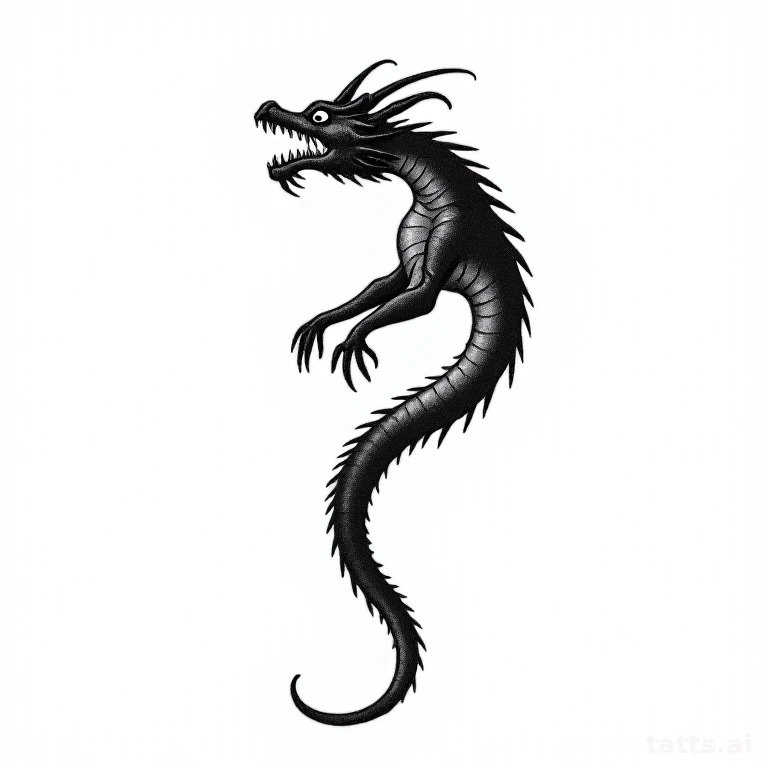
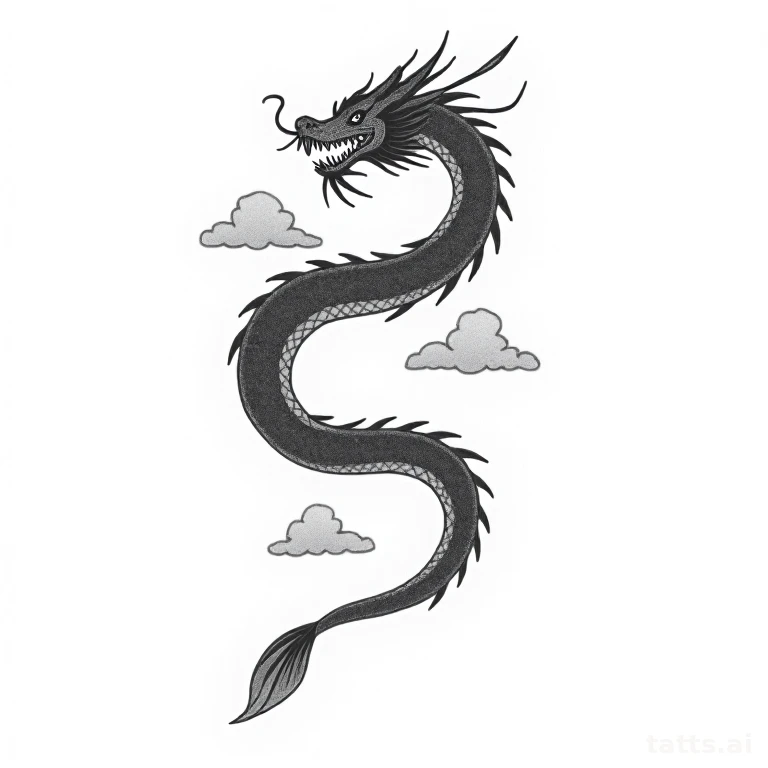
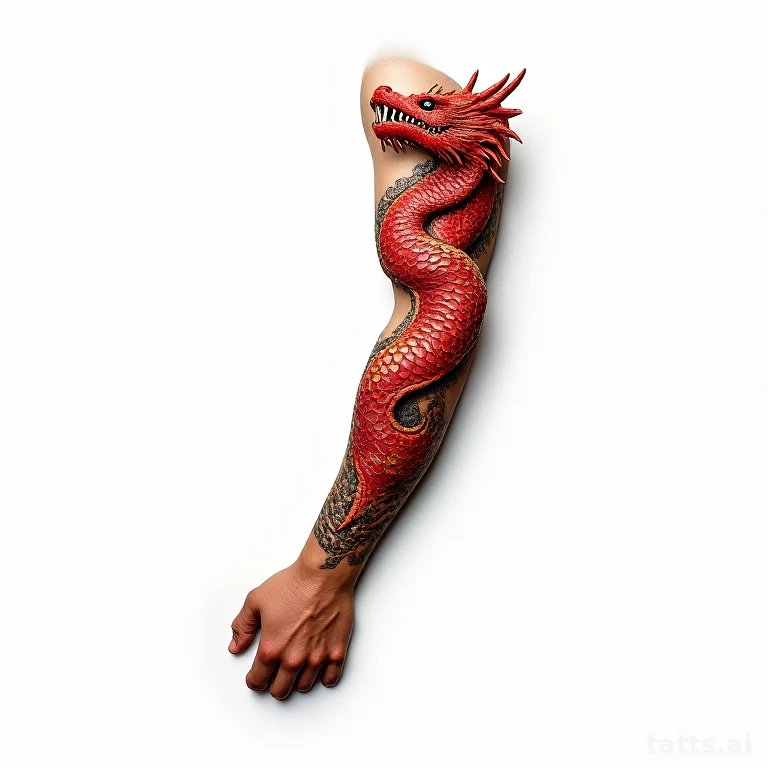
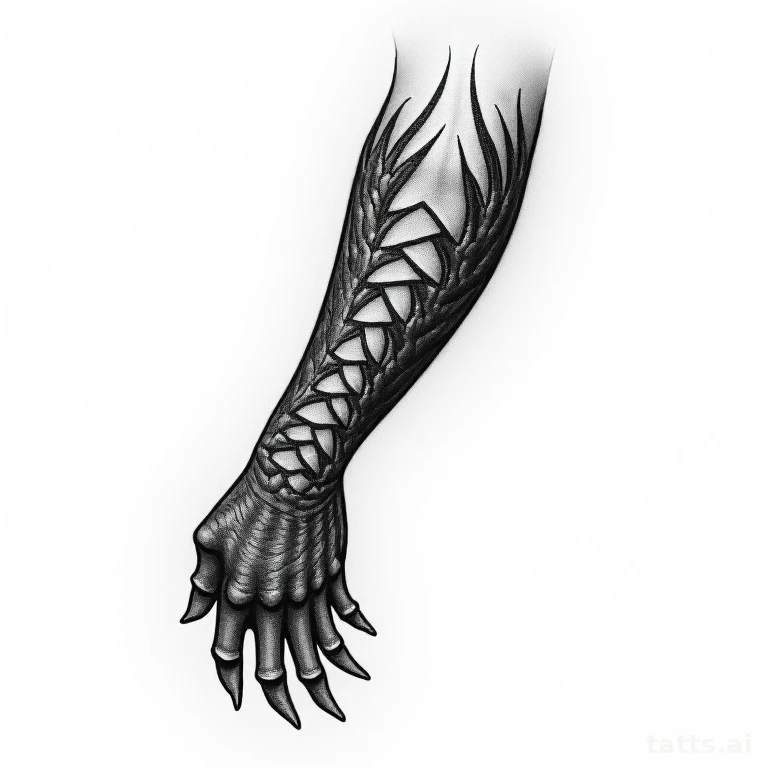
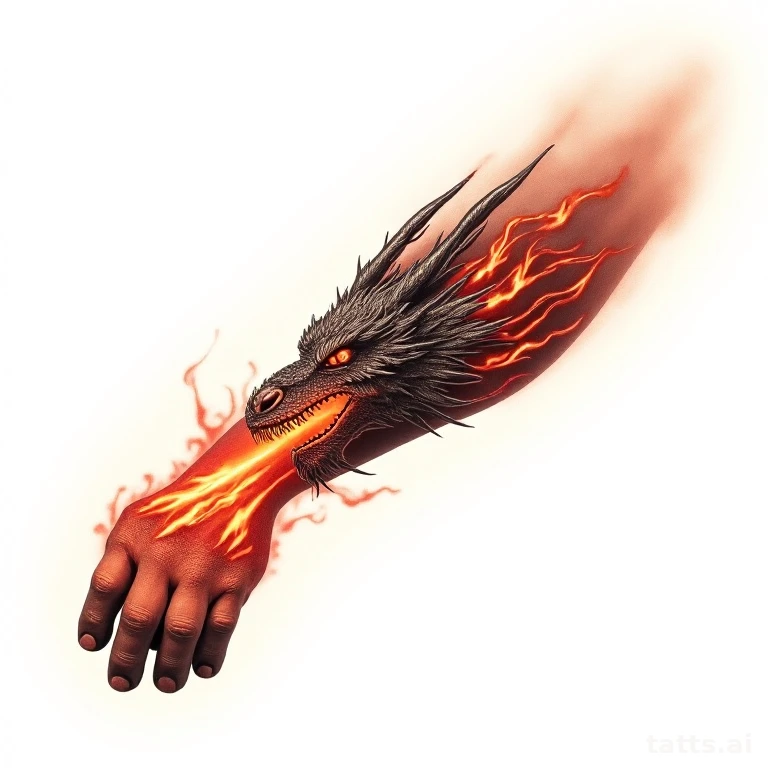
Coiling vs. Elongating the Body
Before committing to a design, decide whether you want the dragon to appear to wrap physically around your arm (so it looks different depending on the angle you view it from) or to run as a flatter, single-view composition up one side. Wraparound designs are more dynamic and interesting from multiple angles but require more planning and usually more session time since the artist needs to work around the whole circumference of the limb, sometimes across two sittings to let the first side heal before completing the wrap.
Matching Dragon Style to Forearm Shape
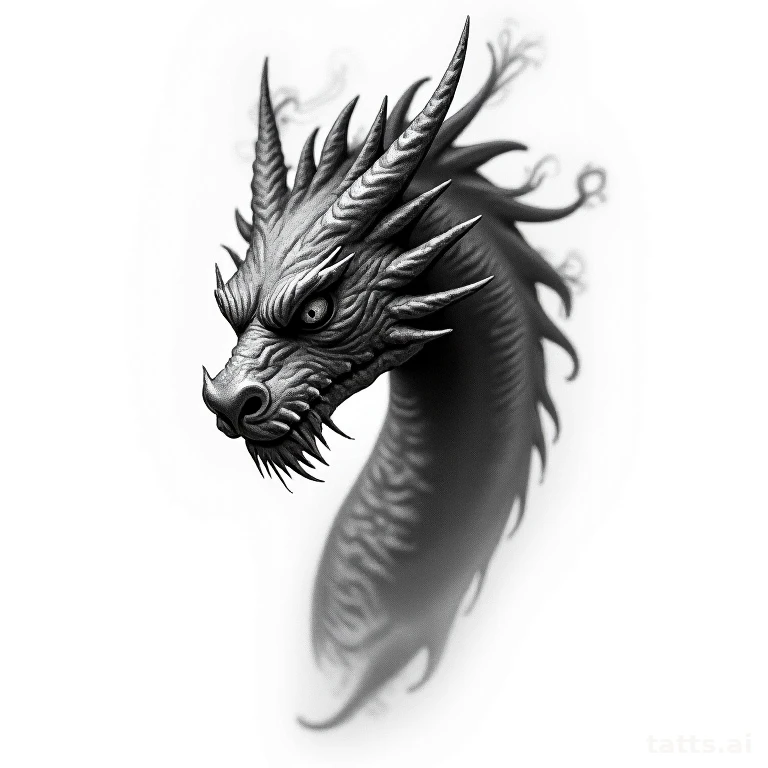
A forearm tapers from a wider elbow end to a narrower wrist end, and a good composition uses that taper deliberately — placing the dragon's head (the most detailed part) near the wider elbow or mid-forearm where there's more room for facial detail, and letting the tail taper naturally toward the wrist where the limb itself narrows. Artists who ignore this natural taper sometimes end up cramming detailed head or claw work into the narrowest part of the arm, where it reads as cluttered.
Frequently asked
- Should I get a Japanese or Western style dragon on my forearm?
- Japanese-style dragons suit the forearm's long, narrow shape better because their serpentine body naturally coils around a limb. Western dragons, being stockier with wings, work fine too but usually look best as a single compact coiled composition rather than an elongated wraparound design.
- How much of the forearm does a dragon tattoo need to cover?
- A meaningful dragon piece with real detail needs at least 6 inches of length to avoid looking cramped, and a full wrist-to-elbow wraparound design can use the entire forearm. Smaller versions under 4 inches tend to lose the coiling motion that makes dragons visually compelling.
- Does a forearm dragon hurt more than one on the shoulder or back?
- Generally less — the outer forearm is one of the more tolerable placements in tattooing, typically 3-5/10, though it climbs toward 6-7/10 if the design extends onto the thinner-skinned inner forearm near the elbow crease or wrist. Shoulder and back work over bone can run noticeably higher for comparable detail.
Make it yours
Generate a one-of-one dragon forearm design free — then try it on your skin.