Tattoo ideas
Dragon Tattoo Ideas
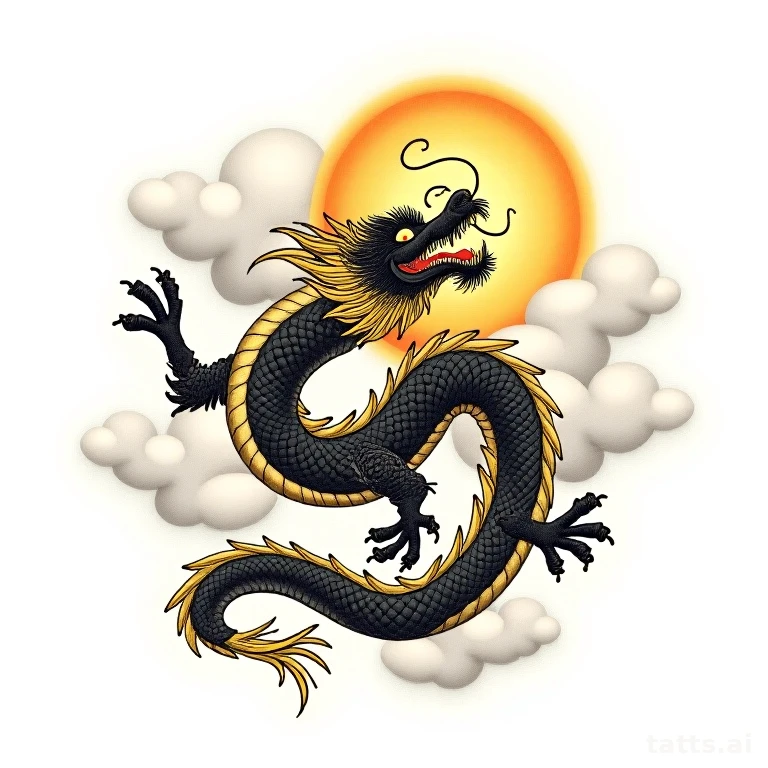
A dragon means something different depending on which tradition drew it. In Japanese irezumi, the ryu is a benevolent water spirit that brings rain and guards against misfortune, almost always shown chasing a flaming pearl of wisdom through clouds or waves. In Western tattoo lineage the dragon descends from medieval bestiaries and pulp fantasy art, a fire-breathing hoarder of treasure that reads more as raw power and conquest than protection. Chinese dragon imagery splits the difference, tying the creature to imperial authority, good fortune, and the lunar new year. Knowing which lineage you're pulling from changes everything about the linework, so it's worth deciding before you sit down with an artist.
Because a dragon's body is long and sinuous, it's one of the few subjects that actually wants a large canvas. A half sleeve or full back lets the coils, whiskers, and claws breathe; cramming a serpentine dragon onto a 3-inch forearm patch usually collapses the detail into mud within a few years. If you're set on something small, a dragon head in profile or a single clawed foot wrapped around a wrist reads cleaner than trying to shrink the whole body. Ribs and the outside of the thigh are popular for a coiling dragon because the curve of the body follows the curve of the muscle.
Pain runs high for this subject simply because dragon pieces tend to be large and often cross into tender territory: ribs sit around 8/10, sternum pushes toward 8-9/10, and the inside of the bicep near the armpit is a consistent 7/10 even though the outer arm is closer to 4/10. A traditional Japanese dragon in bold black outline with flat color ages extremely well, often holding sharp lines for 20+ years with only minor touch-ups to the finer scale detailing. A realism-style dragon with heavy gradient shading and fine scale texture will soften noticeably faster, usually needing a refresh around the 8-10 year mark as the smallest lines spread under skin.
Dragon designs
Generate your own dragon design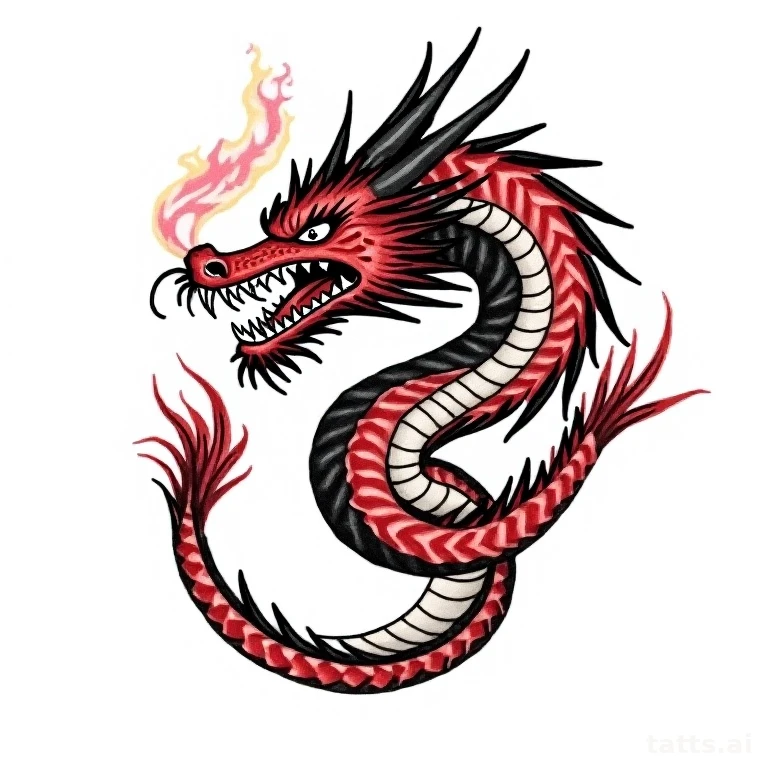
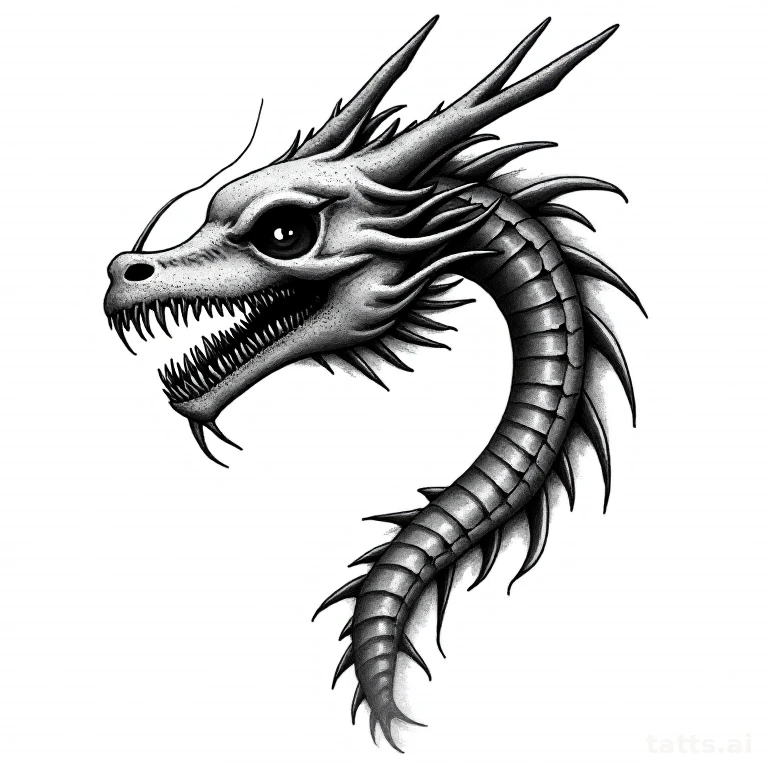
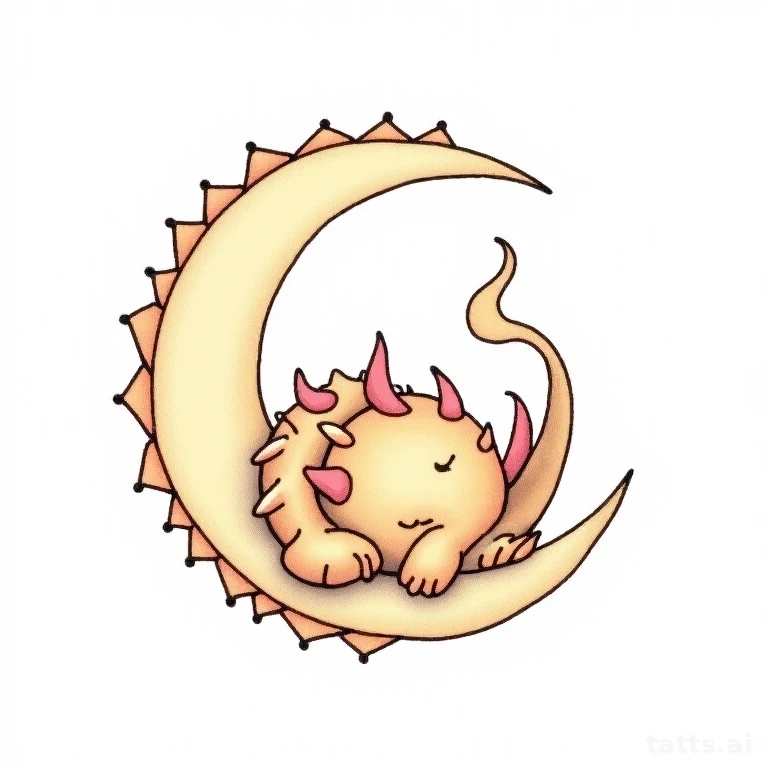
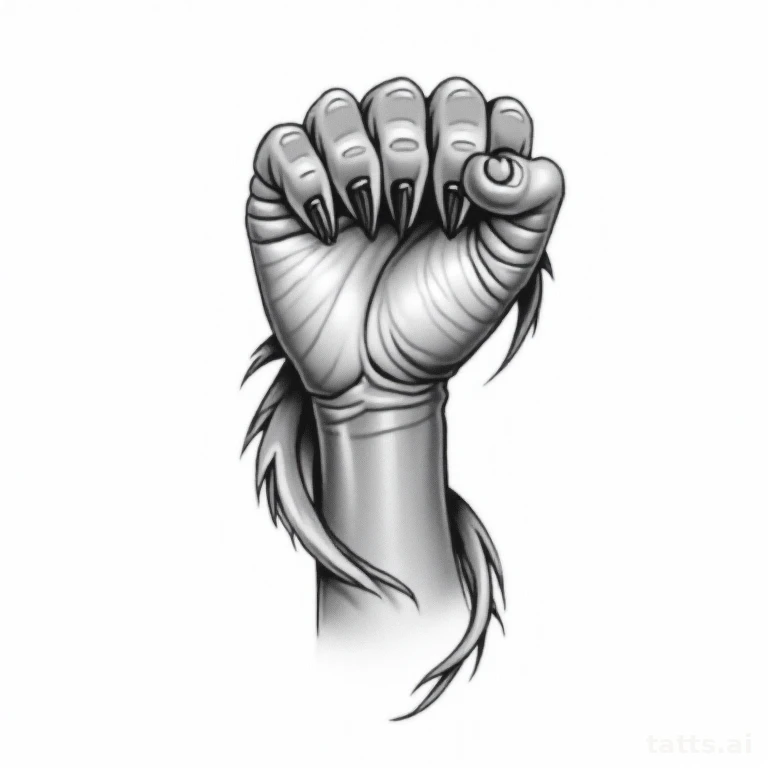
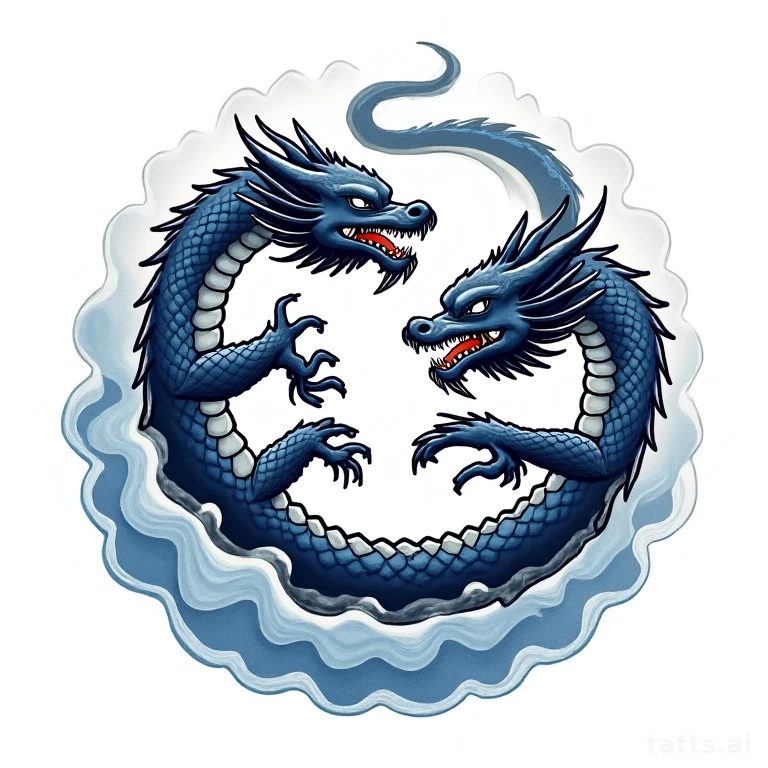
Japanese vs Western Dragon Symbolism
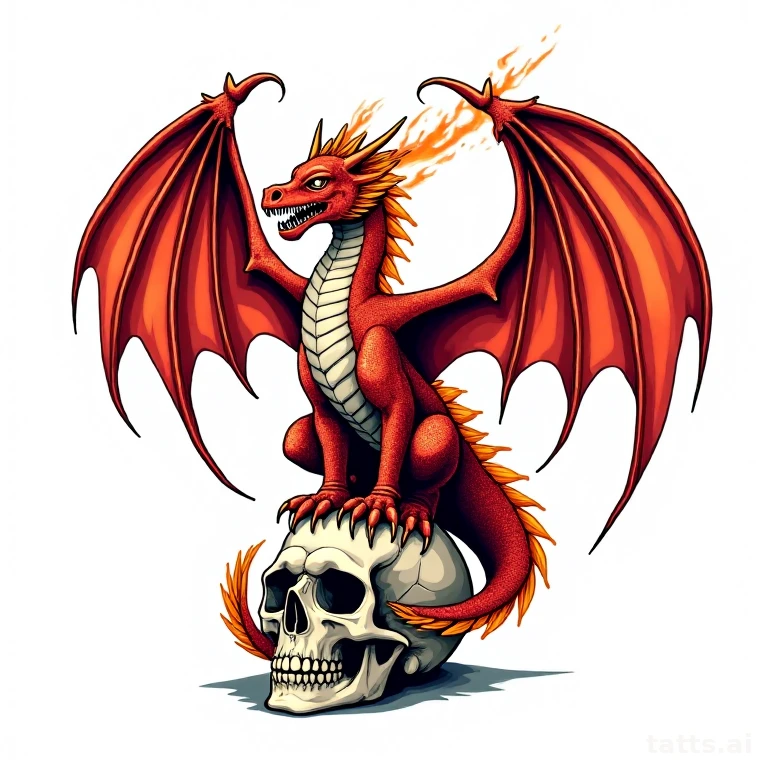
The Japanese ryu has no wings and a long, eel-like body with three claws (versus five on Chinese imperial dragons), and it's paired symbolically with water, weather, and wisdom rather than destruction. Artists often compose it fighting or guarding against a tiger, koi, or phoenix to build a yin-yang narrative across a sleeve. Western dragons, by contrast, usually appear solo, wings spread, breathing fire or gripping a sword or skull, and they lean on the St. George legend of dragon as obstacle to be slain — meaning the wearer often frames the tattoo as 'the thing I overcame' rather than 'the guardian who protects me.' Picking a lineage up front keeps the artist from blending incompatible visual grammars into a muddled piece.
Composition and Negative Space
Dragon pieces live or die on how the artist uses negative space around the coils. Traditional Japanese work fills the background with clouds, wind bars, or waves so the dragon never floats alone on skin — leaving that background out is the single most common reason a dragon tattoo looks unfinished five years later. For a smaller or single-session piece, a dragon wrapped tightly around a forearm or calf with minimal background can still work if the pose is dynamic (mid-turn, claws extended) rather than a static side profile, which tends to read flat without supporting elements.
Frequently asked
- How big does a dragon tattoo need to be to look good?
- A detailed dragon needs at least a half sleeve or full back panel to hold its coils, whiskers, and scale texture without crowding. A simplified dragon head or single clawed limb can work at 4-5 inches, but a full serpentine body under 6 inches usually loses definition as ink settles over the first few years.
- Does a Japanese dragon tattoo need a full background?
- Traditionally yes — clouds, waves, or wind bars are part of the composition, not decoration. Leaving them out is fine for a modern minimalist take, but a classic irezumi dragon without any background often reads as unfinished to anyone familiar with the style.
- How long before a dragon tattoo needs a touch-up?
- Bold-outline traditional dragons hold up 15-20+ years with minimal fading since there's little fine detail to blur. Fine-line or realism dragons with heavy gradient shading typically need a touch-up around 8-10 years as the finest scale lines and gradient transitions soften, spread slightly under the skin, and lose their original crisp edges.
Make it yours
Generate a one-of-one dragon design free — then try it on your skin.