Tattoo ideas
Cross Tattoo Ideas
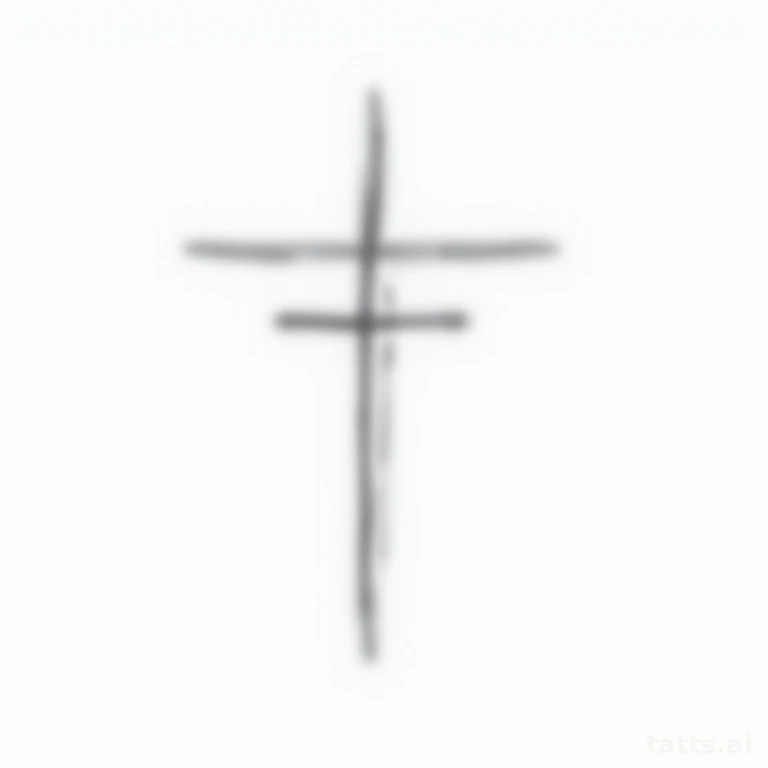
The cross is one of the oldest continuously tattooed symbols and still one of the most personal, because the meaning shifts heavily based on who's wearing it. For many clients it's a direct expression of Christian faith. For others, especially in memorial pieces, it marks a loss without necessarily being a religious statement — a cross with a name, birth date, and passing date is one of the most common memorial tattoo formats in the U.S. regardless of the wearer's own beliefs. A Celtic cross (the ringed cross with interlocking knotwork) carries a separate cultural thread tied to Irish and Scottish heritage rather than Christian iconography specifically, and it's frequently chosen for ancestry or family-heritage reasons. A plain, unadorned cross in simple linework, by contrast, is often chosen purely for its visual minimalism rather than any explicit religious or cultural statement — worth clarifying with your artist which read you're going for, since the amount of ornamentation signals intent.
Because a basic cross is just two intersecting lines, it's one of the most placement-flexible subjects in tattooing. A small 1-2 inch cross works cleanly on the wrist, finger, or behind the ear. A Celtic cross with full knotwork detail needs more room to keep the interlocking pattern legible — 3-4 inches minimum, with the forearm or upper arm being the standard choice. Memorial crosses that include lettering (names, dates) need enough width for the text to stay readable long-term, since cramped script is one of the most common regret complaints in memorial tattoos — budget at least 4 inches of width if you're adding a full name and dates rather than initials.
Pain is low for most common cross placements: wrist and forearm sit 3-4/10. The back of the neck, popular for small crosses, runs a bit higher at 5-6/10 due to thinner skin near the spine. Fingers, also common for tiny crosses, are surprisingly painful at 7-8/10 because of the low fat padding over bone and joints, and finger tattoos fade fastest of almost anywhere on the body due to constant hand-washing and friction — expect a touch-up need within 2-3 years there specifically. A bold blackwork or traditional cross elsewhere on the body, by contrast, is one of the most durable tattoo designs possible since it's fundamentally just clean geometric lines with no fine detail to lose — these commonly stay sharp 25+ years with zero touch-up.
Cross designs
Generate your own cross design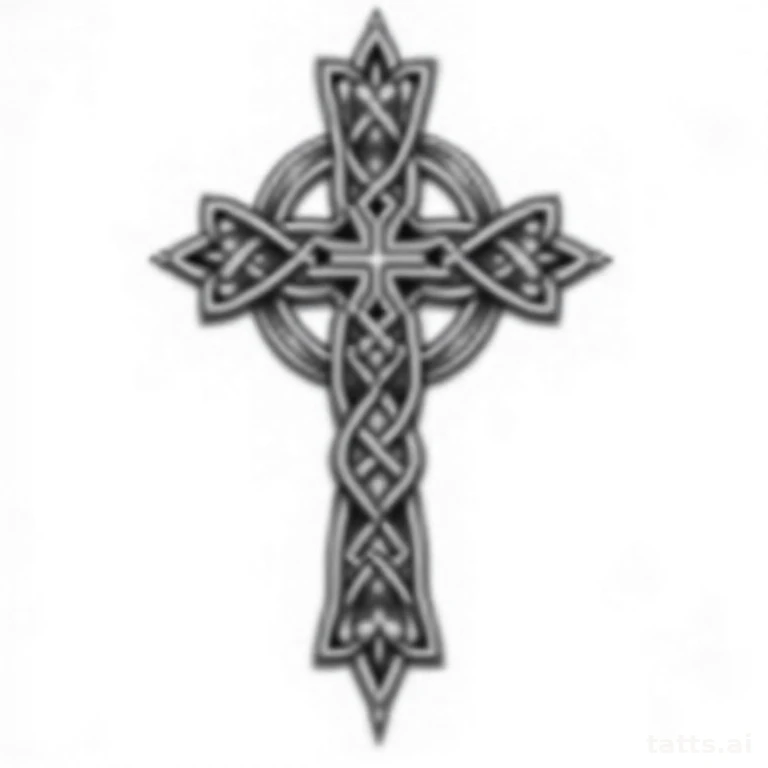
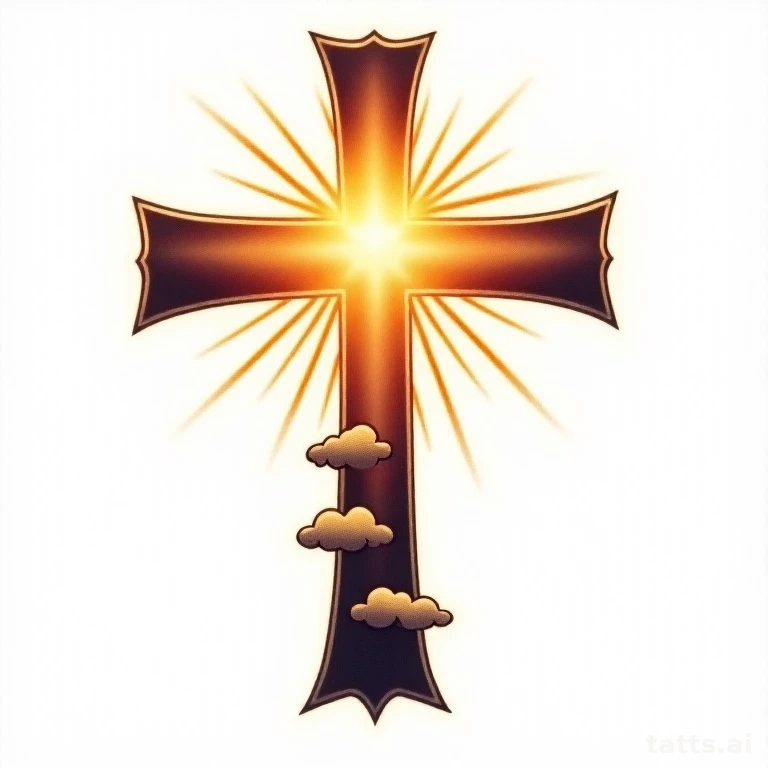
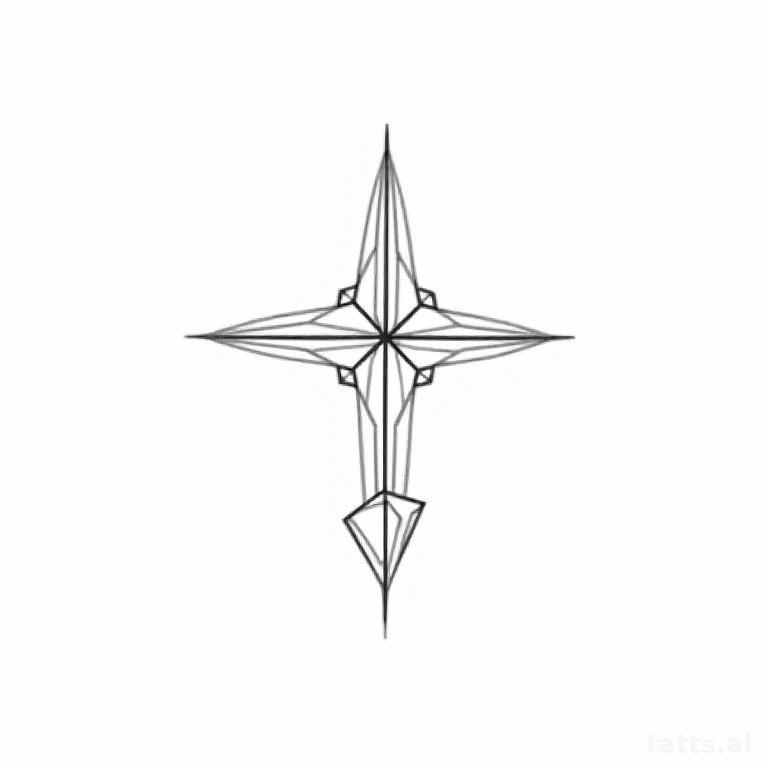
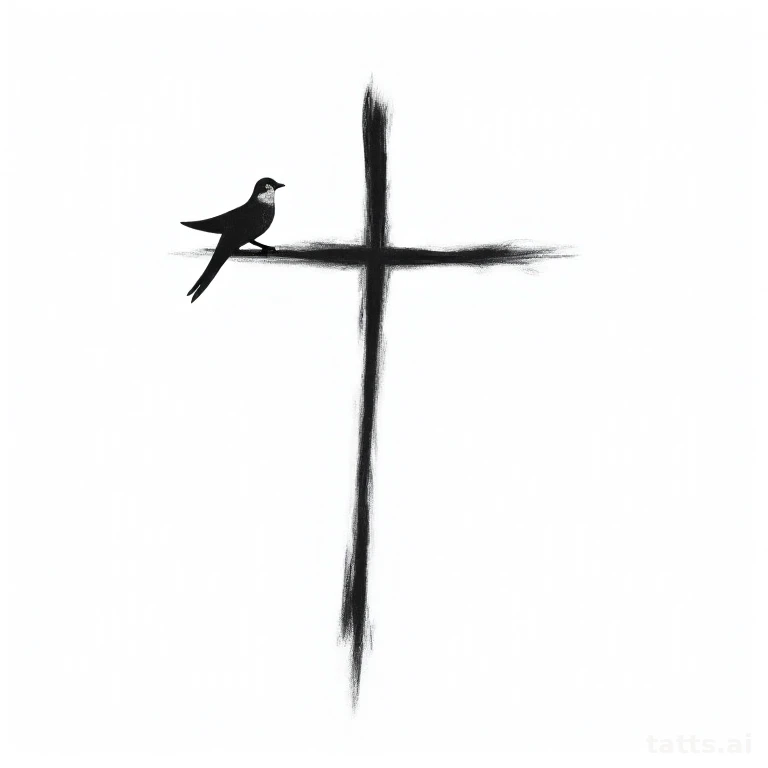
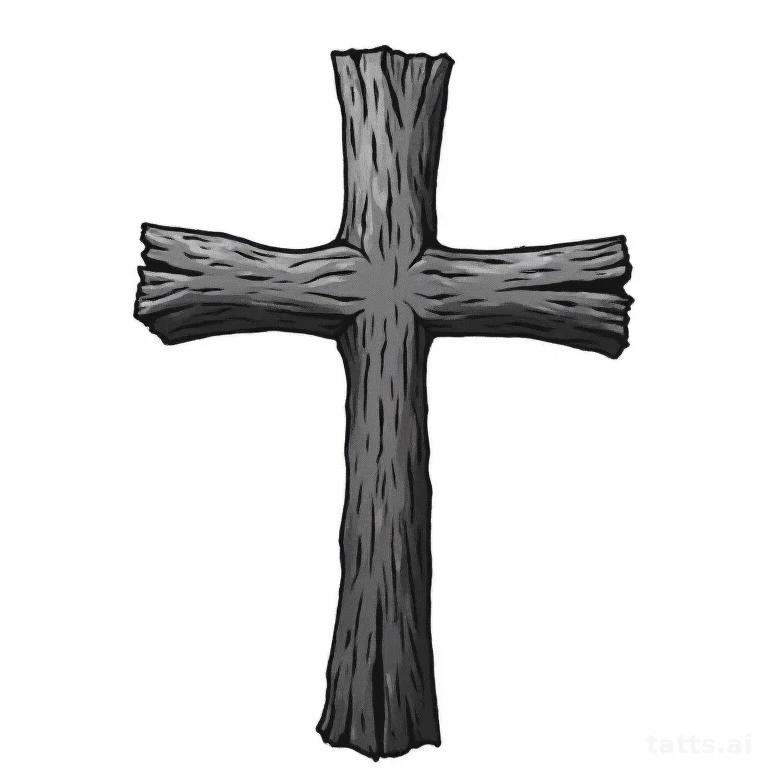
Celtic Cross vs Simple Cross vs Memorial Cross
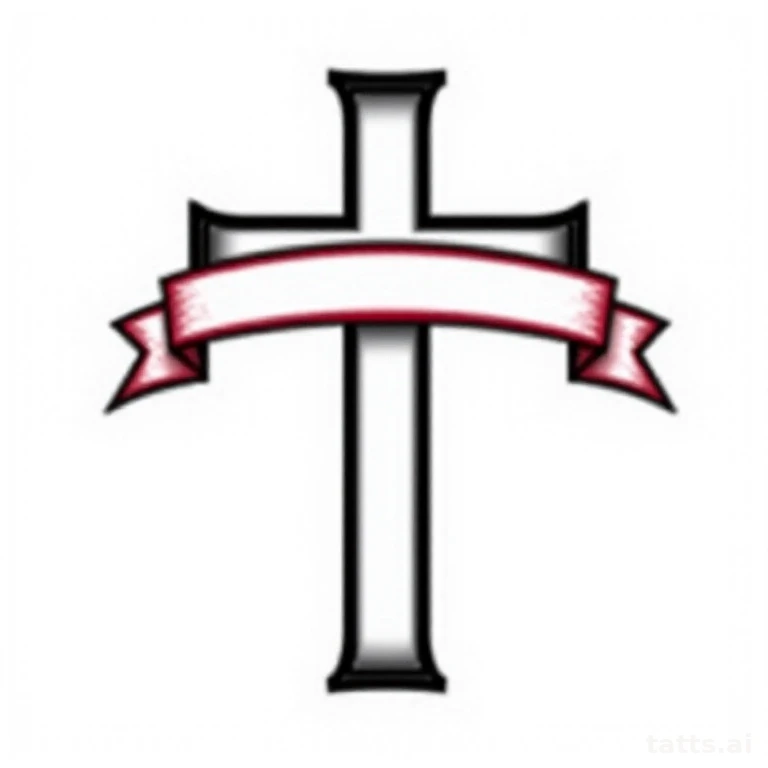
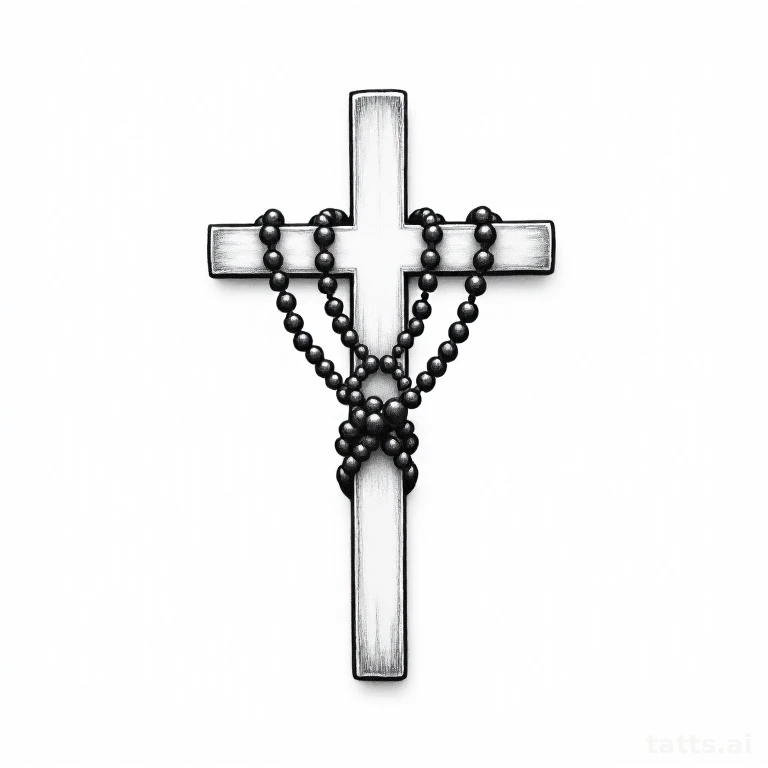
A Celtic cross's ring and knotwork make it visually distinct from a religious cross and it's typically chosen for ancestry, heritage, or general Celtic/Irish cultural connection rather than faith specifically — though the two meanings do overlap for some wearers. A memorial cross typically stays visually simple (so the added lettering stays the focal point) and is often paired with a ribbon, dove, or the person's initials rather than heavy ornamentation. A plain minimalist cross with no additions is the most flexible option and the one least tied to a specific interpretation, which is exactly why some clients choose it — it lets the meaning stay private.
Lettering and Legibility in Memorial Pieces
If you're adding a name or dates to a cross, script size is the detail most likely to cause regret — cramped, overly ornate script that looks elegant in a mockup can blur into illegibility within a few years, especially at small scale. Ask your artist to size the lettering at a minimum height they'd consider durable (usually at least 0.25-0.3 inches per character for cursive script) rather than shrinking text to fit a size you've already decided on. It's better to size the whole piece up than to compress the words.
Frequently asked
- What's the difference between a Celtic cross and a regular cross tattoo?
- A Celtic cross has a ring intersecting the crossbar and typically includes interlocking knotwork, tied culturally to Irish and Scottish heritage rather than exclusively Christian symbolism. A plain cross is simpler and more universally read as either faith-based or purely aesthetic, depending on context.
- Why do finger cross tattoos fade so fast?
- Fingers see constant friction from hand-washing, gripping, and sun exposure, and there's less fat padding to hold ink in place compared to other areas. Expect a small finger cross to need a touch-up within 2-3 years, versus 15-25+ years for the same design on the forearm or upper arm.
- How much space does a memorial cross with a name need?
- Budget at least 4 inches of width if you're including a full name and dates, so the script stays legible long-term. Cramped lettering is one of the most common sources of regret in memorial tattoos as fine script details blur over the first few years.
Make it yours
Generate a one-of-one cross design free — then try it on your skin.