Tattoo ideas
Skull Back Tattoo Ideas
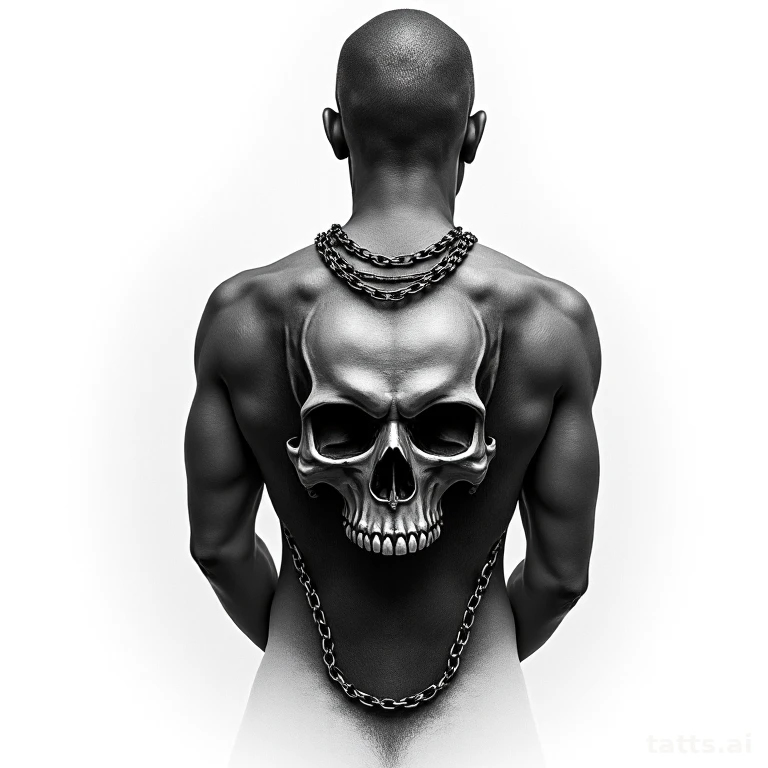
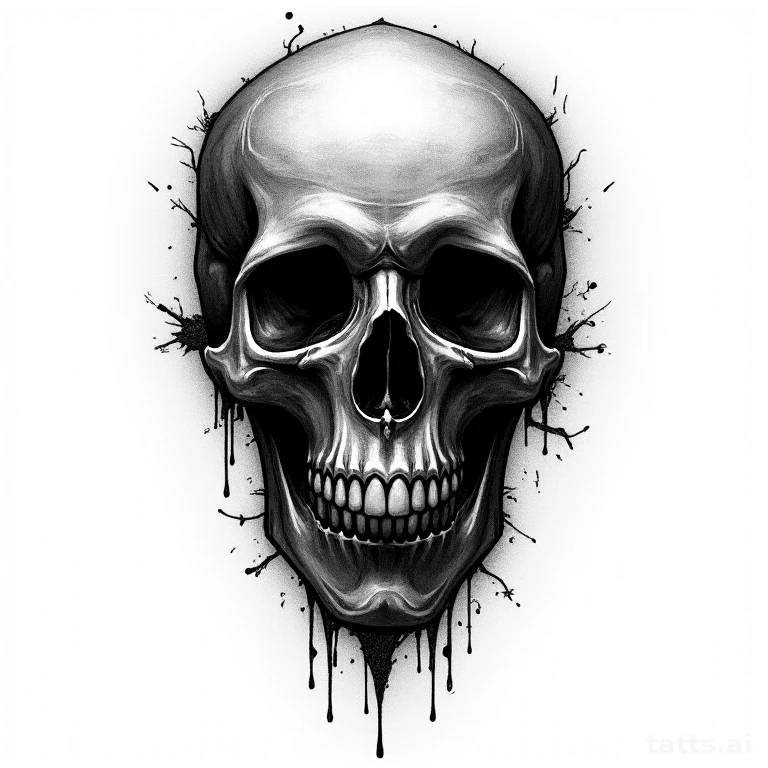
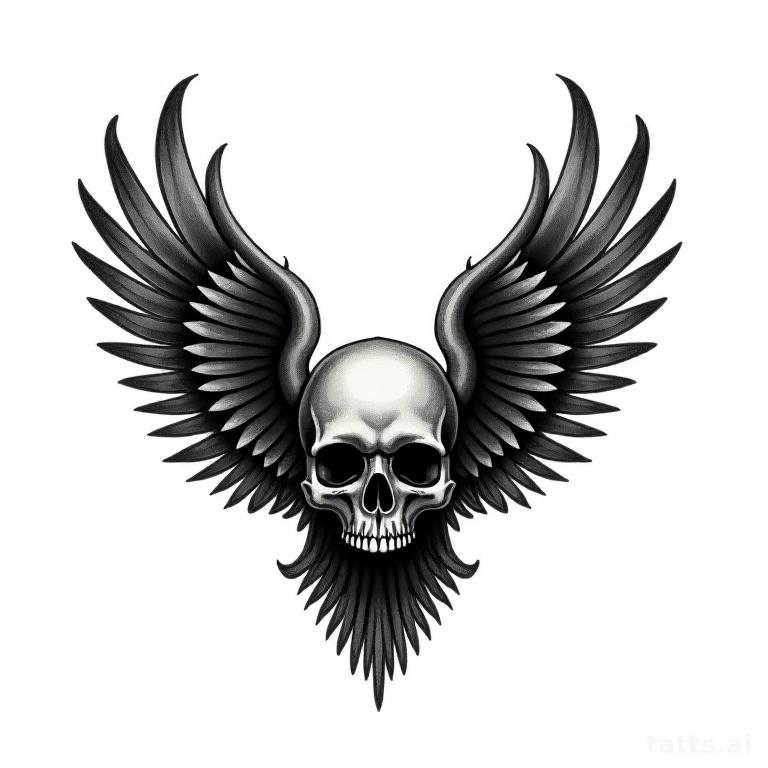
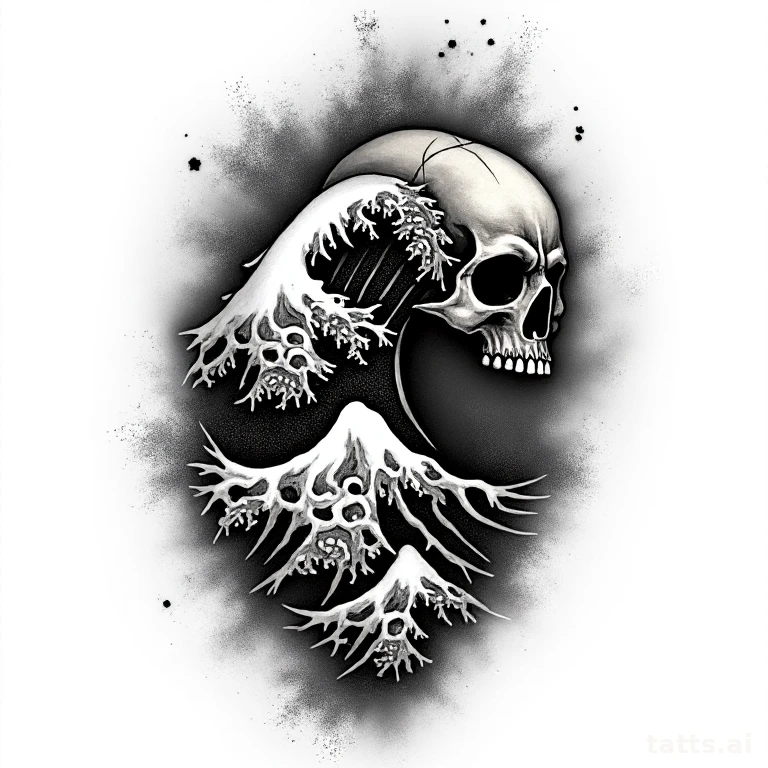
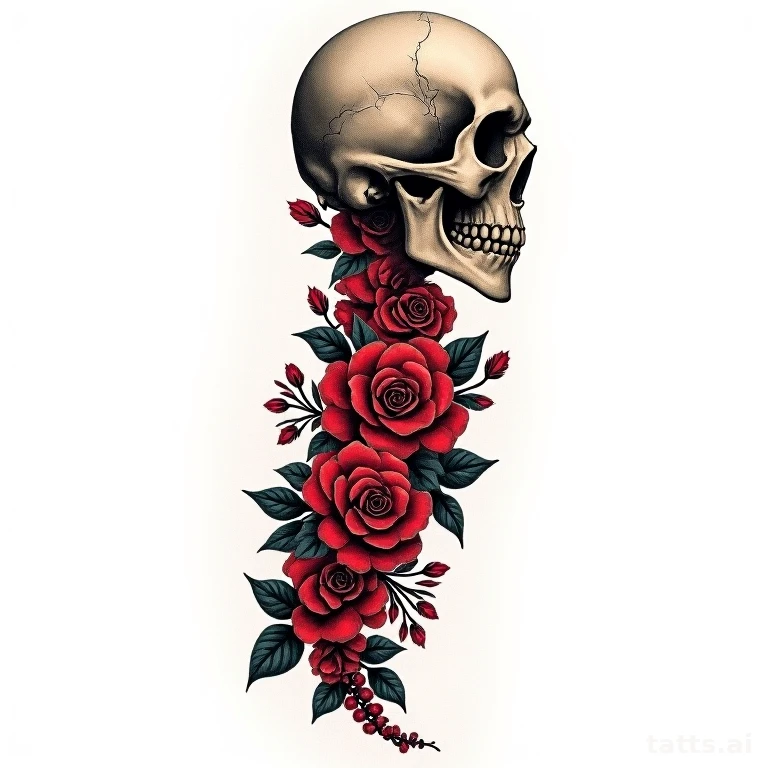
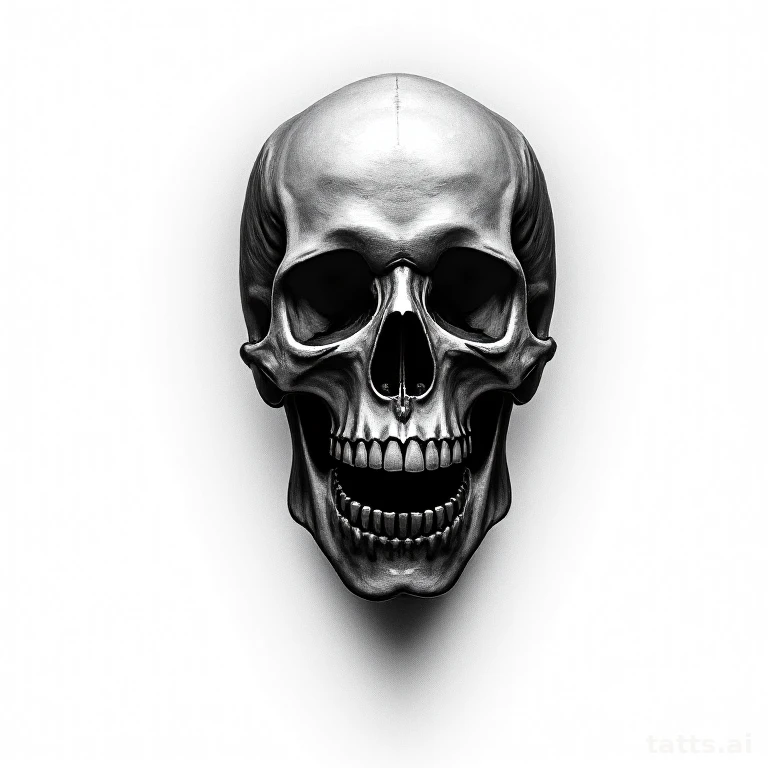
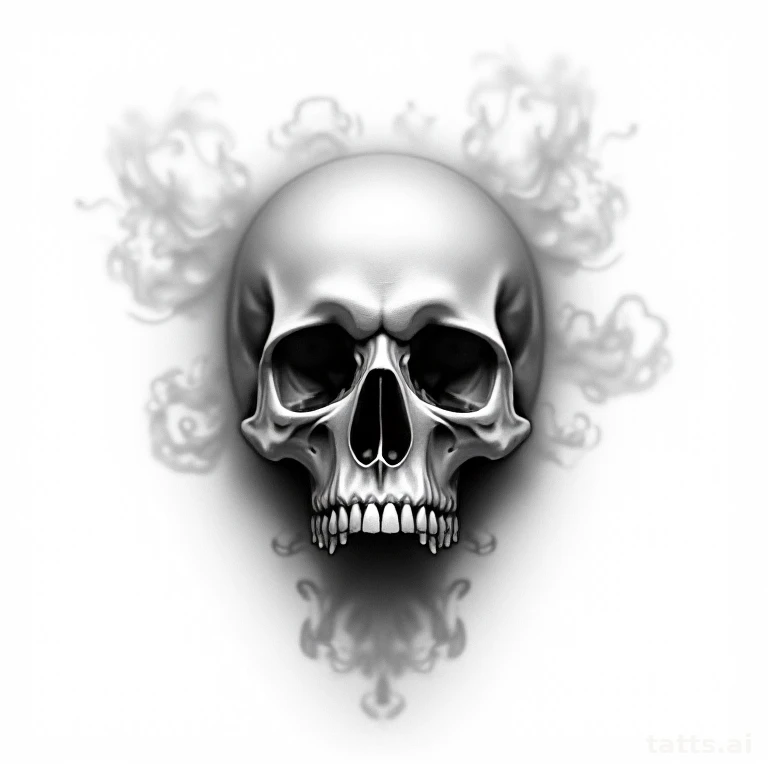
The back is the largest continuous canvas the body offers, which changes what a skull tattoo can be here compared to almost anywhere else — instead of a standalone icon, a back-placed skull is usually the centerpiece of a bigger scene: surrounded by roses, smoke, flames, chains, or an ornate frame that would feel cramped on a forearm or calf. This is where skull tattoos get genuinely ambitious, and it's worth planning the full composition upfront even if you intend to tattoo it in stages, since a back piece done piecemeal without an overall plan tends to end up visually disjointed.
The back also allows a wider range of stylistic ambition than most placements. Full-color neo-traditional, dense blackwork, hyperrealism, and Japanese-style skull-adjacent imagery (skulls aren't traditional Japanese subjects on their own, but Western skull imagery blended with irezumi backgrounds like waves or clouds has become a popular hybrid) all suit the back well because there's enough space for the technical demands of any of those styles to fully resolve. A tightly cramped skull design that would look busy at 5 inches on a forearm can breathe at 12+ inches across the upper or full back.
Pain varies significantly by exact back zone, which matters a lot for a piece this size. The upper back and shoulder blades are relatively tolerable, 4-6/10, since there's more muscle padding. The spine itself is one of the worst zones in tattooing, 8-9/10, due to minimal padding directly over vertebrae — designs are usually built to flow around the spine rather than directly over it for this reason. The lower back and rib-adjacent side areas climb back up to 7-8/10. A large-scale skull back piece is realistically a multi-session project: 3-6 sessions of 3-5 hours each is typical for a detailed 10+ inch composition, spaced 3-4 weeks apart. In terms of longevity, back skin holds ink exceptionally well since it sees less UV exposure and less repetitive flexing than limbs — bold linework and saturated color here commonly holds sharp 20-25+ years, among the best-aging placements on the body.
Skull Back designs
Generate your own skull back design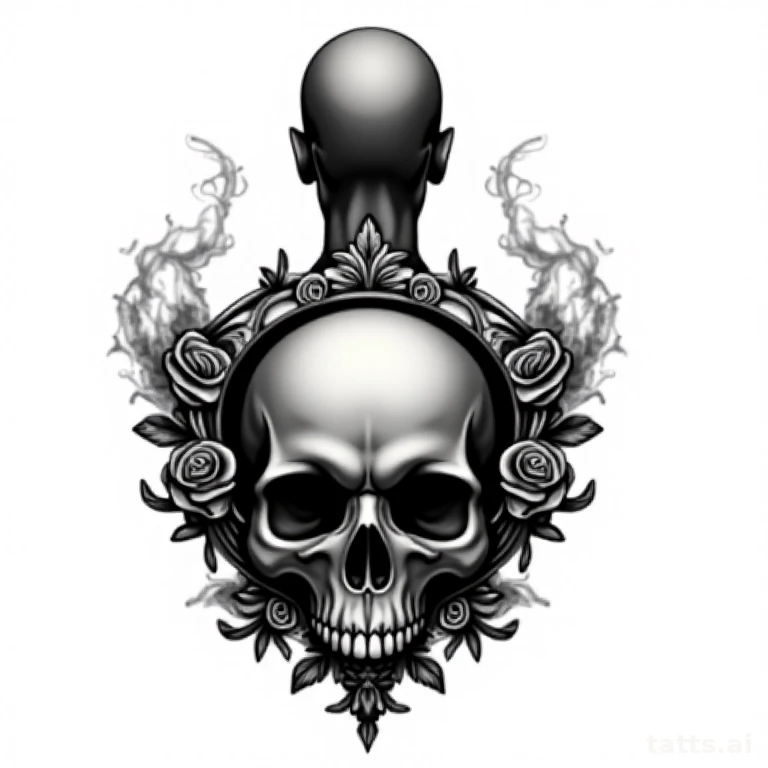
Planning the Full Composition Before Session One
Because the back is large enough to hold a genuinely elaborate scene, it's worth sitting down with your artist to sketch the complete composition — skull placement, surrounding elements, and how negative space will be used — before any tattooing starts, even if the piece will take a year or more to complete across multiple sessions. Starting with just the skull and figuring out the rest later is how back pieces end up looking like a collage of unrelated ideas rather than one cohesive artwork.
Working Around the Spine
A knowledgeable artist designs back pieces to flow around the spine rather than placing detailed work directly on it, both because the pain there is genuinely severe for most people and because the spine's narrow ridge doesn't hold detailed linework as cleanly as the flatter muscle on either side. If your composition includes elements meant to run down the center of the back (a banner, a chain, smoke), expect your artist to route it slightly off-center or use it as a dividing line between two symmetrical halves rather than tattooing straight down the spine itself.
Frequently asked
- How big should a back skull tattoo be to look right?
- This is one of the few placements where going bigger genuinely helps the composition — a detailed skull with surrounding elements (roses, smoke, chains) typically wants 10+ inches of space to let everything breathe. Cramming a full scene into a small back area tends to look cluttered compared to the same composition given room.
- Does a full back skull piece need to be done in one sitting?
- No, and it usually shouldn't be — most detailed back pieces of this scale are done across 3-6 sessions over several months. This also gives you time to see how the piece is progressing and make small adjustments to later sections based on how the earlier ones healed.
- Which part of the back hurts the least for a skull tattoo?
- The upper back and shoulder blade areas are generally the most tolerable, around 4-6/10, thanks to more muscle padding. The spine itself and the lower back near the kidneys are the most sensitive zones, so a well-planned composition routes detailed work around those areas rather than directly over them.
Make it yours
Generate a one-of-one skull back design free — then try it on your skin.