Tattoo ideas
Phoenix Back Tattoo Ideas
The back is the natural home for a full wings-spread phoenix because the composition's proportions genuinely match the canvas — a phoenix rising with wings extended is wider than it is tall, and the back's broad, relatively flat expanse (especially across the upper back and shoulder blades) lets both wingtips extend outward without running out of room the way they would on a narrower placement like the chest or thigh. This is the single most common large-scale phoenix composition in tattooing for exactly that reason.
Rebirth symbolism is the near-universal read for a phoenix, but back placement specifically tends to carry an added layer: because it's not visible to the wearer without a mirror, a back phoenix is often described by clients as something they carry rather than display — a private reminder of having survived and rebuilt rather than a piece meant primarily for others to see. This isn't a rule, just a pattern worth knowing if you're deciding between a back piece and a more publicly visible placement like the forearm or chest for the same subject.
Composition needs to account for the spine, which most experienced artists route around rather than through — a phoenix's body and head typically center along the upper spine while the wings sweep outward across each shoulder blade, avoiding heavy detailed work directly on the vertebrae where pain is highest and skin has minimal padding. Pain across the back varies substantially: upper back and shoulder blades sit at a manageable 4-6/10, the direct spine line spikes to 8-9/10, and the lower back returns to a moderate-high 6-7/10. A full wings-spread phoenix at genuine scale (12+ inches across) is a multi-session commitment — typically 3-5 sittings of 3-5 hours each for a detailed neo-traditional or realism treatment, more if adding a full flame or smoke background. Because back skin sees less UV exposure and less daily flexing than limbs, a well-executed phoenix here tends to age better than the same design would on a forearm or shoulder — expect 15-20 years of strong color retention before a touch-up is needed, longer if the piece is mostly bold-outlined rather than heavy gradient work.
Phoenix Back designs
Generate your own phoenix back design
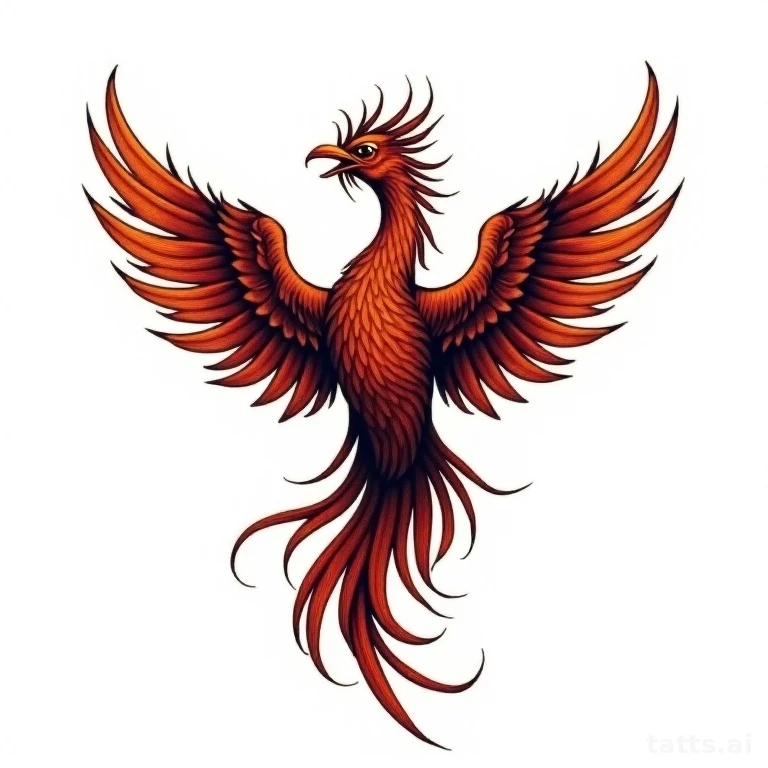
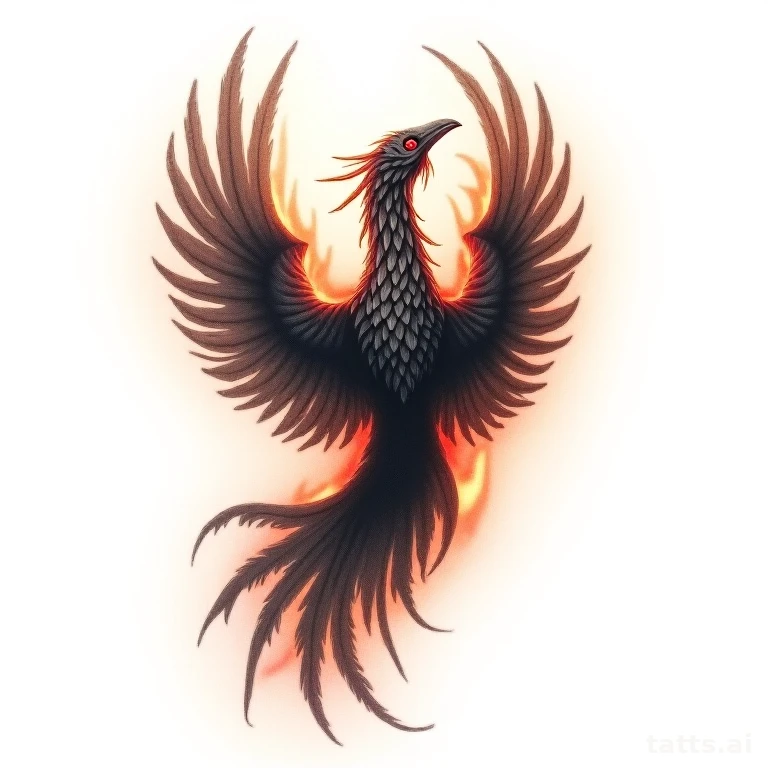
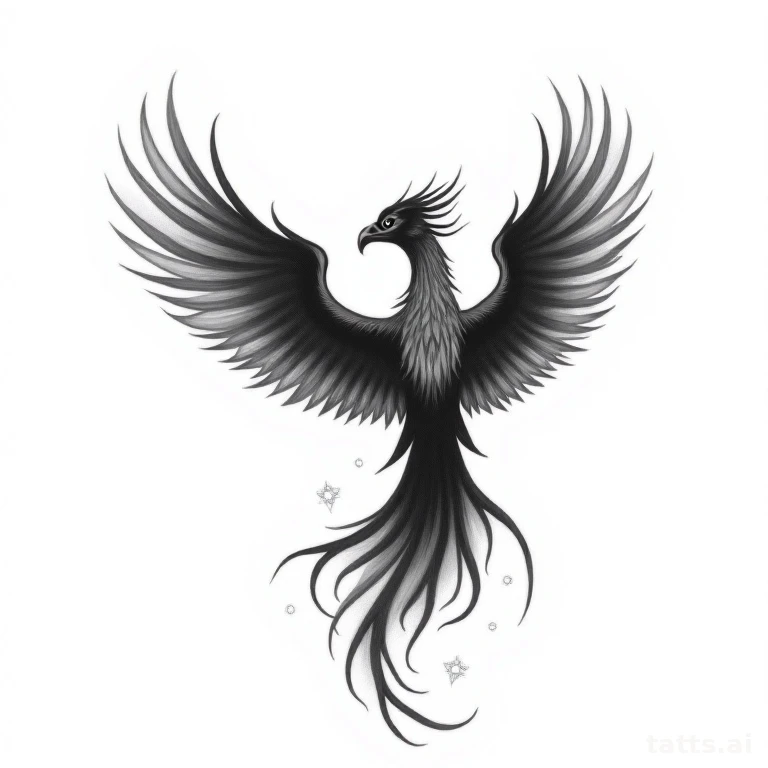

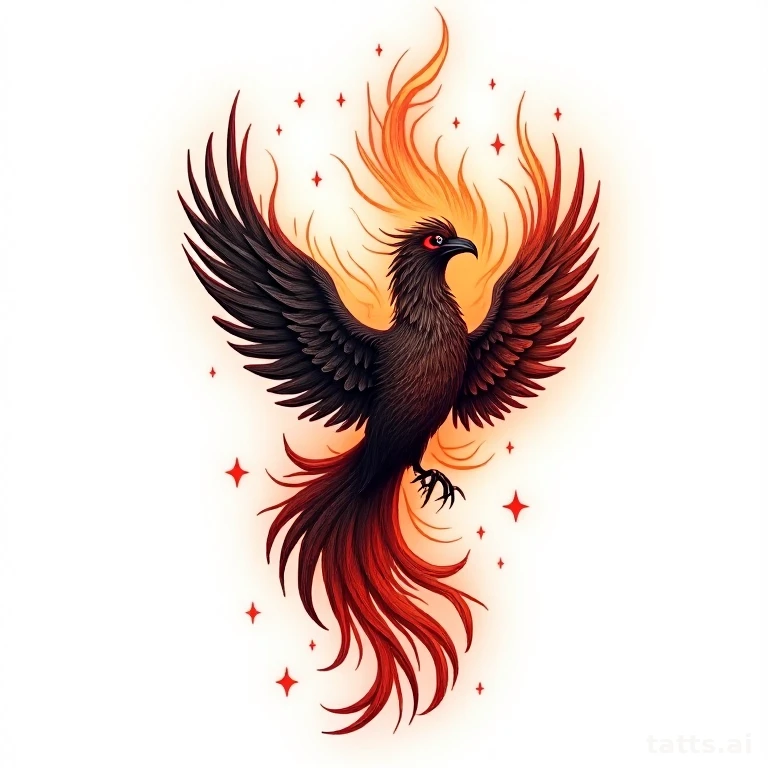

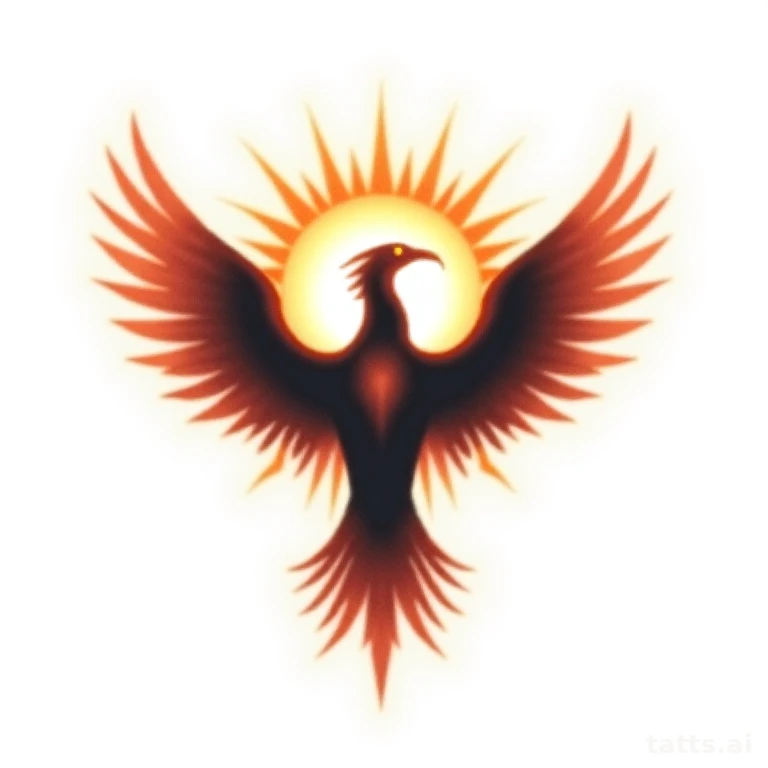
Scaling the Wingspan to Your Back
Wing width is the dimension that most determines whether a back phoenix looks proportionate or cramped — a full wingspan piece generally wants to extend close to the natural width of the shoulders to avoid looking undersized relative to the canvas. Because everyone's back proportions differ, a good artist will take actual measurements rather than working from a generic reference-image scale, and will often have you stand for measurement rather than estimating from a seated consultation before drawing the stencil.
Session Sequencing for Multi-Sitting Back Pieces
Most artists tattoo a large back phoenix in a specific order: outline and centerpiece (head, body) first, then one wing, then the other, healing between each to avoid working over swollen or scabbed skin adjacent to the current session's area. This sequencing also lets you and the artist evaluate how the piece is tracking before committing to the full scope, which matters a great deal on a project of this size, cost, and long time investment stretched across multiple months and paychecks.
Frequently asked
- How long does a full back phoenix piece take to complete?
- For a detailed wings-spread design at 12+ inches, expect 3-5 sessions of 3-5 hours each, spread across several months to allow proper healing between sittings. Rushing sessions too close together risks tattooing over skin that hasn't fully recovered, which can distort fine feather or flame detail.
- Why do artists avoid putting detailed work directly on the spine?
- The spine has minimal muscle or fat padding, making it one of the most painful zones in tattooing, and its narrow ridge doesn't hold fine linework as cleanly as the flatter muscle on either side. Most phoenix compositions route the body along the upper spine loosely while keeping the most detailed work (wings, feather texture) on the padded shoulder blade areas.
- Is a phoenix back tattoo more or less painful than a chest phoenix?
- It depends on exact placement within each zone — the back's shoulder blade areas (4-6/10) are generally more comfortable than the chest's sternum (7-8/10), but the back's spine line and lower back can rival or exceed chest pain in specific sub-areas. Overall, a back piece that avoids the direct spine is usually more tolerable than a chest piece that crosses the sternum.
Make it yours
Generate a one-of-one phoenix back design free — then try it on your skin.