Tattoo ideas
Neo-Traditional Phoenix Tattoo Ideas
Neo-traditional takes American traditional's confident bold outline and adds real dimensional shading, a wider and more saturated color palette, and more naturalistic proportions — for a phoenix, this is the difference between a flat flash-sheet firebird and a piece where individual flight feathers actually layer and catch light. The style split off from strict traditional in the mid-20th century as artists wanted more expressive color range (deep purples, teals, and gradient oranges instead of just primary red-yellow-green) while keeping the durability that comes from a strong black outline holding everything together.
The phoenix itself is a rebirth and resilience symbol nearly universally, drawn from the myth of the bird that dies in flame and is reborn from its own ashes — it's one of the most common tattoos chosen after surviving illness, addiction, divorce, or any major life reset, precisely because the imagery does the emotional explaining for you. Neo-traditional suits this subject especially well because the style's signature gradient color work (oranges bleeding into reds bleeding into golds) can actually render flame and feather texture with real depth, something flatter traditional technique struggles to convey for a subject this dynamic.
A phoenix needs real canvas — the classic wings-spread composition is wide rather than tall, so shoulder blade, upper back, chest, or a large thigh piece suit it better than a narrow forearm strip (though a diving or ascending phoenix in profile works fine on a forearm or calf). Figure 6-10 inches minimum for a wings-spread version to let feather layering and flame gradient actually resolve; smaller than that and the color transitions muddy together. Pain depends heavily on placement: upper back and shoulder blade run 5-6/10, chest climbs to 6-8/10 depending on exact sternum proximity, and ribs (for a wraparound side piece) hit 8-9/10. Session length is longer than traditional work because of the added shading passes — expect 4-6 hours for a mid-size piece, sometimes split into two sittings. The gradient color work that makes neo-traditional so visually rich is also its main aging vulnerability compared to flat traditional color: expect a touch-up around year 8-10 to re-saturate the softest color transitions, though the bold black outline holding the composition together will still look sharp well beyond that.
Neo-Traditional Phoenix designs
Generate your own neo-traditional phoenix design
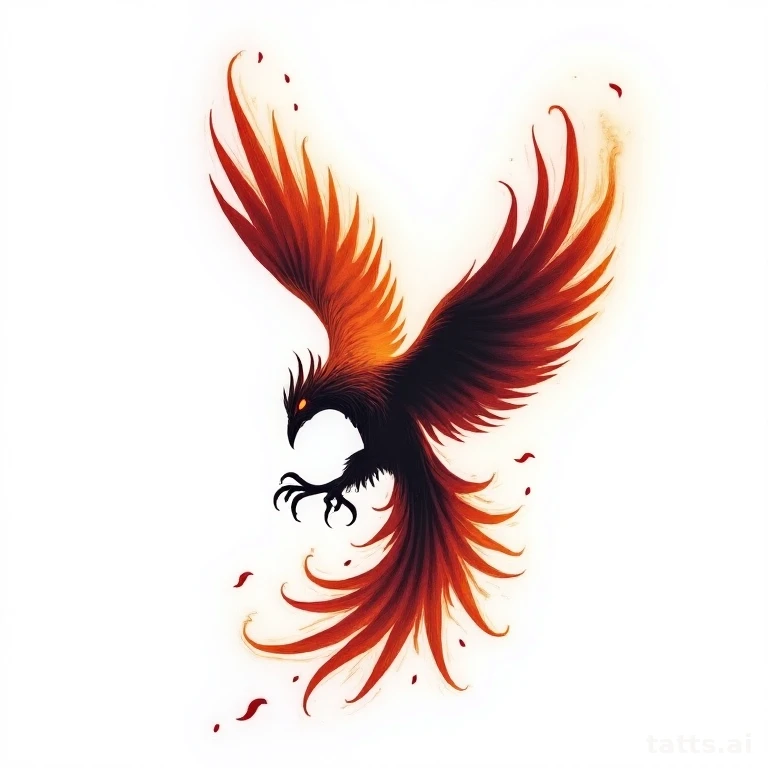
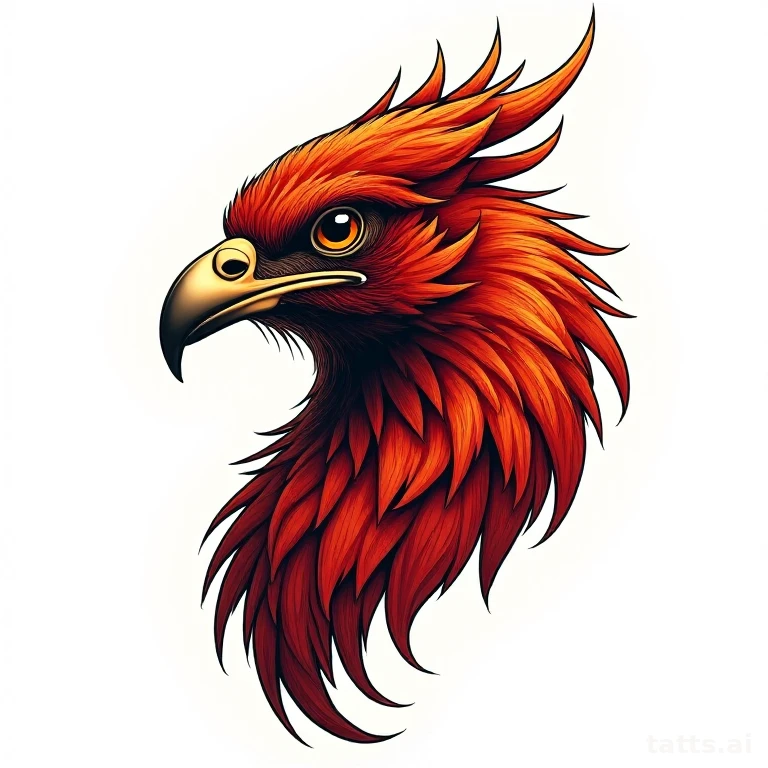
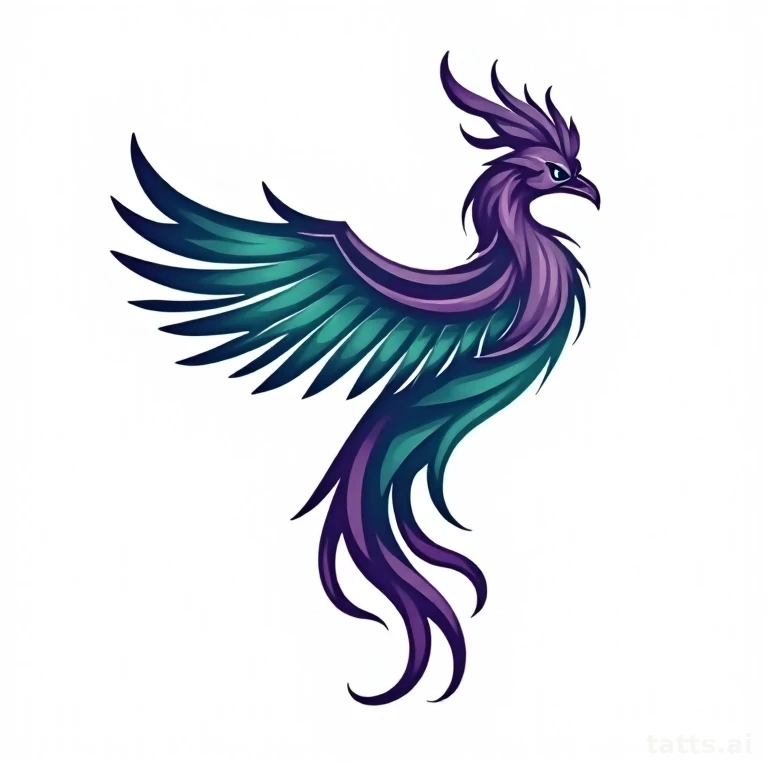
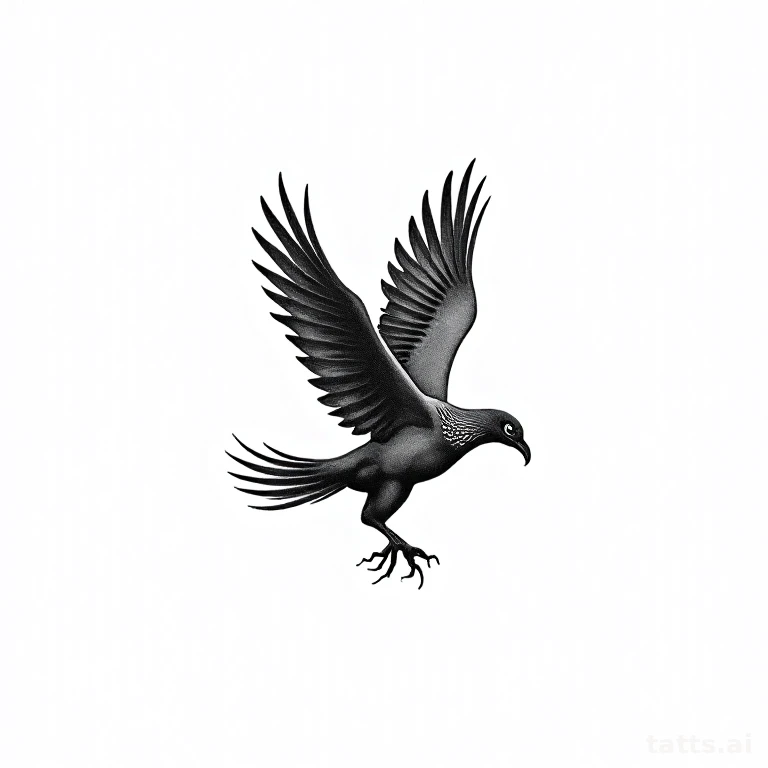
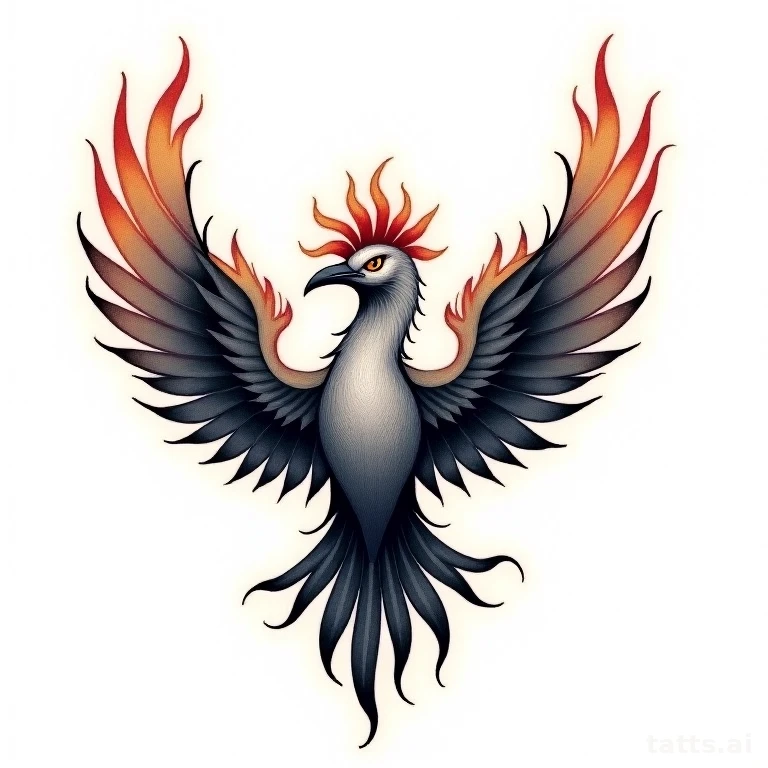


Feather Layering Is Where Skill Shows
A convincing neo-traditional phoenix depends on the artist varying feather size and shading gradually from the body outward to the wingtips — larger, darker-shaded feathers near the body transitioning to smaller, brighter-tipped feathers at the edges. Artists who repeat the same feather shape and shading pattern across the whole wing produce a flatter, less convincing result. Look at portfolio wing pieces specifically (not just phoenix heads) to judge whether an artist actually varies their feather rendering across a full wingspan.
Color Palette Choices Beyond Red and Orange
While red-orange-gold is the expected phoenix palette, neo-traditional's wider color range opens up striking alternatives — deep teal and purple phoenixes, or ice-blue and white "winter phoenix" treatments, are increasingly popular for people who want the rebirth symbolism without the most literal fire palette. These cooler palettes also tend to age slightly better than hot oranges and yellows, which are the first tones to visibly soften under UV exposure over the years, especially on placements that regularly see the sun.
Frequently asked
- How is neo-traditional different from a realistic phoenix?
- Neo-traditional keeps a strong, visible black outline and stylizes the feathers and flame into more graphic, deliberately artistic shapes, while realism tries to render the bird as if photographed, with soft blended edges and no outline. Neo-traditional generally ages better because that bold outline contains the color the way it does in traditional work.
- What's the best placement for a wings-spread phoenix?
- Upper back and shoulder blade are the classic choice because the natural width of that canvas matches the horizontal spread of open wings. A chest piece works too and offers more visibility, but expect higher pain around the sternum and collarbone.
- Does a neo-traditional phoenix need a touch-up sooner than traditional work?
- Generally yes, by a few years — the gradient shading and wider color range that give neo-traditional its depth are more delicate than traditional's flat saturated fills. Budget a touch-up around year 8-10 versus the 15-20 year window flat traditional color can often go without one.
Make it yours
Generate a one-of-one neo-traditional phoenix design free — then try it on your skin.