Tattoo ideas
Neo-Traditional Tattoo Ideas
Neo-traditional picked up where American traditional left off in the 1980s-90s, when artists like Roxx and later the Chapel Tattoo crowd started asking what traditional flash would look like with an illustrator's toolkit instead of a sign-painter's. The bold keyline stayed — that's the DNA link to traditional — but everything else got a upgrade: color palettes expanded from four or five flat primaries into full gradients and jewel tones (deep emerald, amethyst, burnt orange), shading picked up dimension instead of staying flat, and subject matter opened up from sailor iconography into art-nouveau florals, ornate animal portraits, and mythological figures rendered with genuine illustrative detail. Think Alphonse Mucha meets old-school tattoo flash — that's the visual lineage most neo-traditional artists will cite.
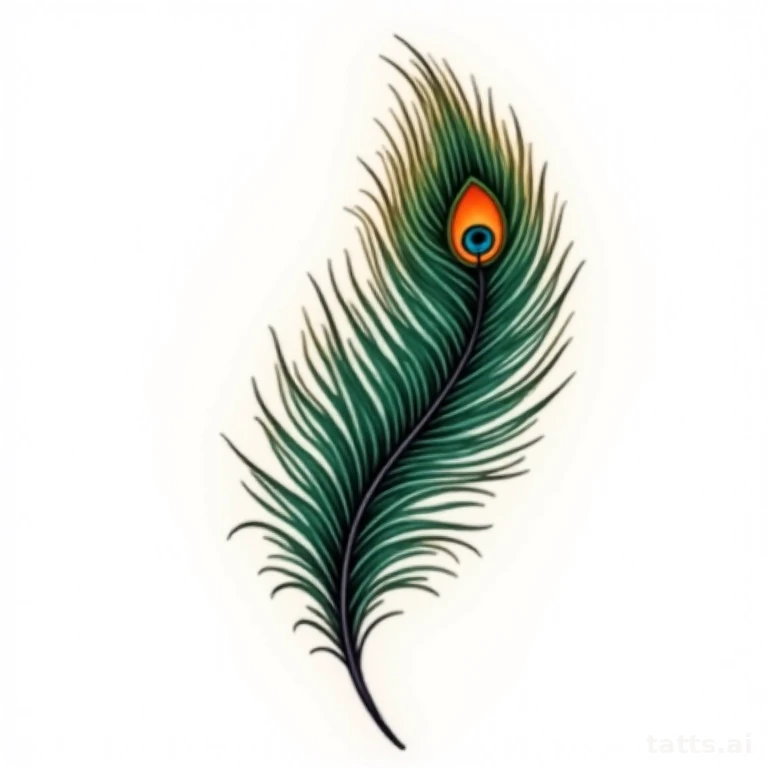
Because neo-traditional keeps the traditional style's structural backbone (bold black outlines, high-contrast color blocking) while adding the detail density of illustration, it lands in a genuinely useful middle spot: it ages closer to traditional than to fine line or realism, since the thick keyline is still doing the heavy lifting of holding the design together as ink settles over the years. Expect a neo-traditional piece to stay sharp for 15-20 years on a well-placed, well-cared-for spot before it needs a color refresh, compared to 30+ for pure traditional and 5-7 for fine line. The detail work inside the outline (feather texture, floral shading, facial modeling on animal subjects) is what softens first, so a touch-up at year 10-12 is common to restore internal gradients even while the outline itself is still holding.
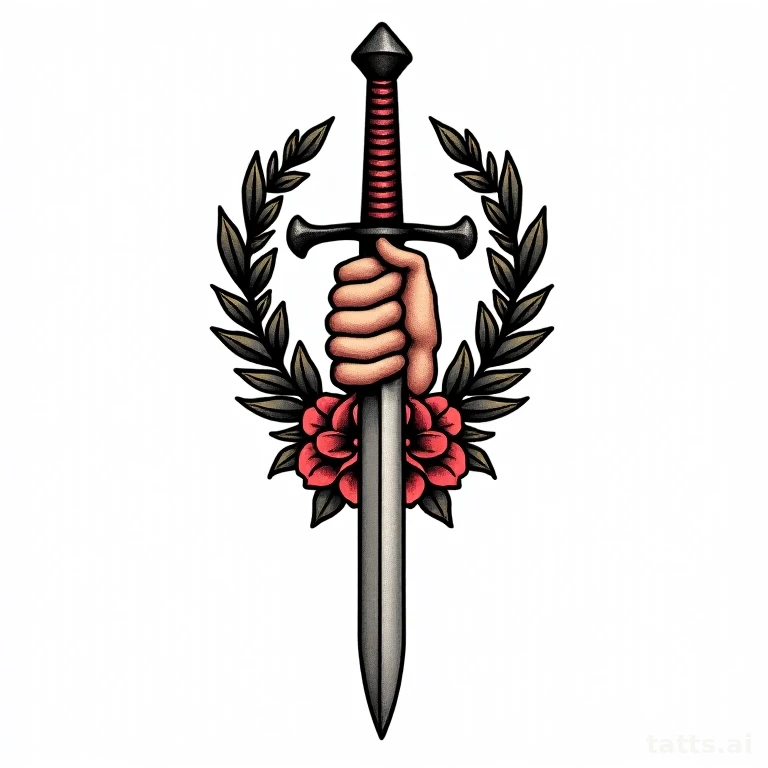
Neo-traditional rewards larger canvases — upper arm, thigh, and back are the most common placements because the style's layered detail (a wolf head wrapped in florals, a hand holding a dagger with ornate flourishes) needs 5+ inches to actually resolve instead of looking cramped. Forearm works for simpler single-subject pieces. Pain sits in the moderate range for upper arm and thigh (4-6/10) but climbs on ribs or sternum if you're chasing a larger composition there (7-8/10), and session length runs longer than traditional because of the added shading and color-blending work — a mid-size piece can mean two to three sessions instead of one. If you love traditional's boldness but want something that reads as more personal and less flash-off-the-wall, this is the style to ask for by name.
Neo-Traditional designs
Generate your own neo-traditional design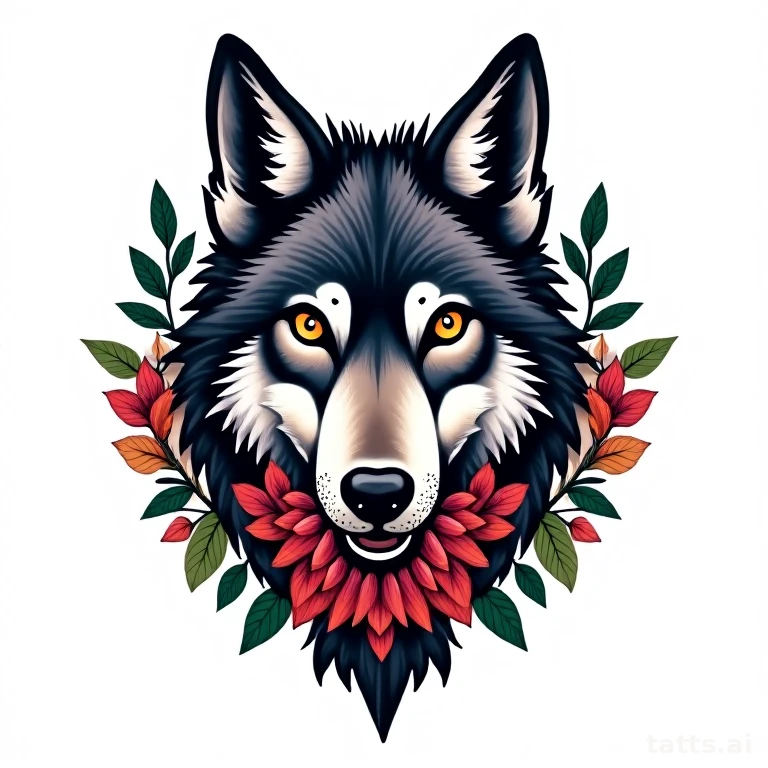
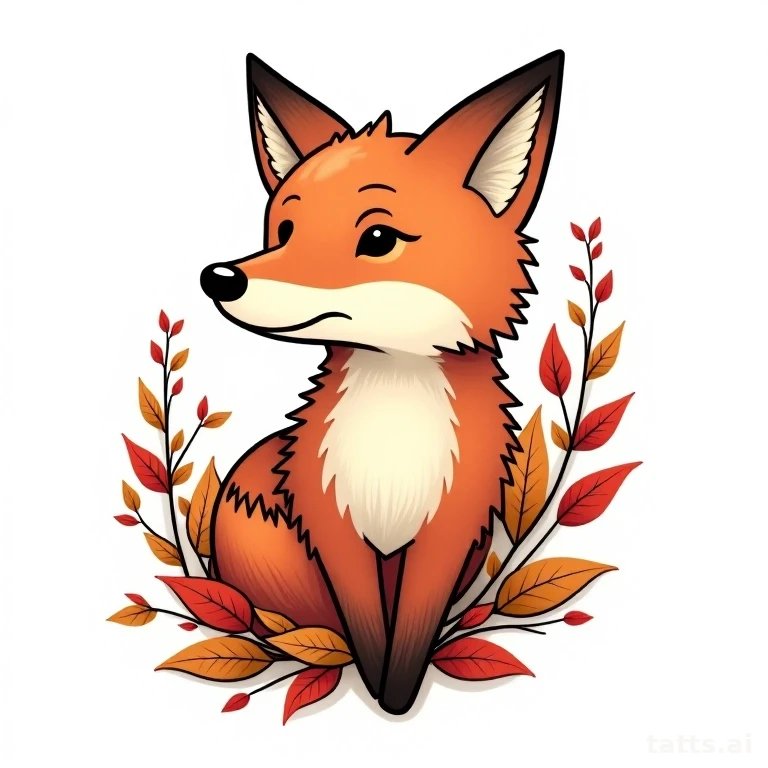
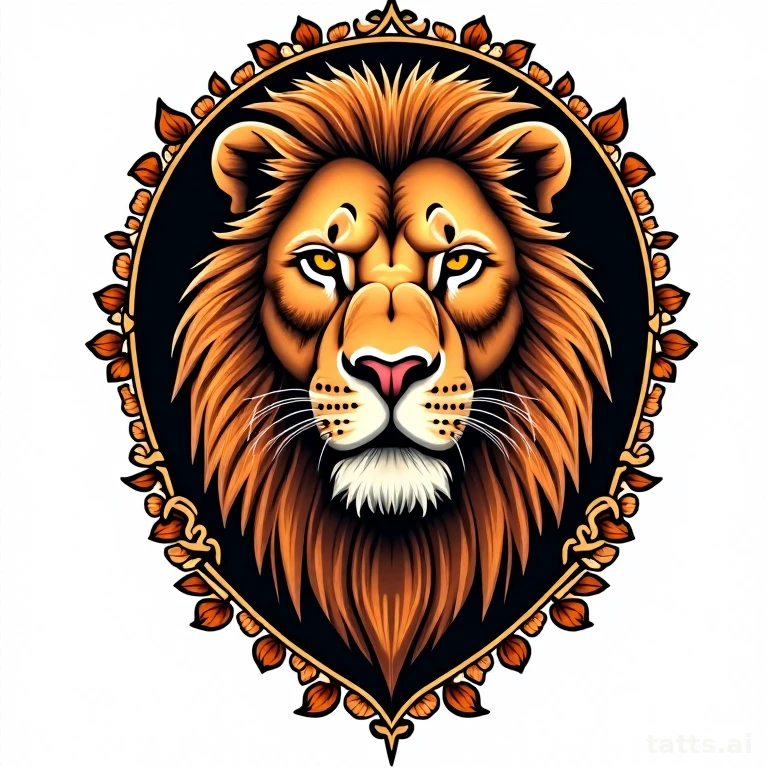
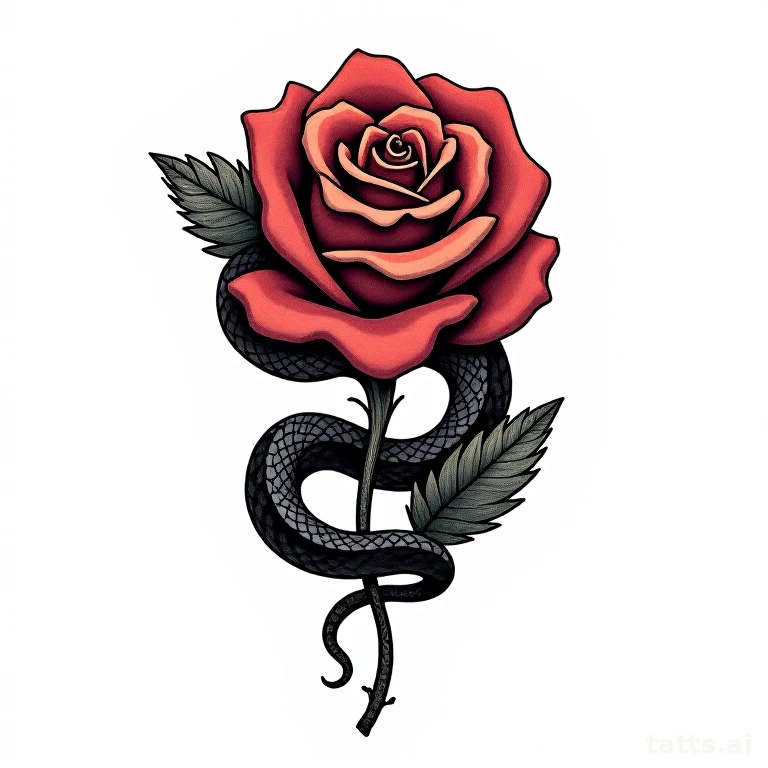
How to brief a neo-traditional artist
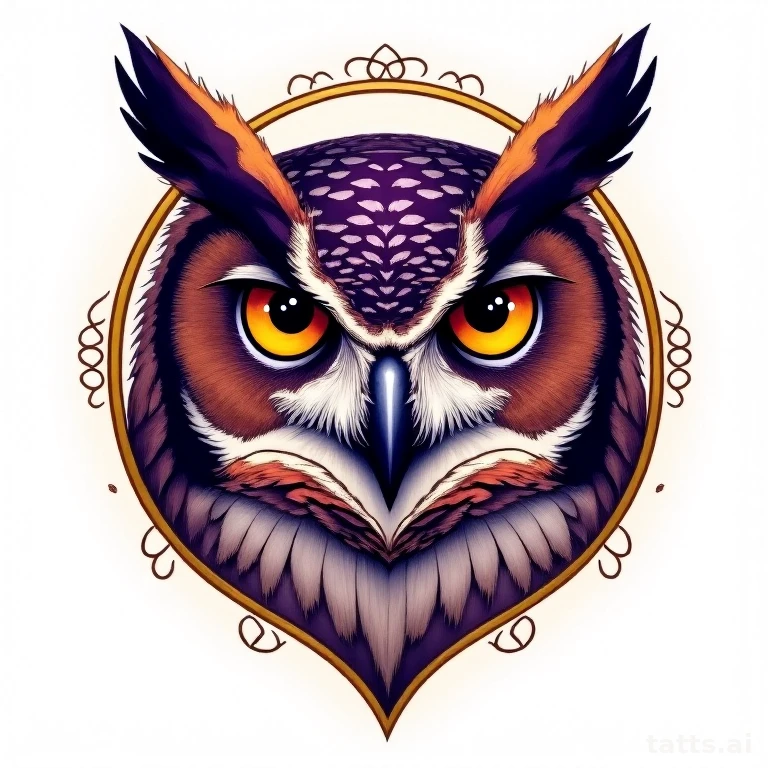
Bring reference for both the subject and the ornamental framing you want — neo-traditional pieces are usually built as a central image (an animal, a figure, an object) surrounded by decorative elements like florals, banners, or geometric borders. Artists in this style often design custom compositions rather than working from flash sheets, so expect a longer consultation and possibly a deposit for custom drawing time. Ask to see the artist's color work specifically, since neo-traditional lives or dies on smooth gradient blending — a portfolio heavy on line work but thin on shaded color pieces is a signal to look elsewhere.
Where neo-traditional differs from realism on the same subject
A neo-traditional wolf and a realism wolf can use the same reference photo and produce completely different tattoos. Neo-traditional flattens and stylizes — you'll see confident black outlines, selective color blocking, and simplified but expressive shading, closer to a graphic novel illustration than a photograph. Realism chases photographic accuracy with soft, blended shading and no hard outline at all. If you want the piece to read instantly as bold and graphic even from across a room, neo-traditional wins; if you want it to look like a photograph was transferred to skin, that's realism.
Frequently asked
- What's the real difference between traditional and neo-traditional?
- Traditional uses a tight palette of 4-5 flat primary colors and minimal shading; neo-traditional keeps the bold outline but adds full color gradients, jewel tones, and illustrative detail like art-nouveau ornamentation. Neo-traditional subjects also skew more varied — florals, mythological figures, animal portraits — versus traditional's sailor-era stock imagery.
- How many sessions does a neo-traditional piece typically take?
- A simple single-subject piece (a bird or a small floral) can be done in one 2-3 hour sitting. Larger compositions with layered ornamentation and full color blending commonly run two to three sessions of 3-4 hours each, spaced a few weeks apart to let the skin heal between passes.
- Does neo-traditional fade faster than American traditional?
- Slightly, mainly in the internal shading and gradient work rather than the outline. The bold keyline holds nearly as long as pure traditional, but the softer color transitions inside the design are the first thing to lose crispness, typically needing a refresh around year 10-12 versus traditional's 20-30 year outline life.
Make it yours
Generate a one-of-one neo-traditional design free — then try it on your skin.