Tattoo ideas
American Traditional Tattoo Ideas
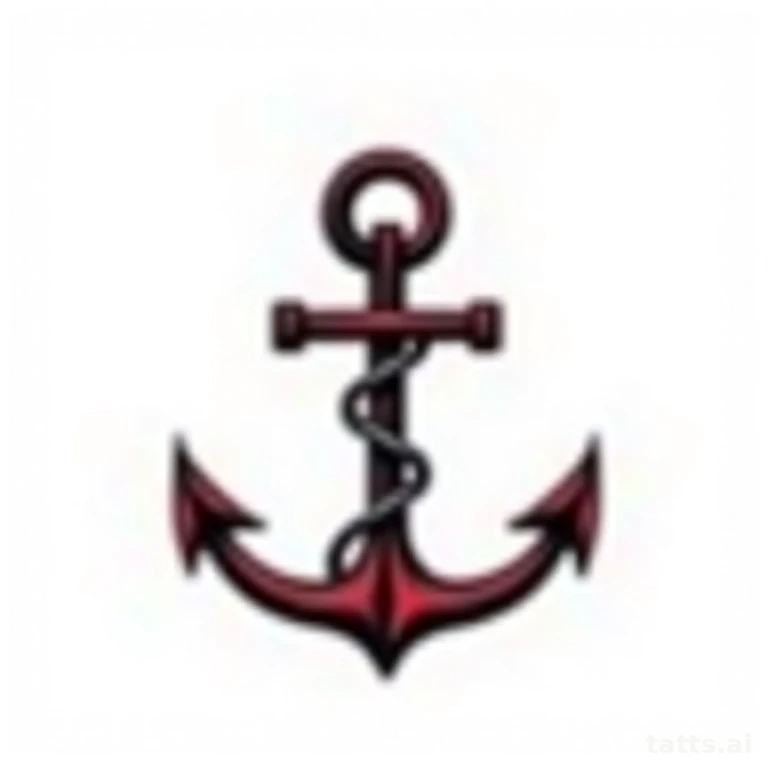
American traditional is the style tattooing was built on in the 20th century — Norman "Sailor Jerry" Collins and the Bowery shops of the 1930s-50s set the template still copied today: thick black keylines (usually the widest needle groupings a shop runs), a tight palette of primary colors dominated by red, green, gold, and navy, and minimal shading that's more about bold color blocks than gradients. Every image in the traditional canon carries inherited meaning from the sailors, servicemen, and dockworkers who got tattooed as portable identity — a swallow meant 5,000 nautical miles sailed (two swallows, 10,000), an anchor signified a sailor who'd crossed the Atlantic, a dagger through a rose meant loss survived, a pin-up was a stand-in for home. You don't have to honor the old meanings, but knowing them is part of getting the style right instead of just copying the look.
The reason traditional tattoos are the gold standard for longevity isn't nostalgia, it's physics. That thick outline (often 2-3x the line weight of neo-traditional or fine line) holds ink density far longer under the skin's natural ink migration process, and the flat, saturated color fills resist the blurring that gradient shading suffers over decades. A well-done traditional piece on the forearm or upper arm can look genuinely sharp at 30+ years, which is why you'll see 80-year-old sailors with crisp anchors from their 20s. The tradeoff is stylistic: traditional doesn't do fine detail, portraiture, or photorealistic texture. If you want a design with intricate small elements, this isn't the style — traditional wants bold, graphic, and legible from ten feet away.
Placement-wise, traditional was designed for exactly the spots sailors could show off or hide depending on duty: forearm, upper arm, chest, and calf are classic zones, all areas with enough flat surface for a bold 4-6 inch design to breathe. Pain on forearm and calf runs moderate, 4-5/10, since the thick lines mean more total needle time per square inch even though the sensation itself isn't sharper. Chest pieces run 6-7/10 over the sternum. Because the style leans on saturated color, budget for a touch-up around year 10-15 if you're in a sunny climate — not because the ink is failing, but because keeping reds and yellows vivid that long benefits from a refresh even on style that otherwise ages better than anything else in tattooing.
American Traditional designs
Generate your own american traditional design
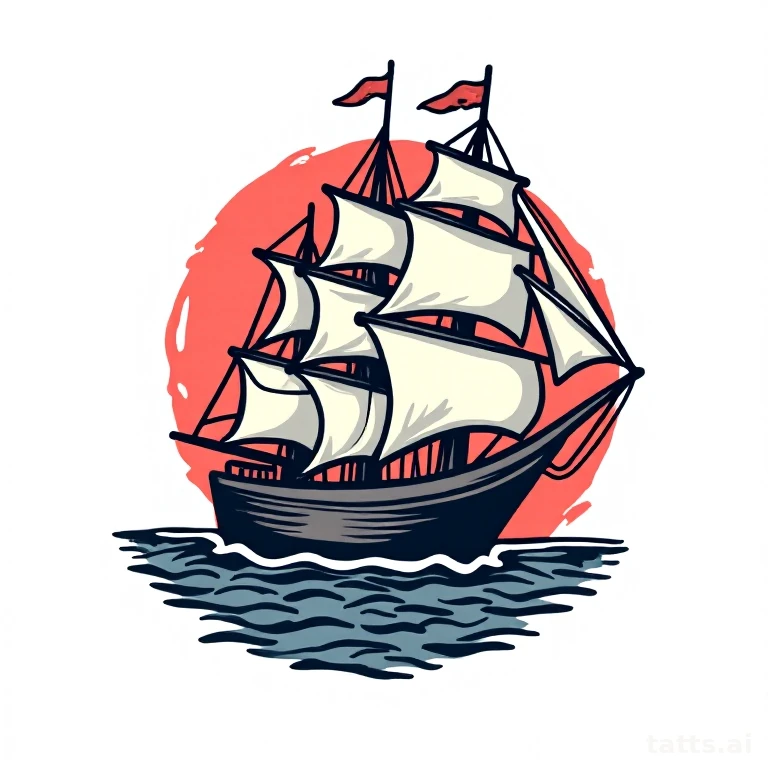
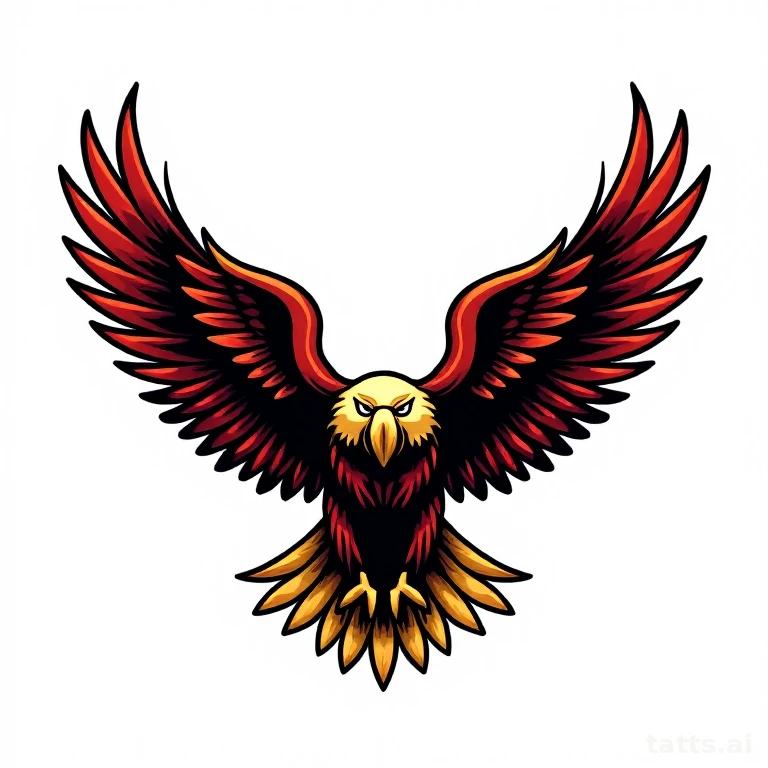
The symbolism actually matters here
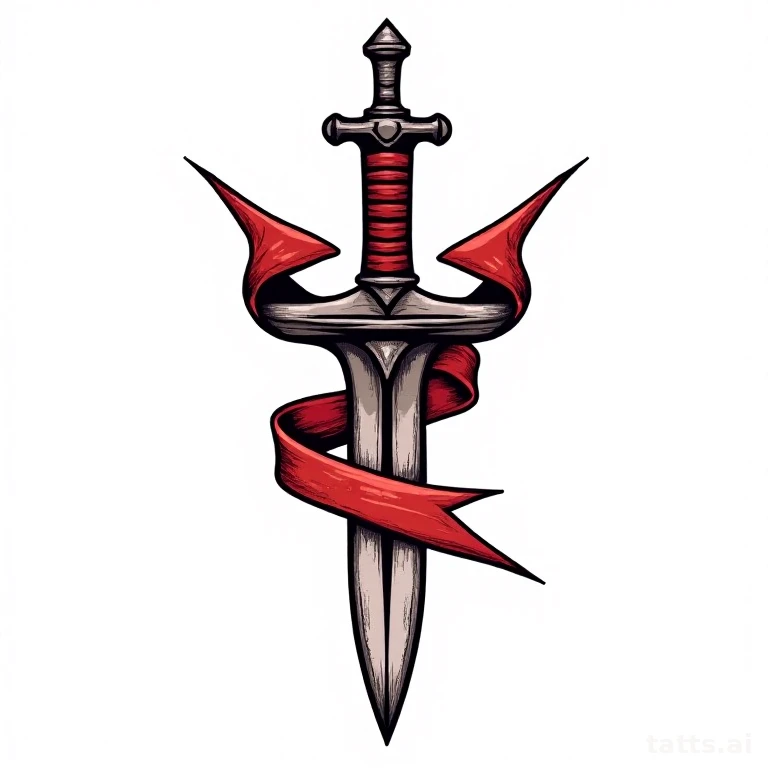
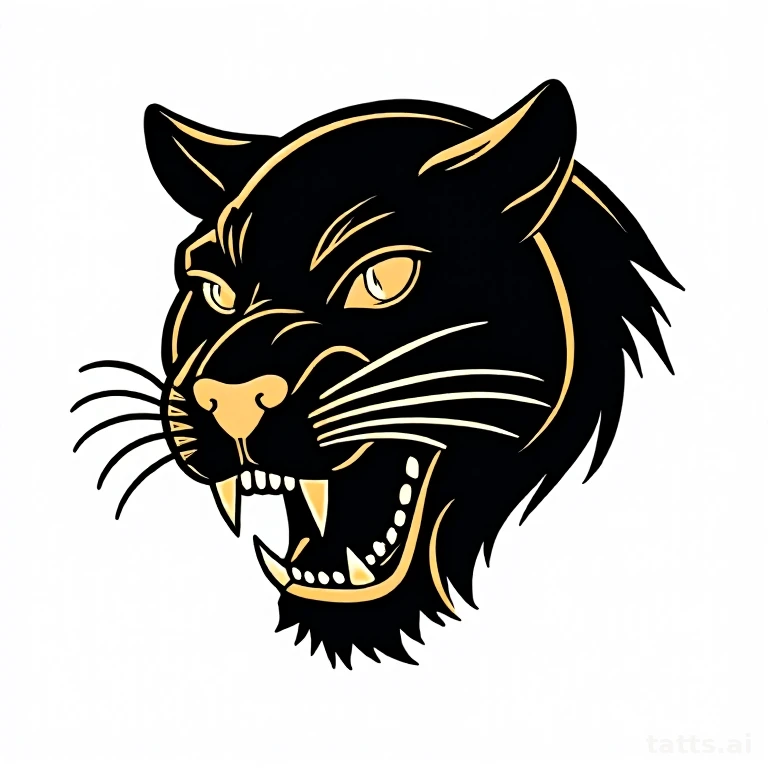
Traditional's stock imagery is closer to a shared vocabulary than to random pretty pictures — a swallow bird meant safe return home, a panther head signaled danger survived or a wild streak, a ship meant a voyage completed, and a dagger through a heart marked betrayal or heartbreak endured. Skulls in traditional flash usually mean mortality accepted, not death-worship. Roses paired with banners are almost always memorial pieces, the banner meant to hold a name or date. Picking traditional imagery just because it looks bold without knowing what you're putting on your skin is common, but any traditional artist worth booking can walk you through what a given image has historically signaled.
Why the bold outline is non-negotiable in this style
Newer clients sometimes ask a traditional artist to thin out the linework for a more "modern" look — this defeats the entire point. The thick keyline is what makes the style hold up for decades and what makes the color fills read as solid blocks instead of muddy patches once the tattoo starts to soften with age. Thinning the outline turns a 30-year tattoo into a 10-year tattoo. If you want thinner lines, that's neo-traditional or fine line, not American traditional — the style's whole identity is the bold line.
Frequently asked
- Why do American traditional tattoos age better than almost any other style?
- The thick outlines and flat, saturated color fills hold ink density far longer than fine detail or soft gradients. Less surface area of thin line means less total fading over time, so a bold traditional swallow can stay legible for 30+ years while a fine line piece in the same spot fades to a shadow in under a decade.
- Do I need to know the traditional symbolism before getting a piece?
- No, but it's worth a conversation with your artist first. Traditional imagery carries decades of inherited meaning (swallows for safe return, daggers for betrayal, panthers for danger survived), and a good traditional artist will tell you what you're choosing so you're not accidentally signaling something you don't mean.
- Is American traditional a good style for a first big tattoo?
- Yes — it's one of the most forgiving styles for beginners because the bold lines and flat color hide minor healing imperfections better than fine detail work does, and the style's durability means you won't be back for touch-ups within a couple years like you might with fine line or heavily shaded realism.
Make it yours
Generate a one-of-one american traditional design free — then try it on your skin.