Tattoo ideas
Traditional Skull Tattoo Ideas
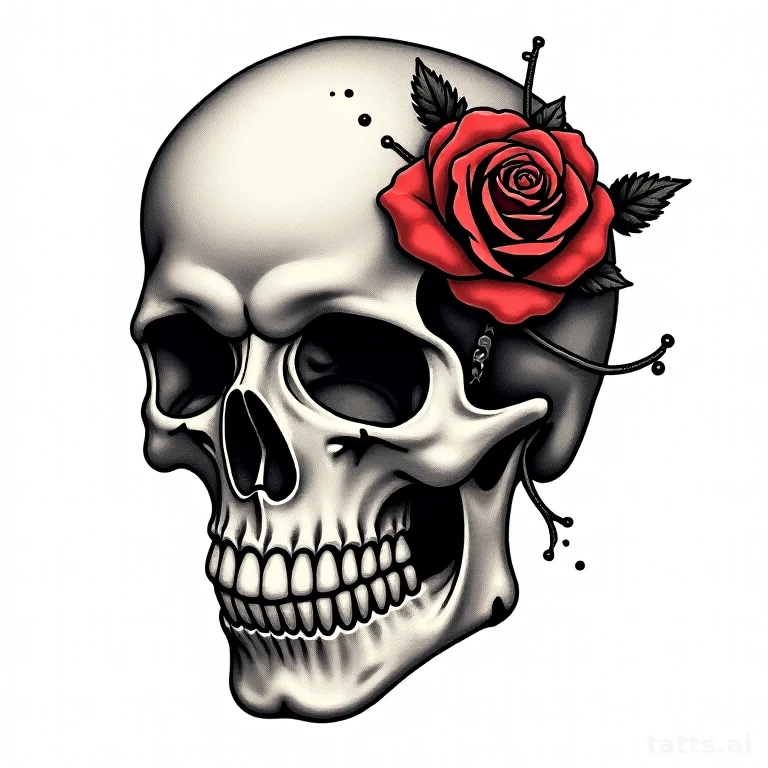
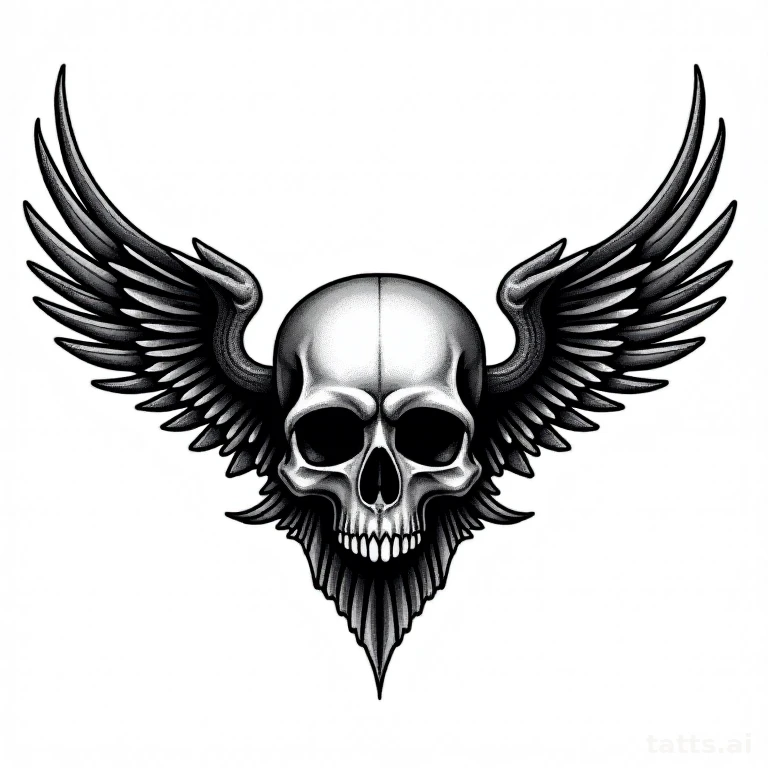
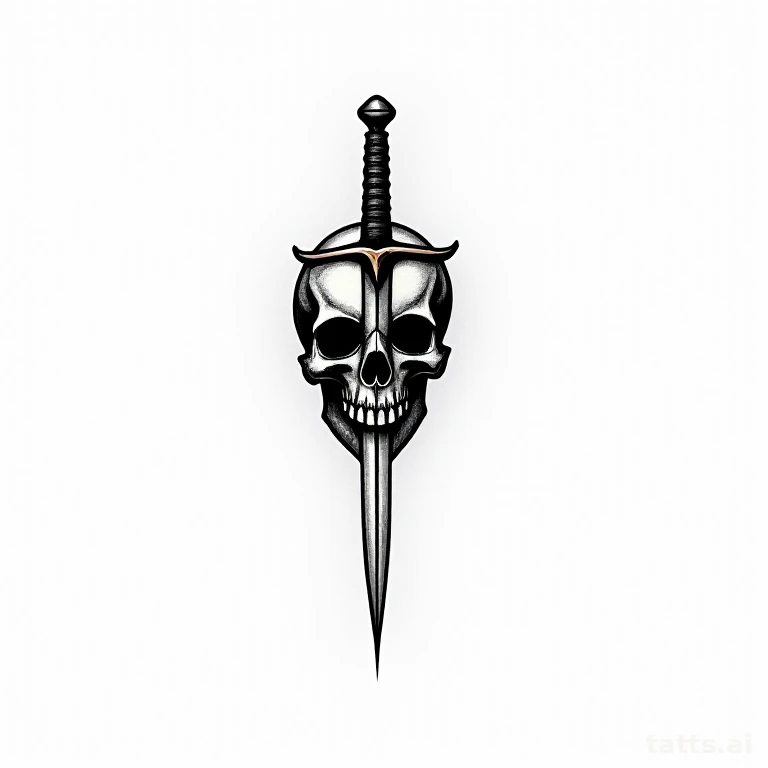
A traditional skull leans on the same bold-outline, flat-color technique that makes American traditional the most durable style in tattooing, but the subject itself carries more symbolic range than people expect. In the classic canon, a plain skull is mortality and rebellion in equal parts — a nod to sailor and biker culture's fatalism, worn as much for its aesthetic punch as any deep meaning. Add a rose in the eye socket or jawbone and it shifts toward "beauty and death coexist"; add wings and it edges toward freedom found through embracing mortality; add a dagger through it and it reads as defiance or a specific grudge against death itself. Know which read you want before you sit down, since these additions change the whole story.
Technically, a traditional skull is one of the more forgiving subjects for a first big tattoo because the bone structure is naturally geometric — eye sockets, nasal cavity, and jaw all break into clean shapes that suit bold outline work without needing photorealistic shading to look correct. This is part of why skull flash has been a walk-in shop staple for a century; it reads clearly even to an inexperienced artist, though a great traditional artist still distinguishes themselves through confident, unwavering line weight and smart use of negative space in the eye sockets rather than filling them solid black.
Sizing is flexible: a simple skull outline works at 3 inches, while a skull with roses, banner, or crossbones needs 5-6 inches to keep every element legible. Forearm, calf, and upper arm are the classic placements, with chest and shoulder favored for larger compositions that pair the skull with other traditional imagery (snakes, daggers, eagles). Pain runs 3-5/10 on forearm and calf, 5-6/10 on upper arm, and rises to 6-7/10 on chest where the sternum has less padding. Because this style relies on flat color and bold black linework rather than delicate gradients, it ages exceptionally well — 25-30+ years of sharp readability is realistic, with only a very minor color touch-up needed after 15-20 years if the piece sees regular sun exposure.
Traditional Skull designs
Generate your own traditional skull design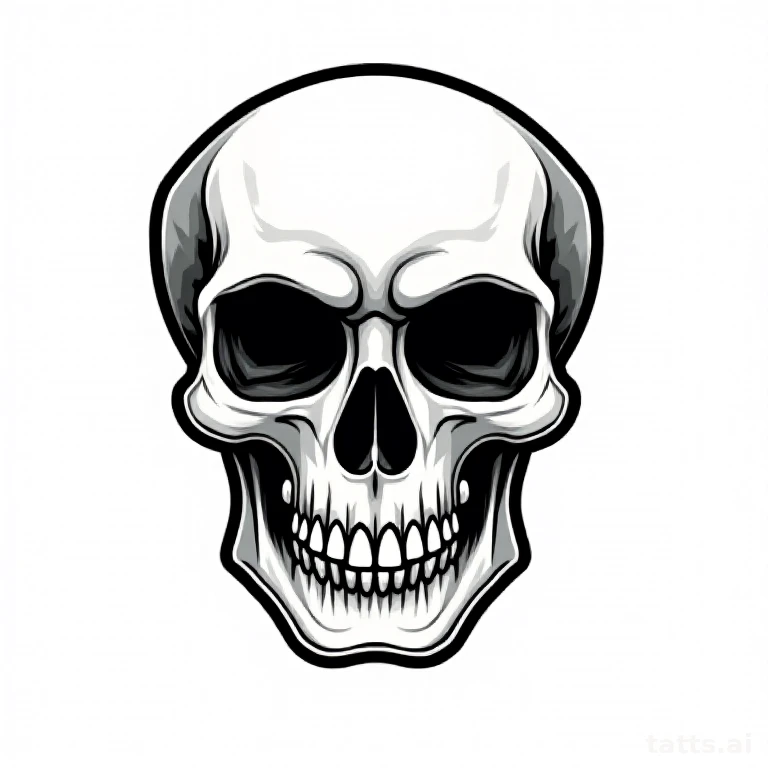
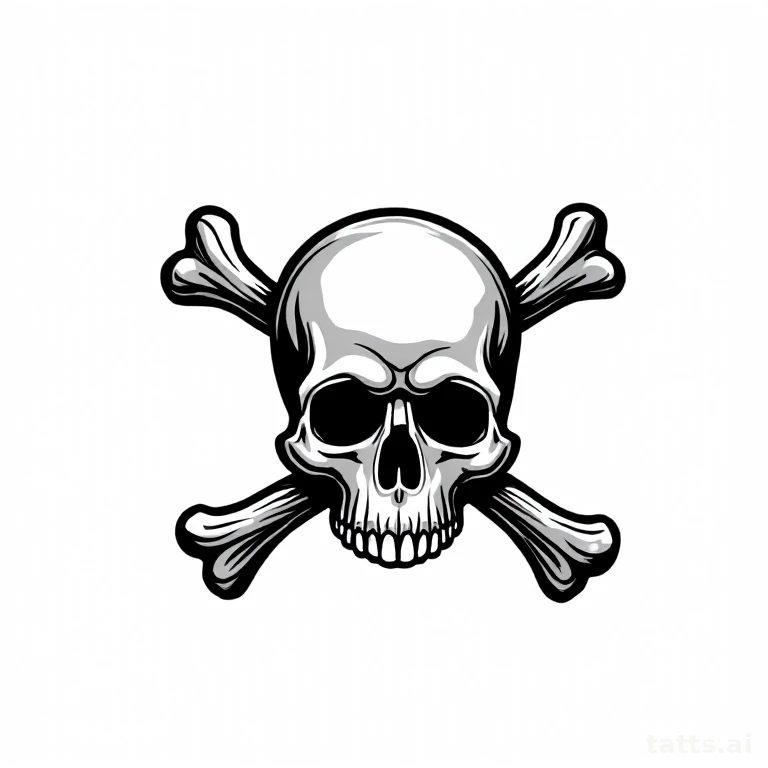
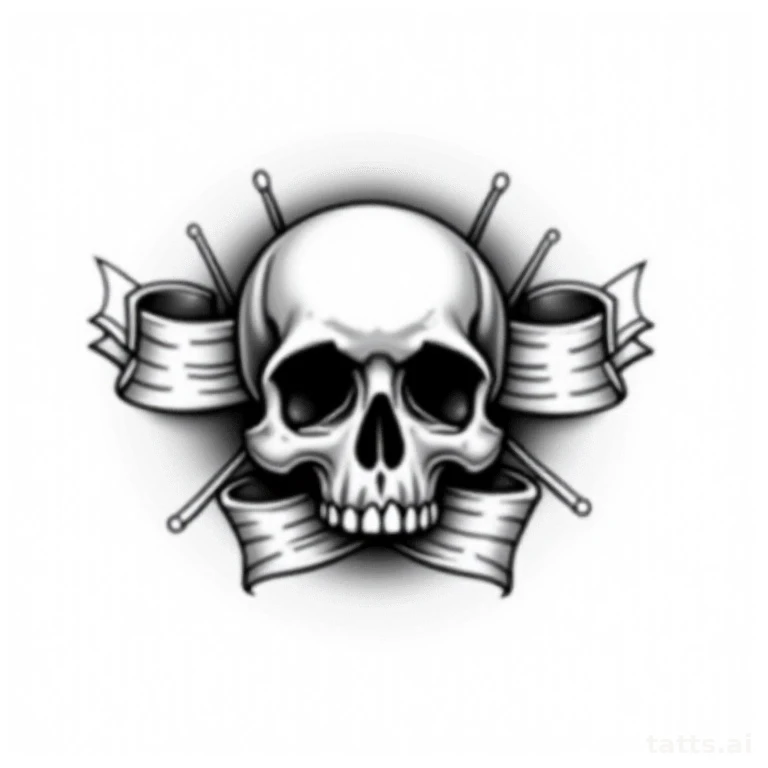
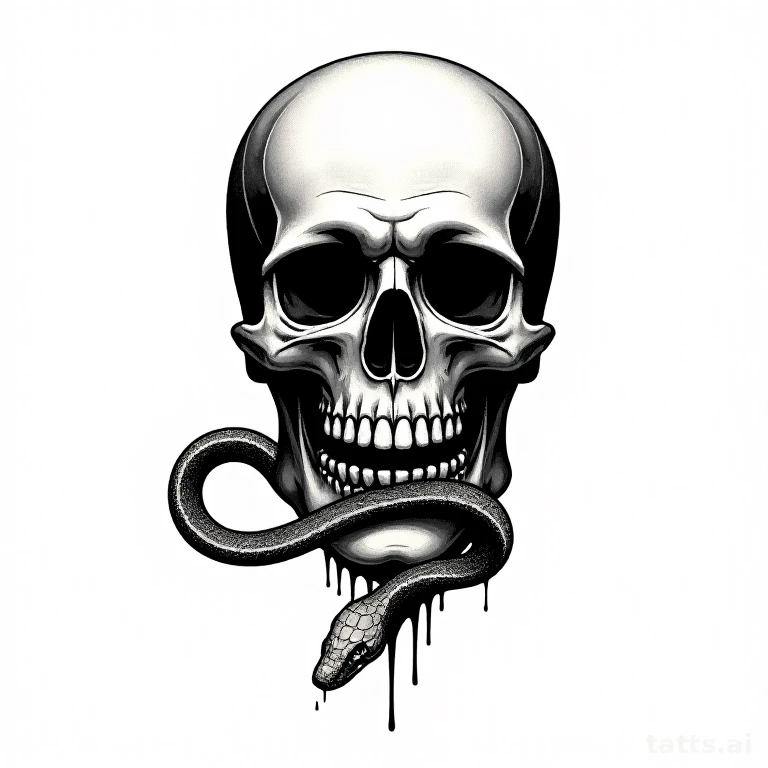
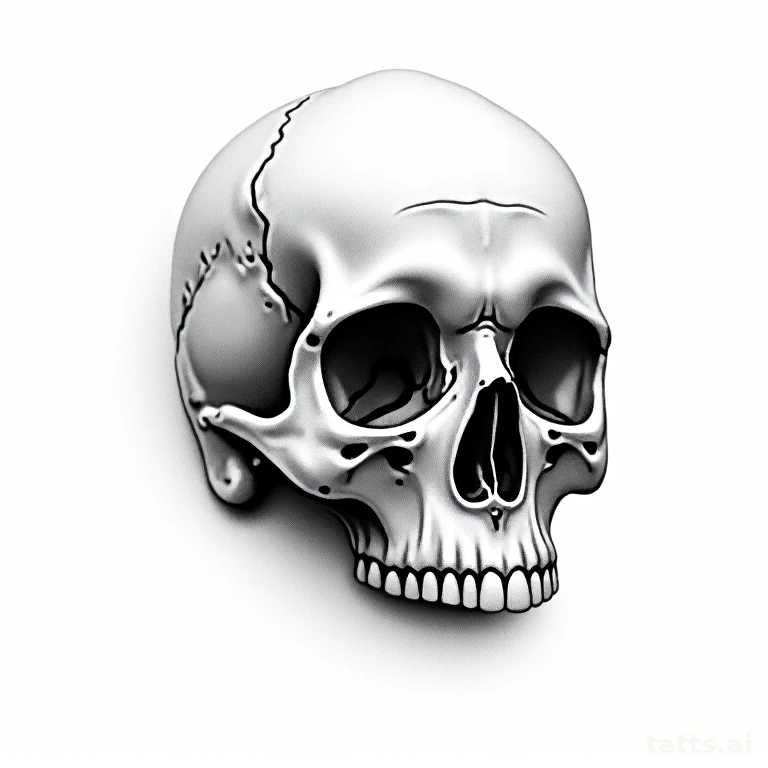
Eye Socket Treatment Changes the Whole Read
How an artist handles the eye sockets is the biggest style signature in traditional skull work — solid black fill reads as harsher and more graphic, while leaving negative space with a few shading lines gives more dimension and a slightly less aggressive look. Neither is more "correct," but it's worth discussing directly since the eye treatment affects the piece's overall tone more than almost any other single decision in the design, and it's genuinely hard to change once shaded in.
Classic Pairings and What Each One Says
Skull-and-rose is the most common traditional pairing and softens the subject into a beauty-meets-mortality statement, often chosen for memorial pieces. Skull-and-dagger or skull-and-snake reads more aggressive and defiant, closer to the biker and outlaw tradition the style grew out of. Skull-with-wings leans toward freedom-through-death imagery, popular in military and first-responder memorial contexts. Match the pairing to what you're actually trying to say about the person or period being honored, not just what looks striking hanging on a flash sheet on the wall.
Frequently asked
- Is a traditional skull a good tattoo to start with if I'm new to ink?
- Yes — the bold, forgiving linework style tends to look clean even at moderate sizes, and the subject's natural geometry (eye sockets, jaw angles) suits the technique well. It's also one of the more affordable traditional pieces since flat color and simple shading finish faster than detailed realism.
- What does a skull with a rose in the mouth or eye socket mean?
- It's a classic beauty-and-mortality pairing, suggesting that something beautiful persists even in the face of death — commonly chosen for memorial tattoos honoring someone who passed, or to mark surviving a genuinely hard period. The specific placement of the rose (eye, mouth, crown) is mostly aesthetic rather than carrying distinct sub-meanings.
- How do traditional skulls compare in pain to traditional roses?
- Very similar, since both rely on the same bold outline and flat color technique rather than dense shading. Expect 3-5/10 on forearm or calf for either subject, rising slightly on chest or upper arm where skin is thinner or closer to bone.
Make it yours
Generate a one-of-one traditional skull design free — then try it on your skin.