Tattoo ideas
Traditional Rose Tattoo Ideas
The traditional rose is arguably the single most iconic image in American tattoo history, and its staying power comes down to the technique, not just the subject. Sailor Jerry-era roses use thick, unbroken black outlines, flat saturated color blocks (usually just red and green, sometimes yellow), and minimal shading — a deliberate simplicity that was originally a practical response to the ink and needle technology of the early 20th century but turned out to age better than almost any tattoo style ever devised. That bold outline is a structural feature: it acts as a dam that keeps color from migrating outward as the tattoo ages, which is why 40-year-old traditional roses on WWII veterans still read clearly today.
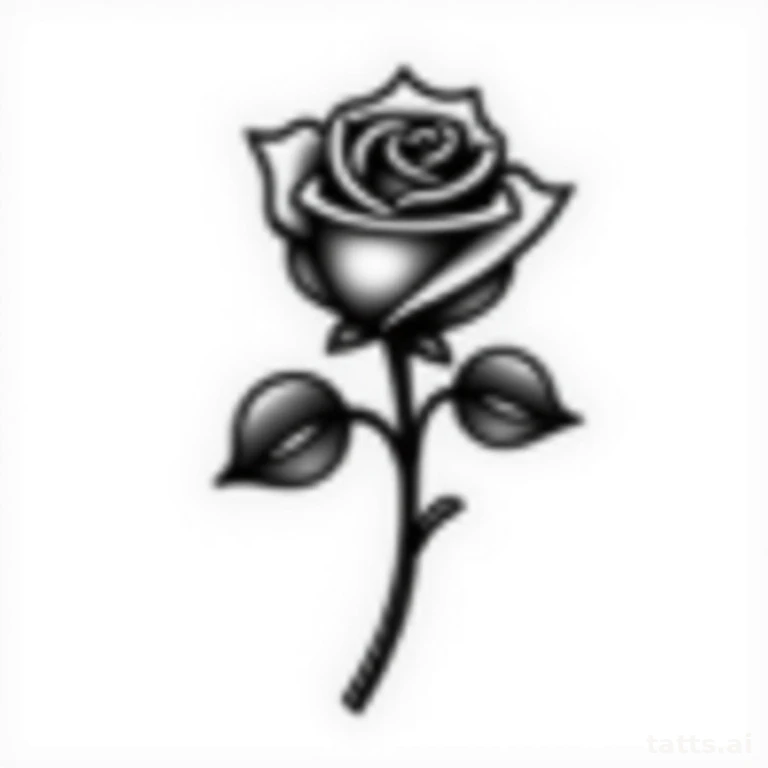
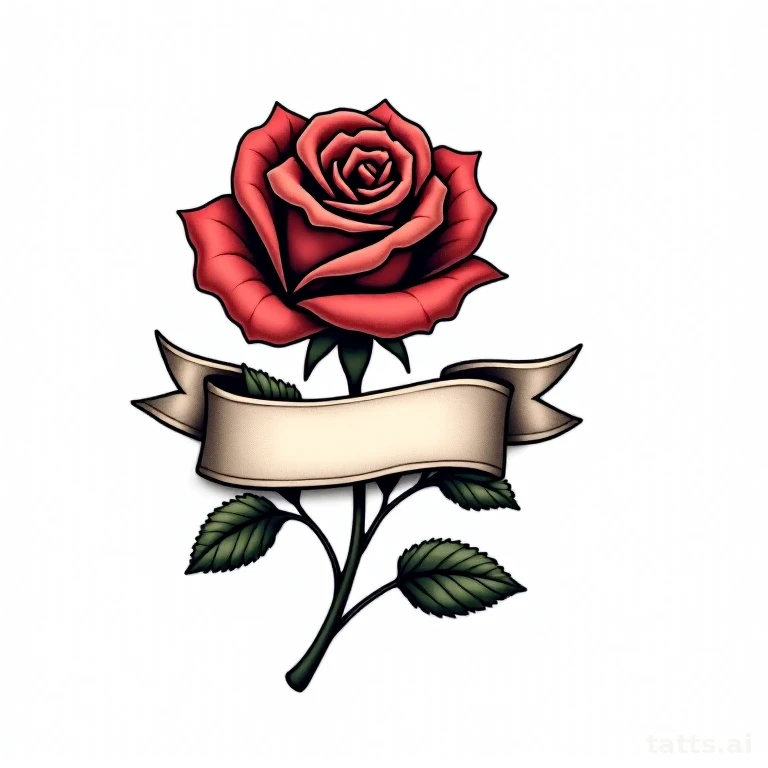
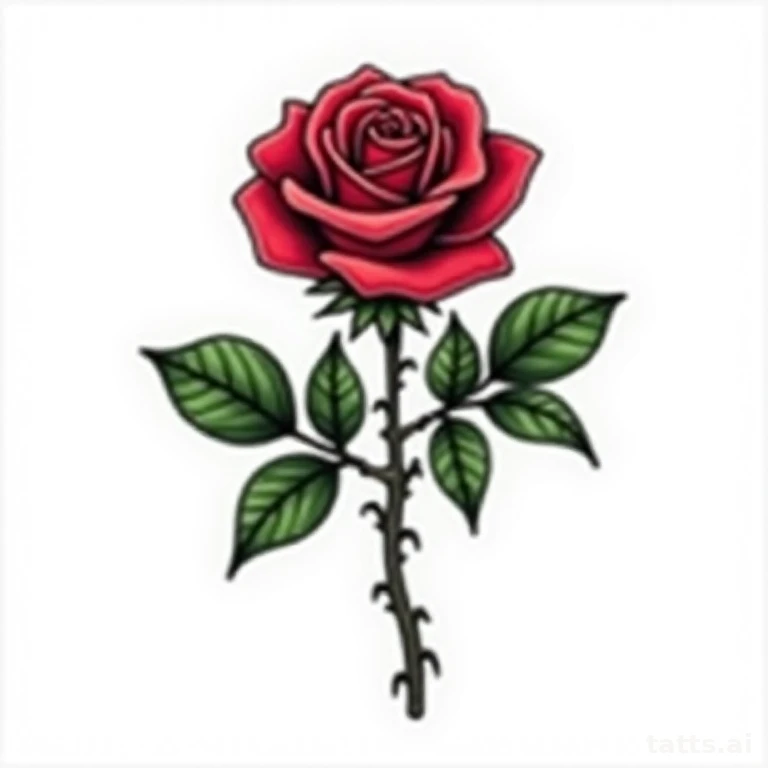
Symbolically the rose is flexible — a red rose reads as love or passion, commonly used for romantic dedication pieces; a black rose signals loss, mourning, or the end of something; a rose with thorns emphasizes that beauty and pain coexist, often chosen to mark surviving a hard period. Paired with a banner reading a name or date, it becomes one of the most common memorial and dedication tattoos in the traditional canon — this combination has been a tattoo shop staple for over a century for good reason.
Sizing is forgiving compared to realism or fine-line work: a single traditional rose reads clearly at 3-4 inches thanks to the bold linework, though 5-6 inches gives room for a fuller bloom with more petal layers and a banner underneath. This makes it one of the best styles for smaller placements like the outer forearm, upper arm, calf, or behind the ear for a mini version. Pain is moderate and short-duration since traditional work moves fast — solid color fill and bold outlines don't require the slow layered shading realism does, so a single rose typically finishes in one 1.5-2 hour sitting. Expect 3-4/10 on forearm and calf, 5-6/10 on upper arm and shoulder. Longevity is the real selling point here: a well-done traditional rose with saturated color and confident outlines holds sharp for 25-30+ years, often needing no touch-up at all beyond a very minor color refresh around year 15-20.
Traditional Rose designs
Generate your own traditional rose design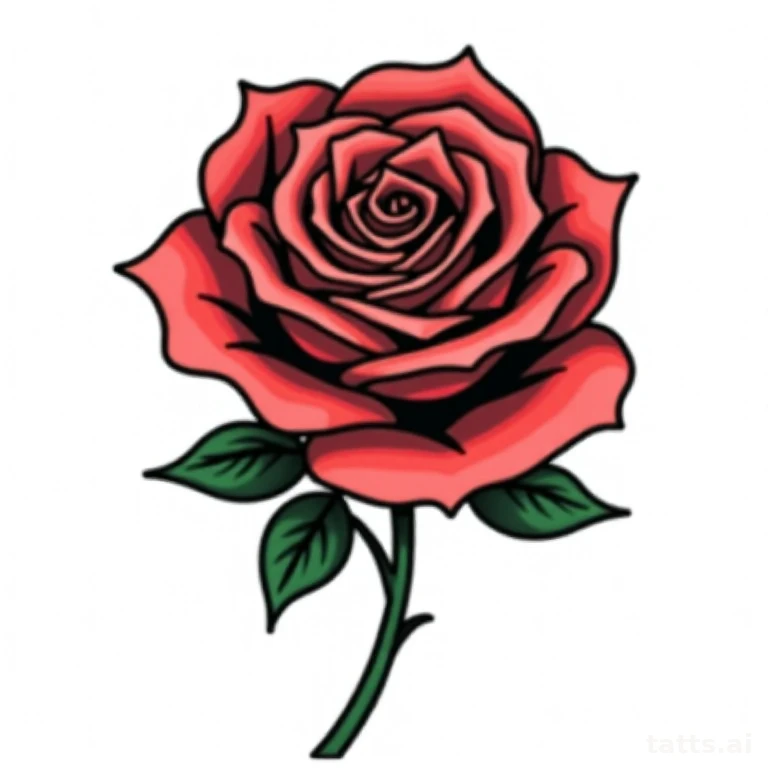
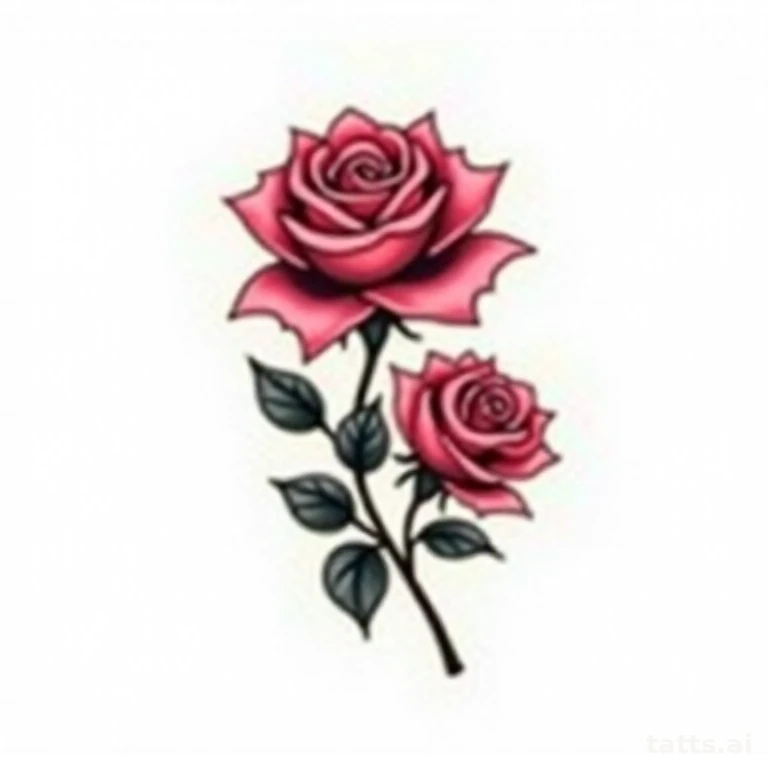
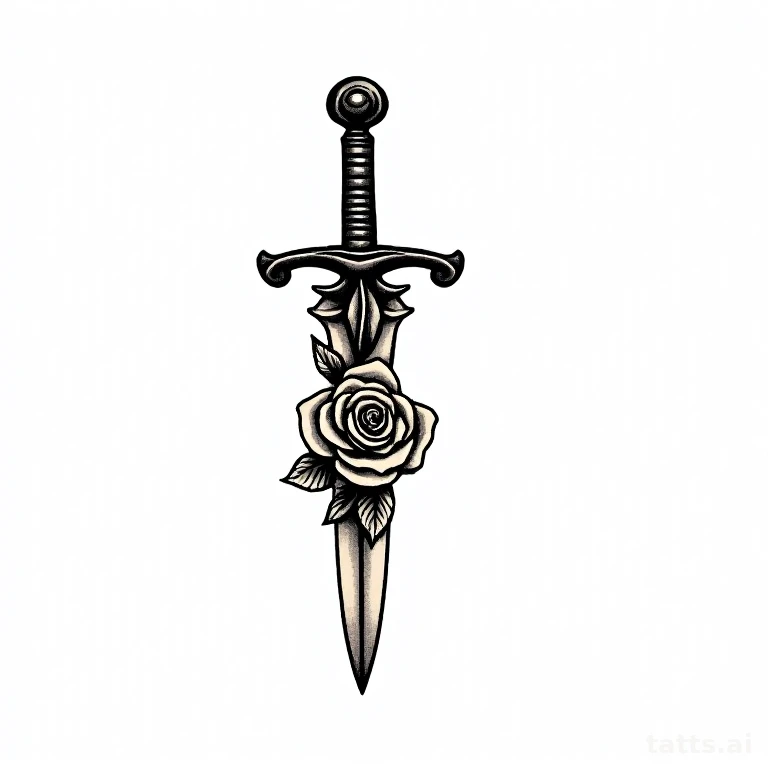
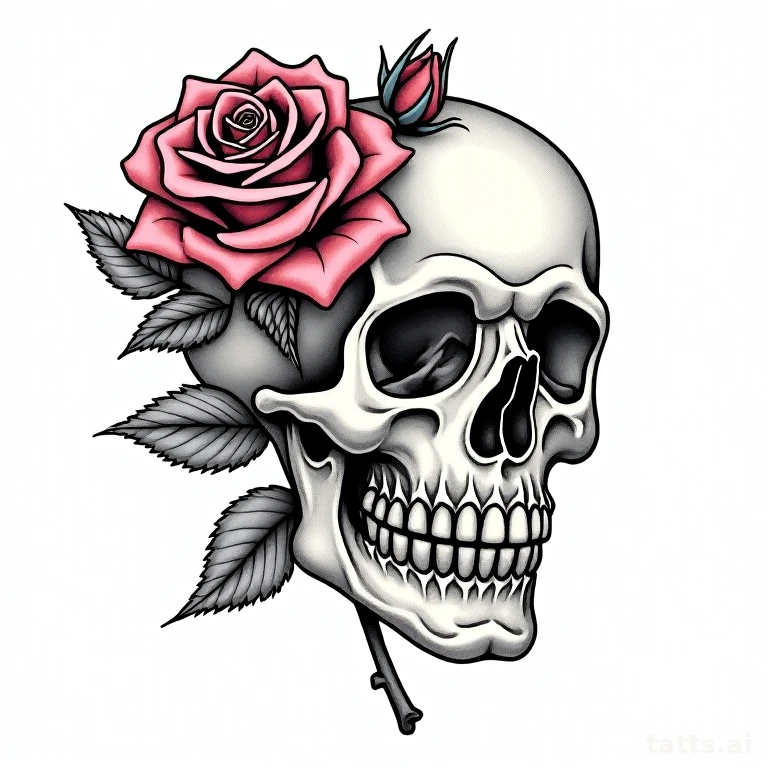
Why Flat Color Beats Gradient for This Style
Traditional tattooing intentionally avoids the soft gradient shading you'd see in neo-traditional or realism — the red petals and green leaves are packed as solid, saturated color blocks. This isn't a limitation, it's the technique that makes the style age so well: flat, dense color holds its saturation far longer than a gradient does, because there's no soft transition zone to blur as ink settles in the skin over decades. If your artist suggests adding heavy shading or blending to a traditional rose, know you're moving toward neo-traditional territory, which has a different (still good, but different) aging profile.
The Banner-and-Rose Combination
Adding a ribbon banner with a name, date, or word underneath the rose is the most requested variation and doesn't add much session time since it uses the same bold-outline, flat-color technique. Keep banner text short — traditional lettering inside a banner needs to stay large enough to read clearly at a distance, so long names or phrases either get cramped or force the whole piece bigger than originally planned. Three to eight characters is the sweet spot for a standard-sized banner.
Frequently asked
- Why do old-school traditional roses age so much better than modern ones?
- It's the technique, not the era — thick black outlines contain the color and keep it from migrating outward, and flat saturated fills resist fading better than soft gradients. Any artist working in true American traditional style today, using that same bold-outline technique, will produce a rose that ages the same way regardless of when it's done.
- What's the difference between a traditional rose and a neo-traditional rose?
- Traditional uses bold uniform outlines and flat two-to-three-color fills with almost no shading gradient; neo-traditional keeps a strong outline but adds shading depth, a wider color palette, and more realistic petal layering. Neo-traditional looks more dimensional but requires slightly more touch-up over time than the flatter traditional approach.
- Can a traditional rose be done small, like 2 inches?
- It's possible but risky — traditional linework needs enough space for the outline weight to read as bold rather than cramped, and petal layers can merge into a blob below about 2.5-3 inches. Talk to your artist about simplifying the petal count if you want a genuinely small version rather than shrinking a detailed design that needs more room.
Make it yours
Generate a one-of-one traditional rose design free — then try it on your skin.