Tattoo ideas
Japanese Koi Fish Tattoo Ideas
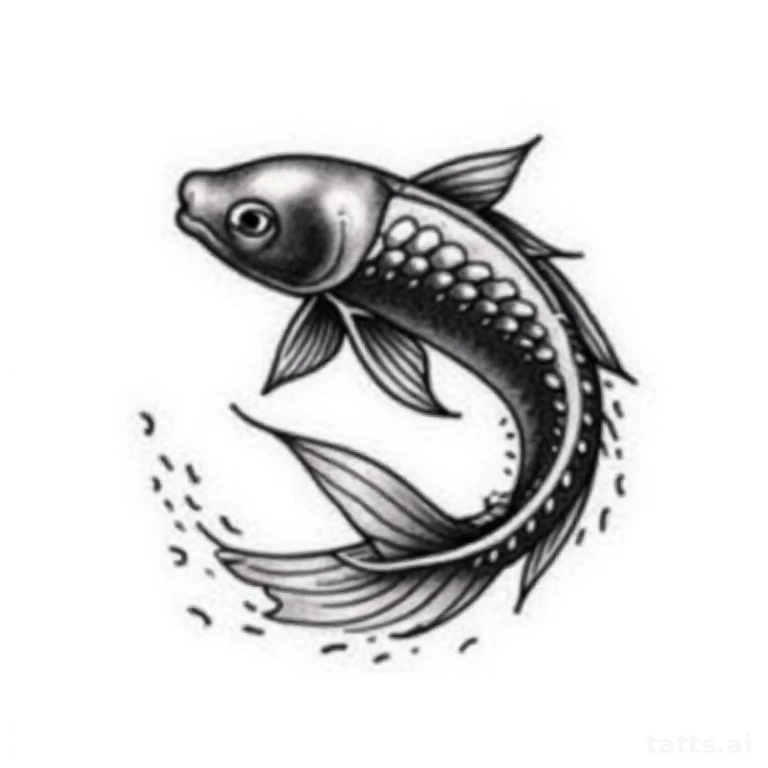
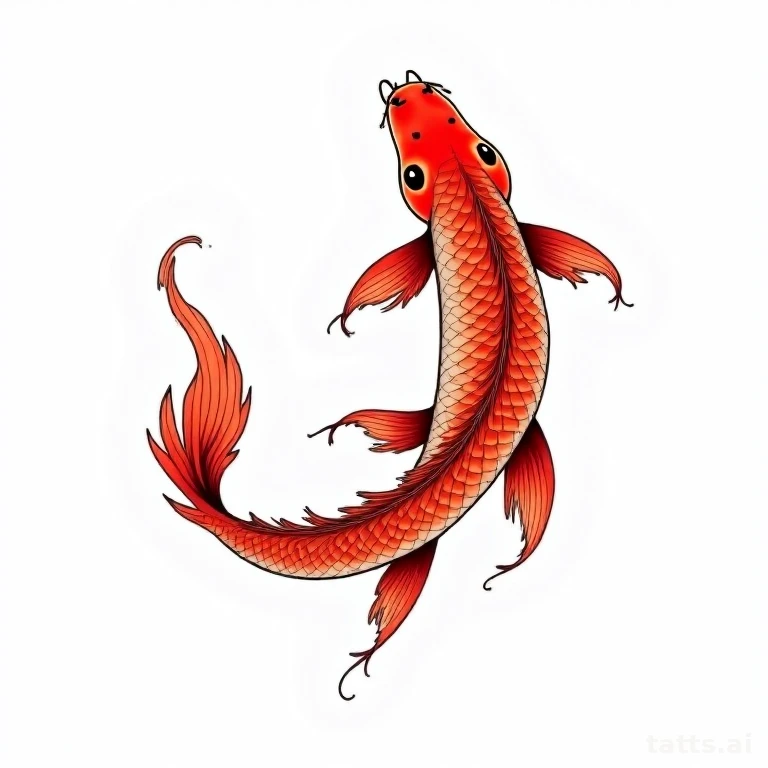
The koi fish carries one of the most specific symbolic systems in Japanese tattooing, and it's worth understanding before you pick a design, because swim direction actually changes the meaning. A koi swimming upstream represents perseverance through hardship — drawn from the legend of the koi that swam up the Yellow River and transformed into a dragon upon reaching the top, a story that's the literal origin of the dragon-koi combination piece. A koi swimming downstream, by contrast, represents having already overcome the struggle — someone who's on the other side of whatever they were fighting through. This distinction is well known enough in Japanese tattoo culture that getting it backward from your intended meaning is a common regret.
Color carries specific weight too: a black koi (magoi) traditionally represents the father or masculine strength and overcoming adversity, red/orange (higoi) represents love and strong life force or the mother, blue represents reproduction and masculine energy in some regional readings, and gold represents wealth and prosperity. Multi-koi pieces often mix colors deliberately to represent family members. If you're getting this for a personal meaning tied to family or struggle, discuss color choice with your artist rather than picking whatever looks best in the reference photo — the color is doing narrative work.
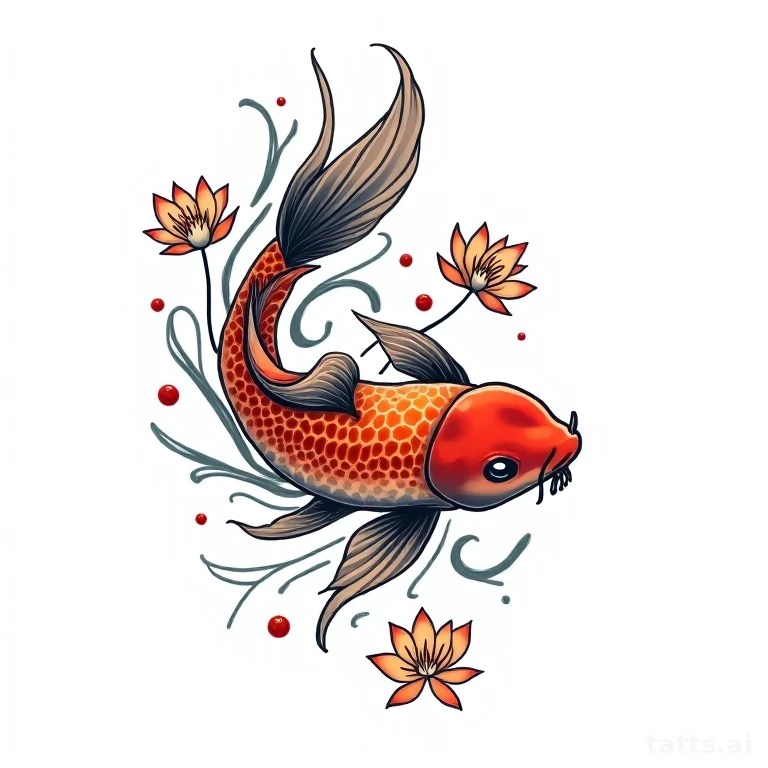
Composition-wise, koi are almost always paired with water elements — flowing linework, splashes, lotus flowers, or maple leaves depending on season symbolism — because a koi floating in empty space loses the sense of motion that makes the piece feel alive. This makes koi naturally suited to elongated placements: forearm, calf, side ribs, or as part of a larger sleeve or back piece where the water can flow with the body's shape. A single koi with modest water detail works at 5-6 inches; a two-koi yin-yang composition or a koi-into-dragon transformation piece needs 8+ inches to give the transformation room to read clearly. Pain sits at 3-5/10 on forearm and calf, 6-7/10 on ribs and side placements, which are popular for this subject because of the natural vertical flow. Bold color and confident black outline linework in the traditional irezumi style ages exceptionally well — 15-20+ years before real fading, since koi pieces are typically saturated with strong contrast rather than relying on delicate highlight work.
Japanese Koi Fish designs
Generate your own japanese koi fish design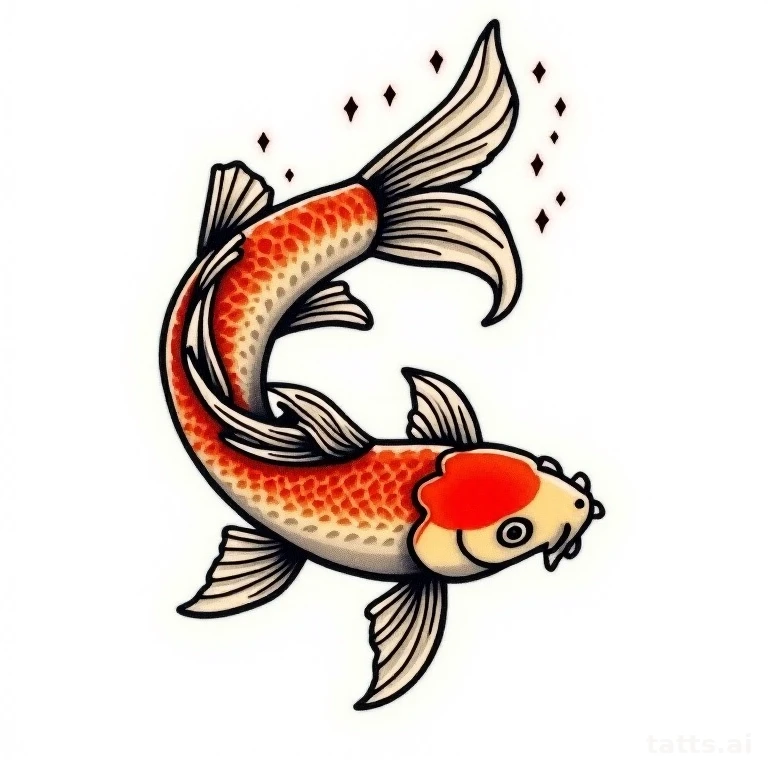
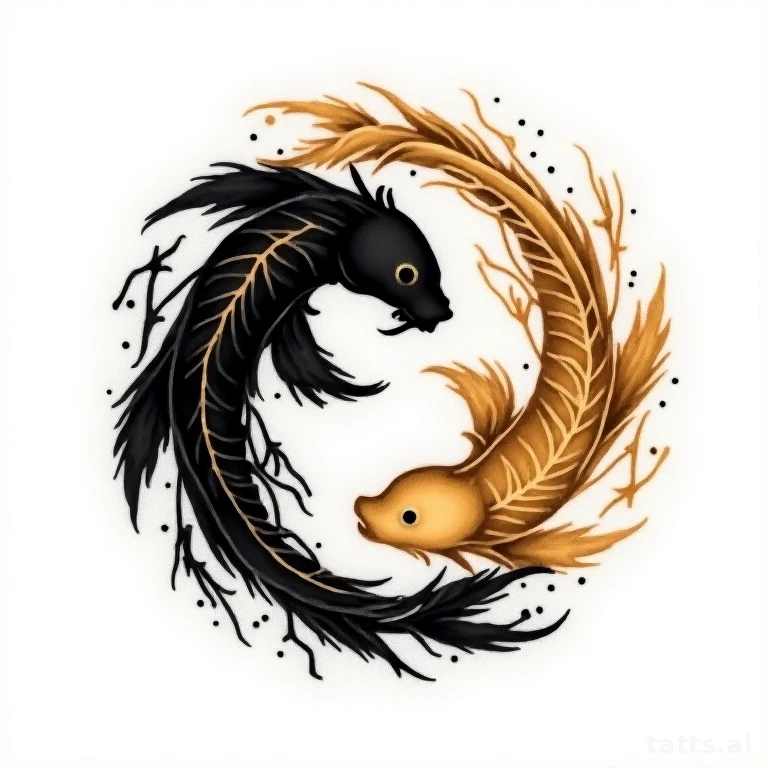
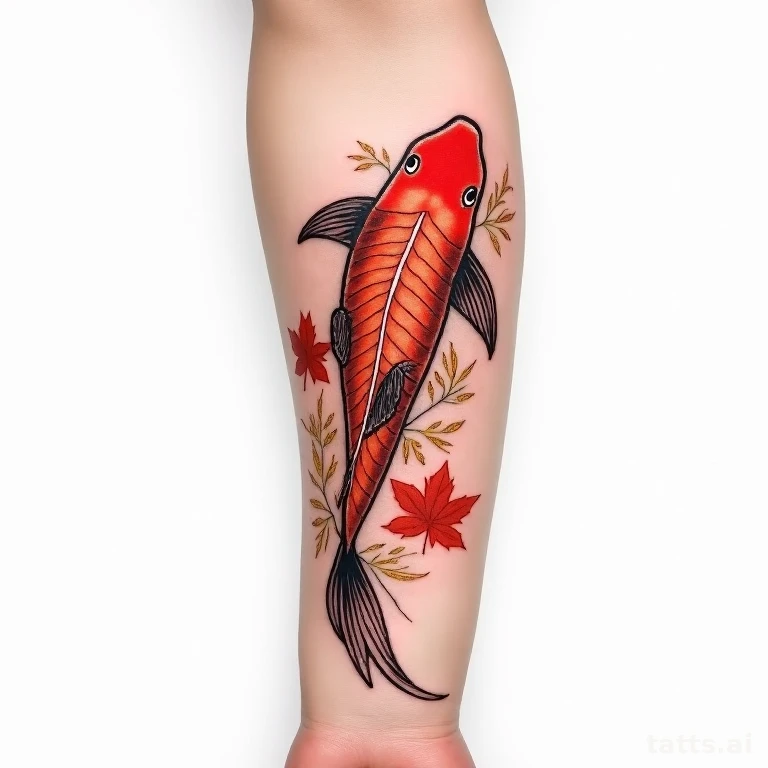
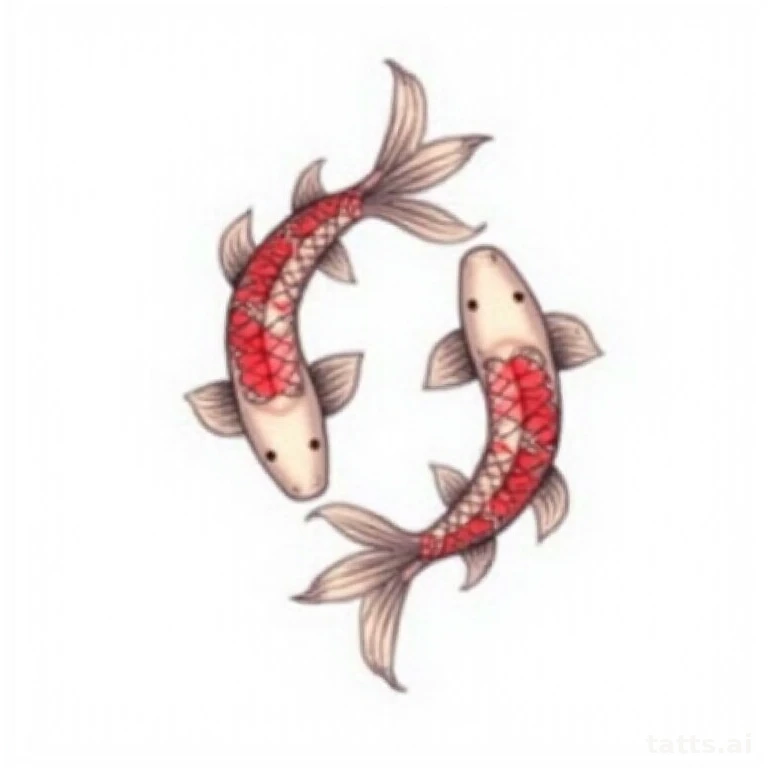
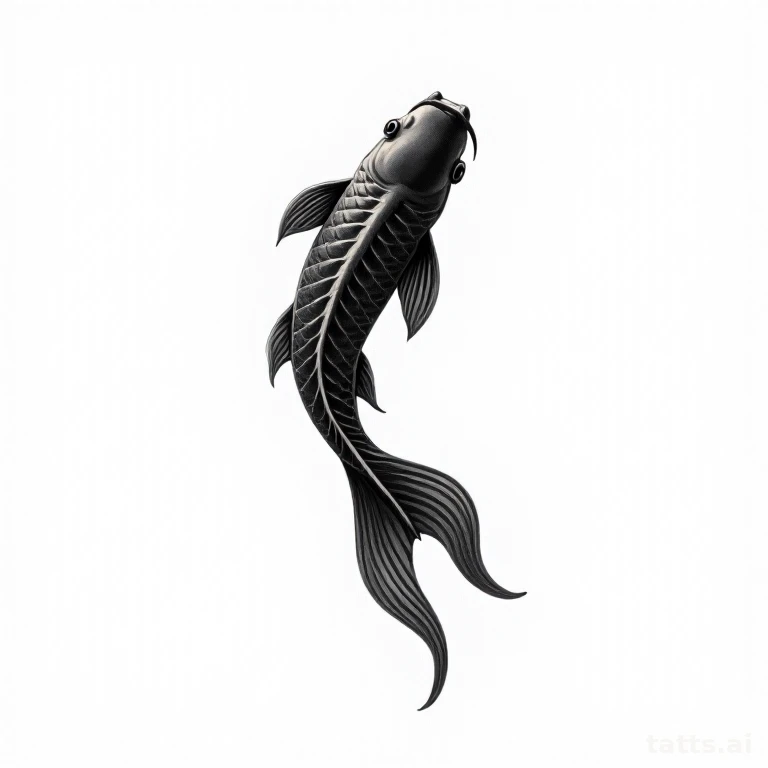
Swim Direction Is a Design Decision, Not an Afterthought
Before your consultation, decide whether your koi represents a struggle you're still moving through (upstream) or one you've overcome (downstream) — this determines the entire composition, including which direction the water and background elements should flow. Artists specializing in Japanese traditional work will ask about this explicitly; if they don't, bring it up yourself so the final linework doesn't accidentally tell the opposite story from what you intended. Once direction is locked in, everything else — fin angle, splash placement, even the tilt of the head — should reinforce it.
Water Rendering Technique Determines Longevity
The flowing water lines around a koi (often called uroko-nami or wave patterns) are usually done in solid black linework rather than soft gradient shading, which is a big part of why koi pieces age so well compared to softer realism water effects. If your artist proposes a heavily gradient, photorealistic water treatment instead of the traditional bold-line wave pattern, know that you're trading some longevity and traditional authenticity for a more painterly modern look — a legitimate choice, but one worth making knowingly.
Frequently asked
- Does koi color really matter, or is it just aesthetic?
- In traditional Japanese symbolism it matters — black for the father/masculine strength, red-orange for love and vitality, gold for prosperity, blue for calm strength. If the piece has personal meaning tied to a person or life stage, choose color deliberately rather than by what looks best; if it's purely decorative, aesthetic choice is fine.
- Can I combine a koi with a dragon in one piece?
- Yes, and it's one of the most requested irezumi compositions — it depicts the legend of the koi's transformation into a dragon after swimming up the waterfall, symbolizing perseverance rewarded. This composition needs more space than a standalone koi, typically a half-sleeve or larger to let the transformation read clearly.
- What placement suits a koi tattoo best?
- Ribs, calf, and forearm are the most popular because they give the elongated body and water linework room to flow naturally with the limb or torso. A koi crammed into a small round space like the shoulder cap tends to lose its sense of motion, which is the whole point of the design.
Make it yours
Generate a one-of-one japanese koi fish design free — then try it on your skin.