Tattoo ideas
Koi Fish Tattoo Ideas
The koi fish's tattoo meaning comes from a specific Chinese legend later absorbed into Japanese irezumi tradition: a koi that swims upstream against the current and successfully leaps the waterfall at Dragon Gate transforms into a dragon. That's why koi tattoos are fundamentally about perseverance through adversity — the direction the fish is swimming actually changes the story. A koi swimming upstream represents someone actively fighting through a hard period; a koi swimming downstream represents having already overcome the struggle and moving forward with it behind them. This is one of the few tattoo subjects where the artist genuinely needs to ask you which direction has the meaning you want before sketching, since it isn't just an aesthetic choice.
Color carries real weight in traditional Japanese koi symbolism too, more so than in most Western tattoo subjects. A black koi (magoi) traditionally represents the father or masculine strength and overcoming adversity generally. A red or orange koi (higoi) represents love, strong will, and is frequently chosen by or for mothers. A blue koi represents reproduction and family, and a gold koi represents wealth or prosperity. Multi-color koi (like the popular orange-and-white kohaku pattern) don't carry a single fixed meaning but are chosen mostly for the way the pattern breaks up the fish's body visually.
Koi need flowing water to look complete — a koi with no wave, current, or splash context around it loses most of its narrative motion and can read as a static aquarium fish rather than a mythic subject mid-struggle. That water detail is also why koi pieces want real size: a single koi with surrounding water and lotus or maple leaf accents needs at least 6-8 inches, making the calf, thigh, or side ribs the classic placements, with a full koi-and-dragon transformation piece often spanning an entire sleeve or back. Pain on the calf and outer thigh runs a manageable 4-5/10; ribs jump to 8/10, which matters if you're planning a large-scale koi pond scene there. On aging, traditional Japanese koi with bold black scale outlines and flat color fills are built for permanence, commonly holding crisp definition for 20-30 years — this is one of the most tested, time-proven tattoo styles in existence. A softer watercolor-style koi with blended, borderless color is far more fragile, often losing its color edges within 4-5 years since there's no black outline anchoring the pigment in place.
Koi Fish designs
Generate your own koi fish design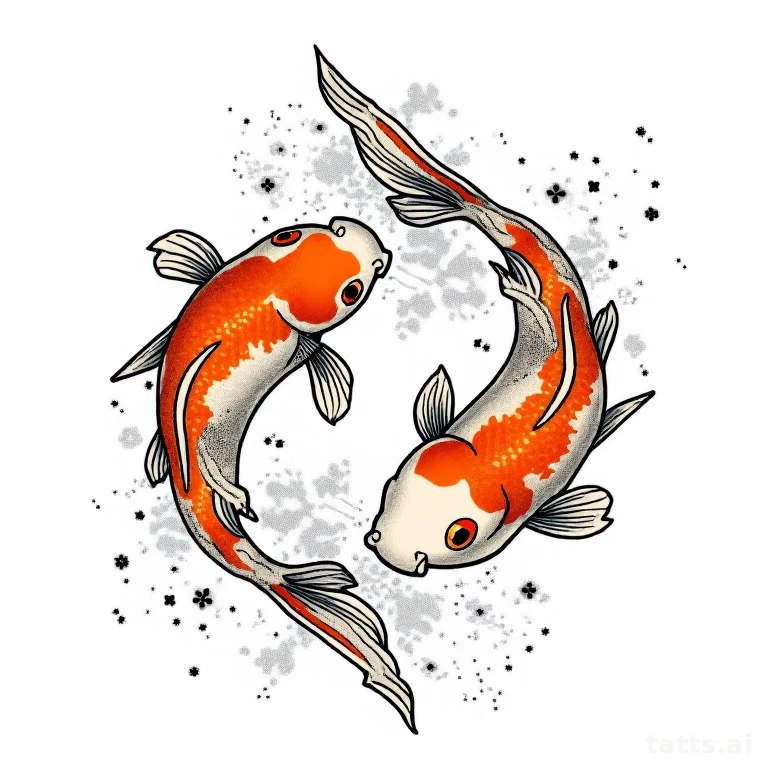
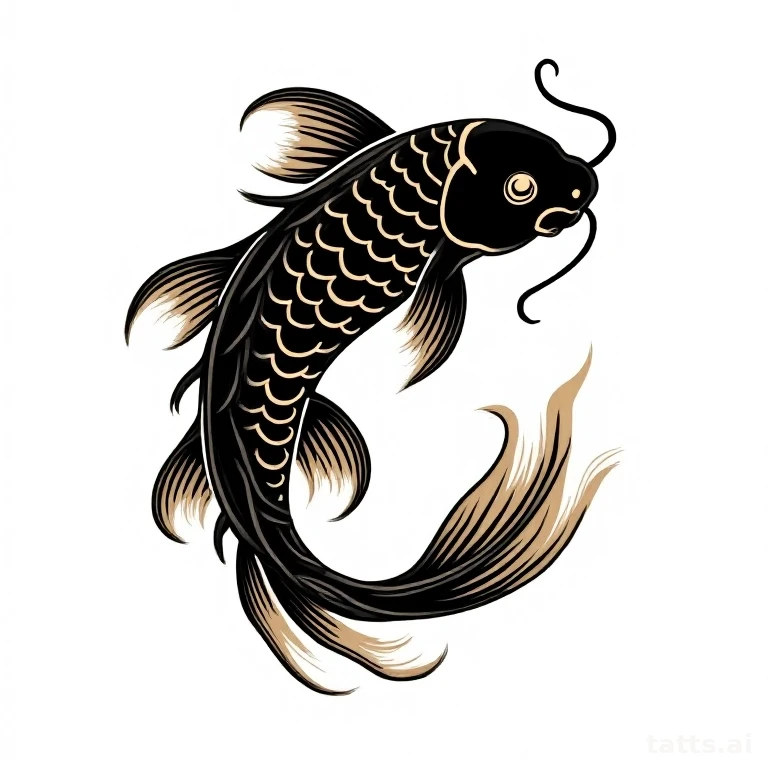
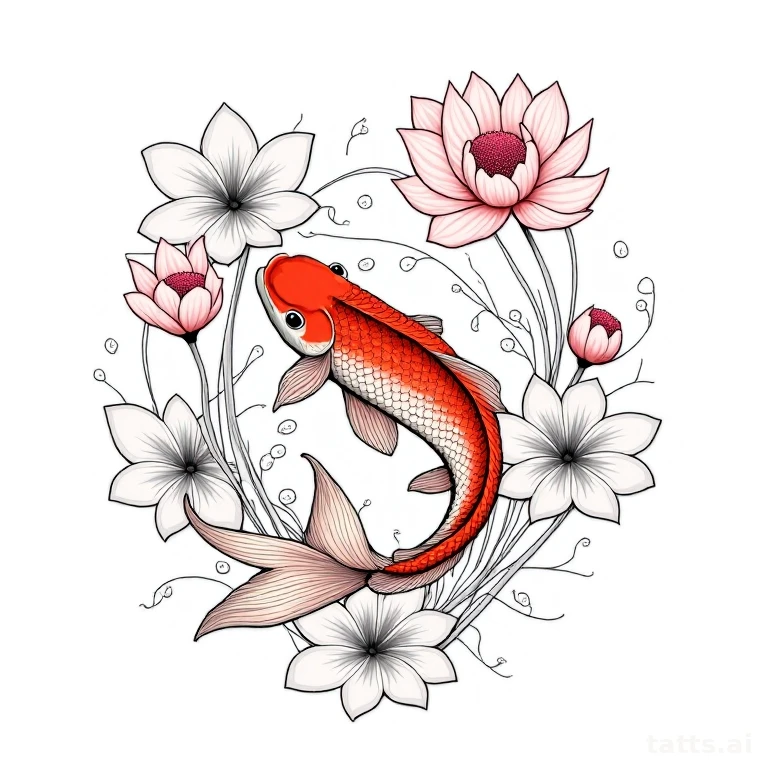
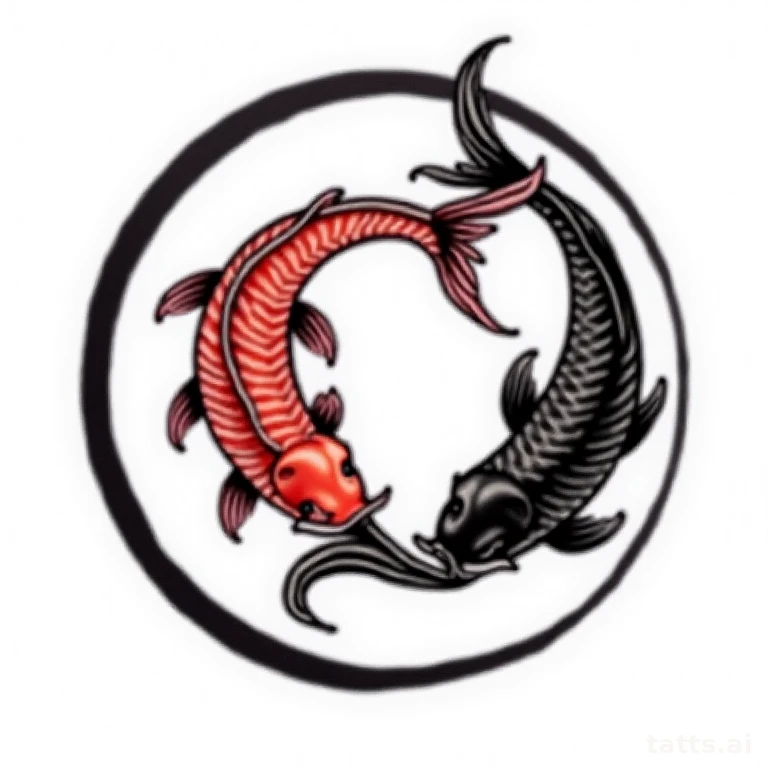
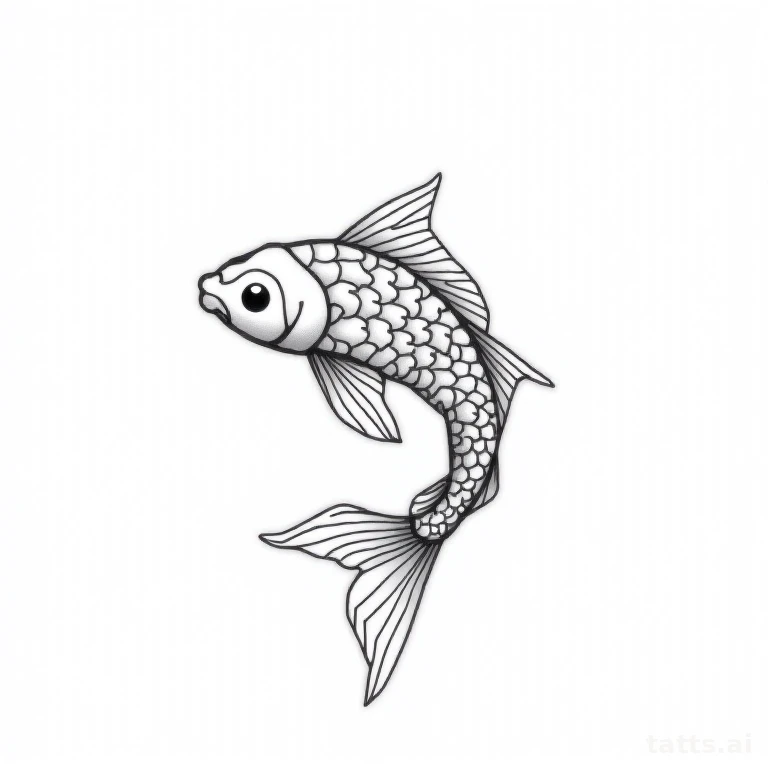
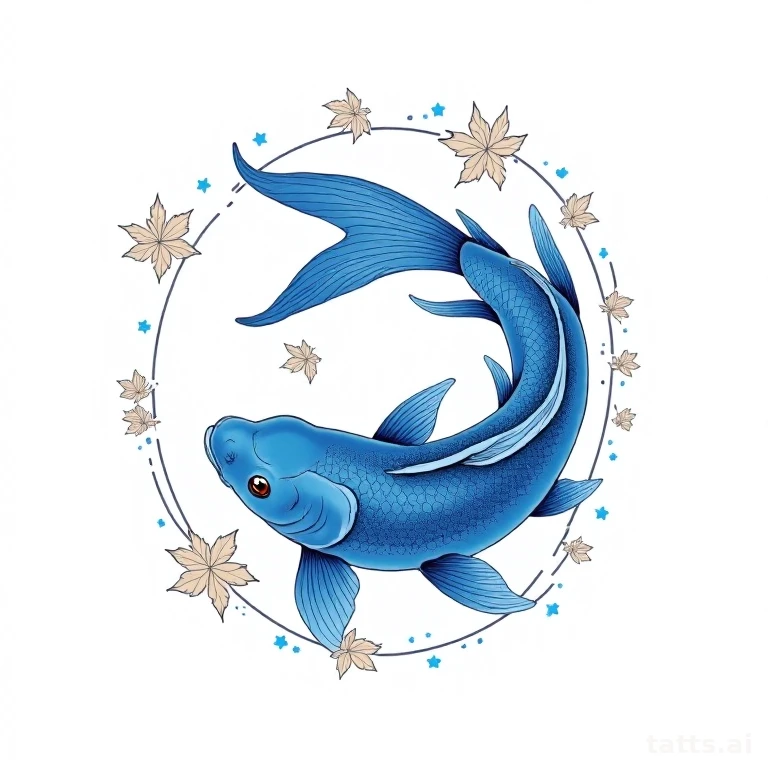
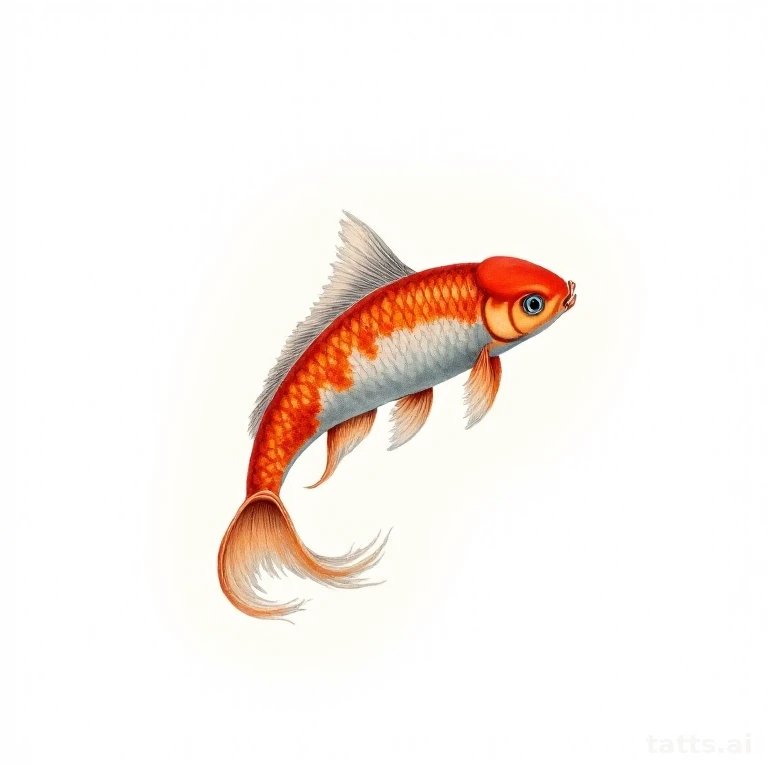
Swimming Direction and Story
Before finalizing your design, decide whether the koi is mid-struggle (swimming upstream, often shown near a waterfall) or past it (swimming downstream, sometimes paired with dragon scales beginning to appear near the tail to show the transformation in progress). This single directional choice is the clearest way to make a koi tattoo specific to your own story rather than a generic 'strength' fish. Some clients choose a full koi-to-dragon transformation piece precisely because it lets both chapters — the struggle and the outcome — live in one composition.
Water, Waves, and Lotus Pairings
A koi's supporting water detail isn't optional decoration the way background sometimes is for other subjects — it's core to the mythology, since the whole story is about swimming against a current. Traditional Japanese pieces render the water in the same bold linework style as the fish (not soft or photorealistic) to keep visual consistency. Lotus flowers are a common pairing since they share the 'beauty rising from struggle' theme (a lotus grows up through muddy water), while maple leaves are often added simply as a seasonal Japanese motif without deeper symbolic tie to the koi itself.
Frequently asked
- Does the direction a koi fish swims in a tattoo matter?
- Yes — a koi swimming upstream represents someone currently pushing through adversity, while a koi swimming downstream represents having already overcome a struggle. It's one of the few design choices in tattooing that directly changes the story, so decide this with your artist before the sketch is finalized.
- What does the color of a koi fish tattoo mean?
- In traditional Japanese symbolism, black koi represent fatherhood and general perseverance, red or orange koi represent love and strong will (often tied to motherhood), blue koi represent family and reproduction, and gold koi represent wealth or financial prosperity for the wearer.
- Why do koi tattoos need water or waves included?
- The koi legend is specifically about swimming against a current to leap a waterfall and transform into a dragon, so water detail carries the actual narrative, not just decoration. A koi shown without any water context loses that story and can read as a static, generic fish tattoo.
Make it yours
Generate a one-of-one koi fish design free — then try it on your skin.